
Catalogue Search | MBRL


Are you sure you want to remove the book from the shelf?

{{itemTitle}}
6
result(s) for
"Anson, Edward, author"
Sort by:

Alexander's heirs : the age of the successors
\"Alexander's Heirs offers a narrative account of the approximately forty years following the death of Alexander the Great, during which his generals vied for control of his vast empire, and through their conflicts and politics ultimately created the Hellenistic Age. Makes full use of primary and secondary sources. Accessible to a broad audience of students, university scholars, and the educated general reader. Explores important scholarly debates on the Diadochi \"-- Provided by publisher.
BOOK

Alexander the Great : themes and issues
Alexander the Great's life and career are here examined through the major issues surrounding his reign. What were Alexander's ultimate ambitions?Why did he pursue his own deification while alive?Did he actually set the world in 'a new groove' as has been claimed by some scholars?And was his death natural or the result of a murderous conspiracy?.
eBook
After Alexander
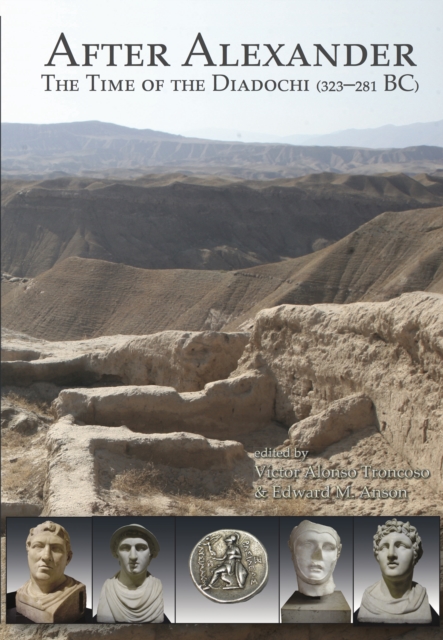
When Alexander the Great died in 323 BC without a chosen successor he left behind a huge empire and ushered in a turbulent period, as his generals fought for control of vast territories. The time of the Successors (Diadochi) is usually defined as beginning in 323 BC and ending with the deaths of the last two Successors in 281 BC. This is a major publication devoted to the Successors and contains eighteen papers reflecting current research. Several papers attempt to unravel the source history of the very limited remaining narrative accounts, and add additional materials through cuneiform and Byzantine texts. Specific historical issues addressed include the role of so-called royal flatterers and whether or not Alexander's old guard did continue to serve into their sixties and seventies. Three papers reflect the recent conscious effort by many to break away from the Hellenocentric view of the predominantly Greek sources, by examining the role of the conquered, specifically the prominent roles played by Iranians in the administration and military of Alexander and his Successors, pockets of Iranian resistance which eventually blossomed into Hellenistic kingdoms ruled by sovereigns proclaiming their direct connection to an Iranian past and a continuation of Iranian influence through an examination of the roles played by certain of the Diadochis Iranian wives. The papers in the final section analyse the use of varying forms of propaganda. These include the use of the concept of Freedom of the Greeks as a means of manipulating opinion in the Greek world; how Ptolemy used a snake cult associated with the foundation of Alexandria in Egypt to link his kingship with that of Alexander; and the employment of elephant images to advertise the authority of particular rulers.
eBook

Alexander's Heirs
Alexander’s Heirs offers a narrative account of the approximately forty years following the death of Alexander the Great, during which his generals vied for control of his vast empire, and through their conflicts and politics ultimately created the Hellenistic Age. -Offers an account of the power struggles between Alexander’s rival generals in the forty year period following his death -Discusses how Alexander’s vast empire ultimately became the Hellenistic World -Makes full use of primary and secondary sources -Accessible to a broad audience of students, university scholars, and the educated general reader -Explores important scholarly debates on the Diadochi
eBook
Eumenes of Cardia : a Greek among Macedonians
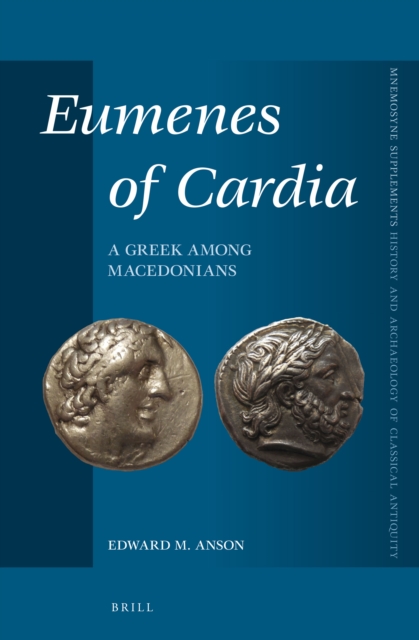
Eumenes of Cardia: A Greek Among Macedonians (2nd edition) updates the original work in light of a decade of scholarly activity and presents much new analysis influenced by this continuing scholarship. Eumenes of Cardia was a royal secretary who, in the years following the death of Alexander the Great became a major contender for power. Despite the fact that he had been chiefly an administrator rather than one of Alexander's elite military commanders, and that he was a Greek from the city of Cardia, as opposed to a native Macedonian, Eumenes came close to securing control of the Asian remnants of Alexander's empire. His history is important because our sources for the years immediately following the Conqueror's death are dominated by the Cardian's story. Moreover, his death marked in many respects the approaching end of the Macedonian dynasty of kings who had ruled Macedonia since the 8th c. BC, and his life illuminated both the nature of the Macedonian heritage and the possibilities of the new age ushered in by the conquests of the great Alexander.
eBook
