
Catalogue Search | MBRL


Are you sure you want to remove the book from the shelf?

{{itemTitle}}
674
result(s) for
"Bernard, Cécile"
Sort by:
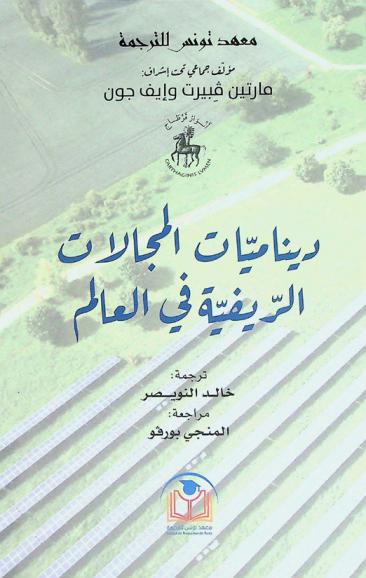
ديناميات المجالات الريفية في العالم
يتناول كتاب \"ديناميات المجالات الريفية في العالم\" لمجموعة من الباحثين بقيادة دومينيك أندريو التحولات العميقة التي طرأت على الأرياف عالميا، حيث لم تعد تعرف فقط كمجالات زراعية، بل أصبحت فضاءات متعددة الوظائف تشمل السياحة، والخدمات، والحفاظ على البيئة. يسلط الكتاب الضوء على التفاوتات المجالية، والهجرة من وإلى الأرياف، وتأثير السياسات العمومية في دعم التنمية المحلية، كما يناقش التحديات البيئية المتزايدة مثل التغير المناخي والتصحر. ويقدم من خلال أمثلة من مختلف القارات، مما يعكس تنوع التجارب الريفية في ظل العولمة ومتطلبات التنمية المستدامة.
BOOK

Natural Products from Cyanobacteria: Focus on Beneficial Activities
Cyanobacteria are photosynthetic microorganisms that colonize diverse environments worldwide, ranging from ocean to freshwaters, soils, and extreme environments. Their adaptation capacities and the diversity of natural products that they synthesize, support cyanobacterial success in colonization of their respective ecological niches. Although cyanobacteria are well-known for their toxin production and their relative deleterious consequences, they also produce a large variety of molecules that exhibit beneficial properties with high potential in various fields (e.g., a synthetic analog of dolastatin 10 is used against Hodgkin’s lymphoma). The present review focuses on the beneficial activities of cyanobacterial molecules described so far. Based on an analysis of 670 papers, it appears that more than 90 genera of cyanobacteria have been observed to produce compounds with potentially beneficial activities in which most of them belong to the orders Oscillatoriales, Nostocales, Chroococcales, and Synechococcales. The rest of the cyanobacterial orders (i.e., Pleurocapsales, Chroococcidiopsales, and Gloeobacterales) remain poorly explored in terms of their molecular diversity and relative bioactivity. The diverse cyanobacterial metabolites possessing beneficial bioactivities belong to 10 different chemical classes (alkaloids, depsipeptides, lipopeptides, macrolides/lactones, peptides, terpenes, polysaccharides, lipids, polyketides, and others) that exhibit 14 major kinds of bioactivity. However, no direct relationship between the chemical class and the respective bioactivity of these molecules has been demonstrated. We further selected and specifically described 47 molecule families according to their respective bioactivities and their potential uses in pharmacology, cosmetology, agriculture, or other specific fields of interest. With this up-to-date review, we attempt to present new perspectives for the rational discovery of novel cyanobacterial metabolites with beneficial bioactivity.
Journal Article

Usability Evaluation of Connected Health Devices in Home Monitoring: Toward Devices Adapted to the Characteristics of Informal Caregivers
While an increasing number of Informal CareGivers (ICGs) are assisting their dependent loved ones with the daily living tasks and medical care, they are rarely considered in the medical devices design process. The objective of this study is to identify the characteristics of ICGs impacting the use of the iHealth® Sense BP7 medical device, namely a connected wrist blood pressure monitor. For this purpose, user tests were conducted with 29 potential or actual ICGs. First, the participants filled out a socio-demographic questionnaire and then handled the blood pressure monitor. Finally, they completed the System Usability Scale questionnaire. The results revealed an impact of technophilia and age on usability dimensions. To conclude, the consideration of the ICG population in the design process of connected medical devices is discussed, particularly the age and level of technophilia.
Journal Article

Structural Diversity of Bacterial Communities Associated with Bloom-Forming Freshwater Cyanobacteria Differs According to the Cyanobacterial Genus
The factors and processes driving cyanobacterial blooms in eutrophic freshwater ecosystems have been extensively studied in the past decade. A growing number of these studies concern the direct or indirect interactions between cyanobacteria and heterotrophic bacteria. The presence of bacteria that are directly attached or immediately adjacent to cyanobacterial cells suggests that intense nutrient exchanges occur between these microorganisms. In order to determine if there is a specific association between cyanobacteria and bacteria, we compared the bacterial community composition during two cyanobacteria blooms of Anabaena (filamentous and N2-fixing) and Microcystis (colonial and non-N2 fixing) that occurred successively within the same lake. Using high-throughput sequencing, we revealed a clear distinction between associated and free-living communities and between cyanobacterial genera. The interactions between cyanobacteria and bacteria appeared to be based on dissolved organic matter degradation and on N recycling, both for N2-fixing and non N2-fixing cyanobacteria. Thus, the genus and potentially the species of cyanobacteria and its metabolic capacities appeared to select for the bacterial community in the phycosphere.
Journal Article

Understanding the railway driving activity to design HUD: Recommendations and specificities for future light trains
As new operating modes emerge for rail transportation, an ergonomics and human factors centered study is essential to ensure that the needs of operators are fully taken into account during this evolution. In this paper, we study the possibility of integrating heads-up displays (HUD’s) to help design future train cabs for very light trains operating in small rural lines. Multiple studies underline the apparent advantages of using HUD’s in transport fields, notably to improve the visibility of certain information or reduce the time when the driver’s attention must diverge from the train and its environment. However, implementing such interfaces is not simple, as technological solutions can be difficult to implement and must comply with strict safety standards. While it has been scarcely explored in the railway industry, this paper investigates the known advantages and disadvantages of using HUD’s, and presents recommendations for their development, based on both a study of the literature and general observations made in the driver’s cab of various types of train operating on small rural lines.
Journal Article
Microbial Diversity and Cyanobacterial Production in Dziani Dzaha Crater Lake, a Unique Tropical Thalassohaline Environment
This study describes, for the first time, the water chemistry and microbial diversity in Dziani Dzaha, a tropical crater lake located on Mayotte Island (Comoros archipelago, Western Indian Ocean). The lake water had a high level of dissolved matter and high alkalinity (10.6-14.5 g L-1 eq. CO32-, i.e. 160-220 mM compare to around 2-2.5 in seawater), with salinity up to 52 psu, 1.5 higher than seawater. Hierarchical clustering discriminated Dziani Dzaha water from other alkaline, saline lakes, highlighting its thalassohaline nature. The phytoplankton biomass was very high, with a total chlorophyll a concentration of 524 to 875 μg chl a L-1 depending on the survey, homogeneously distributed from surface to bottom (4 m). Throughout the whole water column the photosynthetic biomass was dominated (>97% of total biovolume) by the filamentous cyanobacteria Arthrospira sp. with a straight morphotype. In situ daily photosynthetic oxygen production ranged from 17.3 to 22.2 g O2 m-2 d-1, consistent with experimental production / irradiance measurements and modeling. Heterotrophic bacterioplankton was extremely abundant, with cell densities up to 1.5 108 cells mL-1 in the whole water column. Isolation and culture of 59 Eubacteria strains revealed the prevalence of alkaliphilic and halophilic organisms together with taxa unknown to date, based on 16S rRNA gene analysis. A single cloning-sequencing approach using archaeal 16S rDNA gene primers unveiled the presence of diverse extremophilic Euryarchaeota. The water chemistry of Dziani Dzaha Lake supports the hypothesis that it was derived from seawater and strongly modified by geological conditions and microbial activities that increased the alkalinity. Dziani Dzaha has a unique consortium of cyanobacteria, phytoplankton, heterotrophic Eubacteria and Archaea, with very few unicellular protozoa, that will deserve further deep analysis to unravel its uncommon diversity. A single taxon, belonging to the genus Arthrospira, was found responsible for almost all photosynthetic primary production.
Journal Article
Development of a new extraction method based on high-intensity ultra-sonication to study RNA regulation of the filamentous cyanobacteria Planktothrix
Efficient RNA extraction methods are needed to study transcript regulation. Such methods must lyse the cell without degrading the genetic material. For cyanobacteria this can be particularly challenging because of the presence of the cyanobacteria cell envelope. The great breath of cyanobacterial shape and size (unicellular, colonial, or filamentous multicellular) created a variety of cell lysis methods. However, there is still a lack of reliable techniques for nucleic acid extraction for several types of cyanobacteria. Here we designed and tested 15 extraction methods using physical, thermic or chemical stress on the filamentous cyanobacteria Planktothrix agardhii. Techniques based on the use of beads, sonication, and heat shock appeared to be too soft to break the Planktothrix agardhii cell envelope, whereas techniques based on the use of detergents degraded the cell envelope but also the RNA. Two protocols allowed to successfully obtain good-quality RNA. The first protocol consisted to manually crush the frozen cell pellet with a pestle and the second was based on the use of high-intensity ultra-sonication. When comparing these two, the high-intensity ultra-sonication protocol was less laborious, faster and allowed to extract 3.5 times more RNA compared to the liquid nitrogen pestle protocol. The high-intensity ultra-sonication protocol was then tested on five Planktothrix strains, this protocol allowed to obtain >8.5 μg of RNA for approximatively 3.5 × 10⁸ cells. The extracted RNA were characterized by 260/280 and 260/230 ratio > to 2, indicating that the samples were devoid of contaminant, and RNA Quality Number > to 7, meaning that the integrity of RNA was preserved with this extraction method. In conclusion, the method we developed based on high-intensity ultra-sonication proved its efficacy in the extraction of Planktothrix RNA and could be helpful for other types of samples.
Journal Article

Characterization of Potential Threats from Cyanobacterial Toxins in Lake Victoria Embayments and during Water Treatment
Africa’s water needs are often supported by eutrophic water bodies dominated by cyanobacteria posing health threats to riparian populations from cyanotoxins, and Lake Victoria is no exception. In two embayments of the lake (Murchison Bay and Napoleon Gulf), cyanobacterial surveys were conducted to characterize the dynamics of cyanotoxins in lake water and water treatment plants. Forty-six cyanobacterial taxa were recorded, and out of these, fourteen were considered potentially toxigenic (i.e., from the genera Dolichospermum, Microcystis, Oscillatoria, Pseudanabaena and Raphidiopsis). A higher concentration (ranging from 5 to 10 µg MC-LR equiv. L−1) of microcystins (MC) was detected in Murchison Bay compared to Napoleon Gulf, with a declining gradient from the inshore (max. 15 µg MC-LR equiv. L−1) to the open lake. In Murchison Bay, an increase in Microcystis sp. biovolume and MC was observed over the last two decades. Despite high cell densities of toxigenic Microcystis and high MC concentrations, the water treatment plant in Murchison Bay efficiently removed the cyanobacterial biomass, intracellular and dissolved MC to below the lifetime guideline value for exposure via drinking water (<1.0 µg MC-LR equiv. L−1). Thus, the potential health threats stem from the consumption of untreated water and recreational activities along the shores of the lake embayments. MC concentrations were predicted from Microcystis cell numbers regulated by environmental factors, such as solar radiation, wind speed in the N–S direction and turbidity. Thus, an early warning through microscopical counting of Microcystis cell numbers is proposed to better manage health risks from toxigenic cyanobacteria in Lake Victoria.
Journal Article

Anti-Inflammatory, Antioxidant, and Wound-Healing Properties of Cyanobacteria from Thermal Mud of Balaruc-Les-Bains, France: A Multi-Approach Study
Background: The Balaruc-les-Bains’ thermal mud was found to be colonized predominantly by microorganisms, with cyanobacteria constituting the primary organism in the microbial biofilm observed on the mud surface. The success of cyanobacteria in colonizing this specific ecological niche can be explained in part by their taxa-specific adaptation capacities, and also the diversity of bioactive natural products that they synthesize. This array of components has physiological and ecological properties that may be exploited for various applications. Methods: Nine cyanobacterial strains were isolated from Balaruc thermal mud and maintained in the Paris Museum Collection (PMC). Full genome sequencing was performed coupled with targeted and untargeted metabolomic analyses (HPLC-DAD and LC-MS/MS). Bioassays were performed to determine antioxidant, anti-inflammatory, and wound-healing properties. Results: Biosynthetic pathways for phycobiliproteins, scytonemin, and carotenoid pigments and 124 metabolite biosynthetic gene clusters (BGCs) were characterized. Several compounds with known antioxidant or anti-inflammatory properties, such as carotenoids, phycobilins, mycosporine-like amino acids, and aeruginosins, and other bioactive metabolites like microginins, microviridins, and anabaenolysins were identified. Secretion of the proinflammatory cytokines TNF-α, IL-1β, IL-6, and IL-8 appeared to be inhibited by crude extracts of Planktothricoides raciborskii PMC 877.14, Nostoc sp. PMC 881.14, and Pseudo-chroococcus couteii PMC 885.14. The extract of the Aliinostoc sp. PMC 882.14 strain was able to slightly enhance migration of HaCat cells that may be helpful in wound healing. Several antioxidant compounds were detected, but no significant effects on nitric oxide secretion were observed. There was no cytotoxicity on the three cell types tested, indicating that cyanobacterial extracts may have anti-inflammatory therapeutic potential without harming body cells. These data open up promising uses for these extracts and their respective molecules in drugs or thermal therapies.
Journal Article

Strong reorganization of multi-domain microbial networks associated with primary producers sedimentation from oxic to anoxic conditions in an hypersaline lake
Understanding the role of microbial interactions in the functioning of natural systems is often impaired by the levels of complexity they encompass. In this study, we used the relative simplicity of an hypersaline crater lake hosting only microbial organisms (Dziani Dzaha) to provide a detailed analysis of the microbial networks including the three domains of life. We identified two main ecological zones, one euphotic and oxic zone in surface, where two phytoplanktonic organisms produce a very high biomass, and one aphotic and anoxic deeper zone, where this biomass slowly sinks and undergoes anaerobic degradation. We highlighted strong differences in the structure of microbial communities from the two zones and between the microbial consortia associated with the two primary producers. Primary producers sedimentation was associated with a major reorganization of the microbial network at several levels: global properties, modules composition, nodes and links characteristics. We evidenced the potential dependency of Woesearchaeota to the primary producers' exudates in the surface zone, and their disappearance in the deeper anoxic zone, along with the restructuration of the networks in the anoxic zone toward the decomposition of the organic matter. Altogether, we provided an in-depth analysis of microbial association network and highlighted putative changes in microbial interactions supporting the functioning of the two ecological zones in this unique ecosystem. Keywords: archaea; bacteria; picoeukaryota; hypersaline ecosystem; microbial association network; Arthrospira/usiformis; Picocystis salinarum
Journal Article