
Catalogue Search | MBRL


Are you sure you want to remove the book from the shelf?

{{itemTitle}}
109
result(s) for
"El-Hibri, Tayeb"
Sort by:


ʿUmar b. al-Khaṭṭāb and the Abbasids
This article explores the possibility of mutual legitimation between Sunni religious foundations and Abbasid political interests. The main argument centers on anecdotes that elevate the images of al-ʿAbbās as imam and of his son Ibn ʿAbbās as the expert (even founder) of the science of hadith (through close interactions with ʿUmar on topics of learning, and through the collection of hadith in general). It shows the overall relation between historical and religious anecdotes, and how the medieval reader could not accept the authority of hadith collections from their first student, Ibn ʿAbbās, without accepting the political primacy of the Abbasid family from the early days of Islam.
Journal Article

Parable and politics in early islamic history
The story of the succession to the Prophet Muhammad and the rise of the Rashidun Caliphate (632-661 AD) is familiar to historians from the political histories of medieval Islam, which treat it as a factual account. The story also informs the competing perspectives of Sunni and Shi'i Islam, which read into it the legitimacy of their claims. Yet while descriptive and varied, these approaches have long excluded a third reading, which views the conflict over the succession to the Prophet as a parable. From this vantage point, the motives, sayings, and actions of the protagonists reveal profound links to previous texts, not to mention a surprising irony regarding political and religious issues.
In a controversial break from previous historiography, Tayeb El-Hibri privileges the literary and artistic triumphs of the medieval Islamic chronicles and maps the origins of Islamic political and religious orthodoxy. Considering the patterns and themes of these unified narratives, including the problem of measuring personal qualification according to religious merit, nobility, and skills in government, El-Hibri offers an insightful critique of both early and contemporary Islam and the concerns of legitimacy shadowing various rulers. In building an argument for reading the texts as parabolic commentary, he also highlights the Islamic reinterpretation of biblical traditions, both by Qur'anic exegesis and historical composition.
eBook

RESPONSE TO FRED DONNER'S REVIEW OF PARABLE AND POLITICS IN EARLY ISLAMIC HISTORY: THE RASHIDUN CALIPHS (IJMES 43 2011: 570–71)
In his recent review of my book, Parable and Politics in Early Islamic History, in the August 2011 issue of IJMES, Fred Donner provides several opinions that are in need of correction. His initial impression that the “basic point of Parable and Politics” follows previous scholarship “in an attempt to work out how much is ‘fact’ and how much is literary invention” (p. 570) sets the wrong tone for evaluating studies on historiography. Far from being merely an opposition between true and false, the study of “fiction” in historiography is actually an analysis of construction not of truthfulness. The complexity of doing this lies in reaching for a multifaceted commentary that was originally intended not only in the individual reports but also through a process of intertextuality, which casts implications on a range of issues and on the representation of characters across a cluster of reports.
Journal Article

Tabari's Biography of al-Mu'tasim The Literary Use of a Military Career
The reign of the 'Abbasid caliph al-Mu'tasim (833-842) is usually recognized among historians for its military character with the recruitment of new Turkic troops, the foundation of Samarra' as a new capital, and the campaign against 'Ammuriyya. Chronicle accounts about al-Mu'tasim, however, also hold potential as a topic for narrative criticism. This article analyzes the little examined use of military history for literary and allusive purposes by medieval narrators. The overall accomplishments of al-Mu'tasim were dramatized in the classical texts within a matrix of tensions that permeated his reign, including: the caliph's backing of the Mihna while undertaking jihad against the Byzantines and the Khurramiyya, his sudden reversal for the fortunes of al-Afshin in spite of the latter's military skill, and the lingering mistrust between the 'Alids and the 'Abbasids, Persian officials and the Arab leadership. The article shows how the narratives of Tabari in particular display a careful construction which deployed these various dimensions as objects for readership reflection to varying degrees of criticism or support. [PUBLICATION ABSTRACT]
Journal Article

The Redemption of Umayyad Memory by the ʿAbbāsids
El-Hibri proposes that a moralizing undercurrent governs much of the representation of the Umayyads, especially the portrayal of Mu'awiya, and that a certain genre of competitive dialogues served to communicate a variety of political a moral purposes, some to the advantage of the Umayyads but most to confirm the centrality of the 'Abbasid argument and position at the expense of the 'Alid right to the succession and leadership of the Hashimite family.
Journal Article

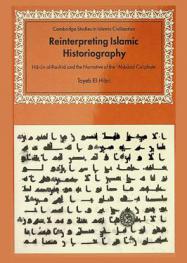
Reinterpreting Islamic Historiography
The history of the early 'Abbasid Caliphate has long been studied as a factual or interpretive synthesis of various accounts preserved in the medieval Islamic chronicles. Tayeb El-Hibri's book breaks with the traditional approach, applying a literary-critical reading to examine the lives of the caliphs. By focusing on the reigns of Harun al-Rashid and his successors, the study demonstrates how the various historical accounts were not in fact intended as faithful portraits of the past, but as allusive devices used to shed light on controversial religious, political and social issues of the period. The analysis also reveals how the exercise of decoding Islamic historigraphy, through an investigation of the narrative strategies and thematic motifs used in the chronicles, can uncover new layers of meaning and even identify the early narrators. This is an important book which represents a landmark in the field of early Islamic historiography.
eBook
Harun Al-Rashid and The Mecca Protocol Of 802: A plan For Division Or Succession?
The succession crisis and civil war that followed the death of Caliph Harun alRashid in 809 is a gloomy chapter in the history of the Abbasid caliphate in its prime that captured the attention of later medieval Muslim scholars. Their main challenge lay in trying to find an appropriate rationale for justifying the conflict between the caliph's sons, al-Amin and al-Maʾmun, and the fate of the community under a caliphate seized by force for the first time in the Abbasid era. The destruction wrought by the civil war on the capital, Baghdad, combined with the spread of factional strife to other provinces of the caliphate, presented an ethical and religious dilemma reminiscent to contemporaries of the early Islamic fitnas. Conscious of this parallel, the chronicler al-Tabari, writing a century later, devotes considerably more space to the years of the civil war than he does to the reigns of al-Rashid and al-Maʾmun that bracketed it.
Journal Article
Ṭabar's Biography of al-Mu῾taṣim. The literary Use of a Military Career
The reign of the ῾Abbsid caliph al-Mu῾taṣim (833842) is usually recognized among historians for its military character with the recruitment of new Turkic troops, the foundation of Smarr᾿ as a new capital, and the campaign against ᾿Ammriyya. Chronicle accounts about al-Mu῾taṣim, however, also hold potential as a topic for narrative criticism. This article analyzes the little examined use of military history for literary and allusive purposes by medieval narrators. The overall accomplishments of al-Mu῾taṣim were dramatized in the classical texts within a matrix of tensions that permeated his reign, including: the caliph's backing of the Miḥna while undertaking jihd against the Byzantines and the Khurramiyya, his sudden reversal for the fortunes of al-Afshn in spite of the latter's military skill, and the lingering mistrust between the ῾Alids and the ῾Abbsids, Persian officials and the Arab leadership. The article shows how the narratives of Ṭabar in particular display a careful construction which deployed these various dimensions as objects for readership reflection to varying degrees of criticism or support.
Journal Article