
Catalogue Search | MBRL


Are you sure you want to remove the book from the shelf?

{{itemTitle}}
59
result(s) for
"Kist, William"
Sort by:
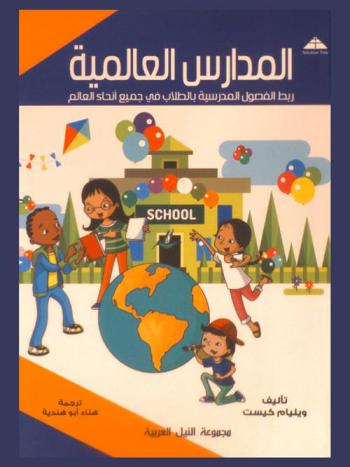
المدارس العالمية : ربط الفصول المدرسية بالطلاب في جميع أنحاء العالم
يقدم المؤلف في الكتاب لمعلمي القرن الحادي والعشرين خارطة طريق أساسية ترشدهم إلى كيفية تضمين التعليم العالمي في الفصل المدرسي، ولذلك يتضمن الكتاب أفكارا ومشروعات وخططا للدروس ومصادر واختبارات للتقييم، وهو ما يجعله مرجعا قيما للغاية. ويقدم المؤلف مرة أخرى وصفا للمعلمين الذين بدأوا في قيادة مسيرة إشراك طلابهم في عملية التفكير النقدي والعمل التعاوني والتواصل والكثير من الأنشطة الأخرى، فهذا الكتاب مفيد ومهم للجميع بدءا من مدرس الفصل إلى مدير المدرسة.
BOOK

The socially networked classroom
'A veritable smorgasbord of ideas and suggestions. This text grabbed me right away, and I started flagging all sorts of ideas even in the earliest chapters. It is as if Bill Kist met me in the hallway, took me by the hand, and simply said, 'Come here, I want to show you something' - Sheila M. Gragg, Technology Integration Coach Ashbury College, Canada 'I loved this book. I learned a great deal about 'texts' and about how to teach 'texts' to students in the digital age. But what was so compelling about this book was the genuineness of the author; he cares passionately about his students and passionately about the subject matter. As Dewey points out, effective education must have an emotional component; indeed, the book's credibility and authority derives from its core emotional energy' - Elliot Soloway, Arthur F. Thurnau Professor University of Michigan, Ann Arbor 'This book is totally compelling and geared to a slice of the teaching profession that is in desperate need of the kind of guidance and insight that Kist offers. By sharing his creative teaching methods, he points out the openings in teachers' practice where shift can happen' - Sue Collins, Integration Technology Specialist, Bedford Public Schools, MA Secondary school students are increasingly plugged in to social networking sites outside of school, but inside the classroom such functions of the web are often ignored. In The Socially Networked Classroom: Teaching in the New Media Age, William Kist identifies and documents the processes of teaching and learning via social networking in the new-media classroom. This book broadens the debate around what constitutes literacy as it tackles practical tasks for educators that include: - Documenting the assignments, assessments, and outcomes of instruction in networked classrooms - Categorizing the classrooms into levels of Web 2.0 applications - Illustrating how the new assignments can be used to address classic classroom questions
eBook
The global school
Prepare students for an increasingly flat world—a place where diverse people from divergent cultures learn and work together rather than in isolation. Learn specific steps to globalize your classroom, and move beyond the call for students to memorize material to instead encourage higher-order thinking. These ideas, assignments, projects, and assessments are all wrapped in a 21st century skills framework.
eBook

Life Moments in Texts: Analyzing Multimodal Memoirs of Preservice Teachers
This study features an analysis of more than 100 \"multimodal autobiographies\" that have been created as videos or PowerPoint presentations by preservice teachers during a seven-year period; trends in the data as well as implications for the preservice teachers' future practices are discussed.
Journal Article

Teaching the Common Core: Exit Tweets and Wiki Blue Books
As schools across the country are struggling to implement some kind of planned formative, interim, and summative assessments in response to the Common Core State Standards and a new generation of standardized tests, teachers are increasingly integrating various technology applications into their collection of assessments. This article describes existing examples of screen-based assessments that make use of mobile and multimodal formats to aid in all steps of the so-called “data-driven” cycle—collecting, analyzing, and acting upon what assessments tell us about our students. In addition, some creative applications of “new literacies” are suggested for each phase, suggesting that technology may allow classroom teachers substantial power that could be central, not peripheral, to the teaching and learning that goes on in their classrooms.
Journal Article
Exit Tweets and Wiki Blue Books: Assessment Possibilities
With approximately 62 percent of colleges offering at least one degree that can be earned entirely online (Sheehy, 2013), it is very likely that high school graduates will need to be able to navigate their learning for some courses and even entire majors completely in a screen-based environ- ment. [...]Dylan Wiliam (2011) describes a formative assessment in which small groups of students collaborate in coming up with one perfect answer to an AP exam question.
Journal Article

\I Gave Up MySpace for Lent\: New Teachers and Social Networking Sites
This Digital Literacies column describes the dilemma many new teachers feel as their uses of social networking sites pose conflicts with institutional cautions regarding educators' participation in these kinds of online activities. Pre-service teachers discuss the challenges of marrying their own out-of-school literacies to mandated professional literacies. Reactions to mandates regarding social networking sites run the gamut from defiance to, in a few cases, compliance with outright bans on participation in social networking sites. (Contains 3 resources.)
Journal Article
Remixing My Life: The Multimodal Literacy Memoir Assignment and STEM
The authors explore the experiences and multimodal compositions of a student at a STEM (science, technology, engineering, and mathematics) high school who opted to take an elective course on multimodal autobiography. They document how her meaning making included her beliefs and perspectives about the world, as well as a finely developed aesthetic sense.
Journal Article
Middle Schools and New Literacies: Looking Back and Moving Forward
This article synthesizes 15 years of research in middle school classrooms that have started to integrate new literacies into their daily teaching and learning. Trends of the data suggest there are certain salient characteristics of middle school teachers and students in these grade levels that make such innovations more successful with them than with other grade levels. The author suggests that the organizational plan of many middle schools may be one of the keys to allowing the integration of new literacies. A workshop template is offered that would allow innovation to continue even as most schools transition to the new Common Core English Language Arts standards. This template includes time for conducting mini-lessons; responding to teacher-selected texts and student-selected texts (both page-based and screen-based texts); writing and creating teacher-directed texts and student-directed texts (both page-based and screen-based texts); and time for exhibiting and archiving student work.
Journal Article
Leading Ourselves (Tweets Optional): AN ANALYSIS OF SELECTED TWITTER USERS
This paper describes an analysis of 21 adolescent literacy leaders' tweets over a total of four days. Coding of the tweets revealed that professional educators were tweeting about personal matters nearly as much as they are tweeting about educational matters. These tweeters also suggested resources, sent reports from events such as conferences, and made queries about classroom instruction. Documentation of the project includes a breakdown of tweeted topics by percentage. Implications for educators who want to develop Personal Learning Networks ( PLN ) are discussed. Free author podcast
Journal Article