
Catalogue Search | MBRL


Are you sure you want to remove the book from the shelf?

{{itemTitle}}
171
result(s) for
"Knight, Judith"
Sort by:

Occupational identity in later life
Occupational identity in later life represents a lifetime of occupational choices which encapsulate multiple meanings derived from the past and interpreted as a source of being in the present. Engaging in meaningful occupations has the potential to promote successful ageing, but health and declining capacities can influence that choice. The aim of this study was to explore the occupations that older people have engaged in during their lives, in particular, to discover how this influences occupational choice in later life. Ninety six people, aged 55 and over were recruited using local groups, organisations and communities of, or for older people. A survey questionnaire ascertained demographic and occupational data from this sample, which, largely concurred with national data. From those in the sample who had agreed to be interviewed, five women and three men aged between 64 and 92 were selected to reflect its diversity. A biographical approach was adopted and two to three in-depth interviews explored occupational life stories and the growth of occupational identity. Life chronologies provided a framework for narrative analysis of each biography which was followed by horizontal analysis to identify emerging themes. The findings demonstrate the considerable social changes that have occurred during the participants lives. Values, customs and occupational meaning gained early In life contributed to evolving occupational identity. Various factors such as family, class, gender and education for a young person in the 30's, 40's and 50's had a strong influence on opportunities and attainment in life. The gender imbalance In the years up to retirement, with men afforded greater opportunities than most of the women, was redressed after retirement with women having equal or greater occupational opportunity and choice than the men. Meaningful connection was the predominant form of meaning in both key occupations and daily routine, either through connection with the past self or 'being with' others in the present. A loss of occupational meaning, a state of 'being without' was identified following a major bereavement and new meaning was sought through occupations involving 'being with' others in an endeavour to accommodate a changed occupational identity. Finally the current conceptualisation of occupational identity reflects a western, but non-European, perspective, which this study demonstrated only pertained to the male participants, while the women demonstrated connectedness and interdependence. It is therefore important that the theoretical concept of occupational identity should in future include a notion of gender difference within it. A further study could explore a European perspective to ascertain if a gender difference exists in occupational identity for a younger cohort. Meanwhile, the findings from this study suggest that there is necessity for occupational therapists to promote occupation as part of the current drive for healthy ageing.
Dissertation

Red Eagle's Children
Red Eagle’s Children presents the legal proceedings in an inheritance dispute that serves as an unexpected window on the intersection of two cultural and legal systems: Creek Indian and Euro-American. Case 1299: Weatherford vs. Weatherford et al. appeared in the Chancery Court of Mobile in 1846 when William “Red Eagle” Weatherford’s son by the Indian woman Supalamy sued his half siblings fathered by Weatherford with two other Creek women, Polly Moniac and Mary Stiggins, for a greater share of Weatherford’s estate. While the court recognized William Jr. as the son of William Sr., he nevertheless lost his petition for inheritance due to the lack of legal evidence concerning the marriage of his biological mother to William Sr. The case, which went to the Alabama Supreme Court in 1851, provides a record of an attempt to interrelate and, perhaps, manipulate differences in cultures as they played out within the ritualized, arcane world of antebellum Alabama jurisprudence.   Although the case has value in the classic mold of salvage ethnography of Creek Indian culture, Red Eagle’s Children , edited by J. Anthony Paredes and Judith Knight, shows that its more enduring value lies in being a source for historical ethnography—that is, for anthropological analyses of cultural dynamics of the past events that complement the narratives of professional historians.   Contributors David I. Durham / Robbie Ethridge / Judith Knight / J. Anthony Paredes / Paul M. Pruitt Jr. / Nina Gail Thrower / Robert Thrower / Gregory A. Waselkov  
eBook

The interdependent relationships of organizational learning and leadership practices within school cultures
This study investigated the interdependent relationships of organizational learning and leadership within school cultures and how these three variables facilitate systemic change. This field of research is particularly relevant in today's turbulent times of educational change as each of these concepts has been viewed in the literature as the “key” to organizational change. As a comparative case study, this research involved three kindergarten to grade eight schools in a large school board in southern Ontario. Data collection techniques included a focus group interview with members of each School's Growth Team (SGT), individual interviews with the principal, and individual interviews with eight staff members (three on the SGT and five not on the Team). Results from the first level of coding identified the form and content of each school's culture, the leadership practices that were in place, and examples of single and double-loop learning. A second level of coding responded to the three research questions. Which conditions associated with school culture contribute most to organizational learning? Which leadership practices influence the nature of school culture? Which types of leadership practices contribute most to organizational learning? Causal maps were drawn to illustrate the relationships among culture, leadership, and organizational learning. Data indicate that collaborative cultures were predominant in all three schools. Certain cultural conditions fostered collaboration. Specifically, norms of mutual support, risk taking, sharing of ideas and resources, students coming first in deliberations and practices, and professional development were viewed as significant features of collaborative cultures. Leadership practices which impacted on the schools' collaborative cultures were: providing support, providing a vision, building culture, and modelling expected behaviours. In addition, certain traits and capacities impacted on the schools' cultures. Further, leadership practices which influenced organizational learning were: providing support, resources, and intellectual stimulation. Although each of the constructs of this research was seen as a critical component of the change process, evidence from the study suggested that one variable alone cannot facilitate change. Instead, a systemic approach to change, where internal coherence exists among all three variables, appeared to be a more realistic explanation for the intricacies of the successful implementation of change initiatives.
Dissertation
The Augusta Chronicle, Ga., Judith Knight column: Fisher House will fill vital need in community
Sep. 7--A unique connection exists among active-duty soldiers, veterans, Dwight D. Eisenhower Army Medical Center, Medical College of Georgia Hospital and the Uptown and Downtown divisions of the Charlie Norwood Veterans Affairs Medical Centers.
Newsletter
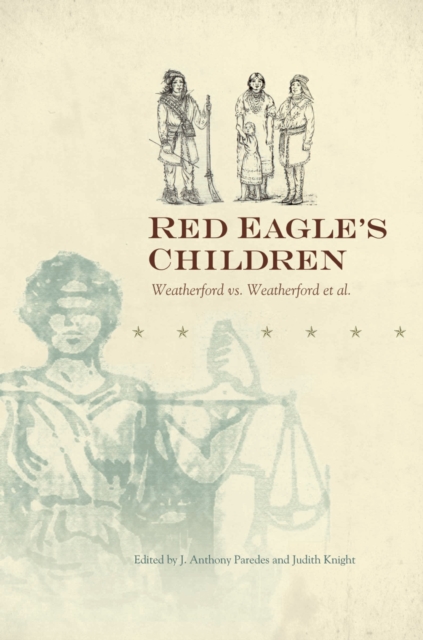
Red Eagle's Children
Red Eagle's Children presents the legal proceedings in an inheritance dispute that serves as an unexpected window on the intersection of two cultural and legal systems: Creek Indian and Euro-American.Case 1299: Weatherford vs.Weatherford et al.
eBook

The Early Development of Inferences about the Visual Percepts of Others
3 experiments assessed the ability of 2-5-year-old children to infer, under very simple task conditions, what another person sees when viewing something from a position other than the children's own. Some ability of this genre appears to exist by 2-3 years of age, at least. The data suggest a distinction between an earlier (Level 1) and a later (Level 2) developmental form of visual percept inference. At Level 1, S is capable of nonegocentrically inferring that O sees an object presently nonvisible to S himself. At Level 2, S is also capable of nonegocentrically inferring how an object that both currently see appears to O, that is, how it looks from his particular spatial perspective.
Journal Article

Network Centrality and Firm Innovation: A Social Network Analysis of the Monaghan Furniture Industry
This research seeks to empirically explore the relationship between the network positions assumed by firms and their capacity for innovation. Using social network analysis techniques this paper examines the effect of network centrality in inter-firm networks on the innovation performance of small firms. Looking at a network of furniture manufacturers, this paper provides a unique insight into the innovation and networking activities of firms within a low technology sector. In addition this paper explores the factors affecting the position a firm assumes within a network. The paper finds some evidence indicating a relationship between network centrality; firm size; strategy and absorptive capacity. The paper also finds evidence of a positive correlation between network degree centrality and firm innovation. [PUBLICATION ABSTRACT]
Conference Proceeding
