
Catalogue Search | MBRL


Are you sure you want to remove the book from the shelf?

{{itemTitle}}
13
result(s) for
"Mitchem, James"
Sort by:

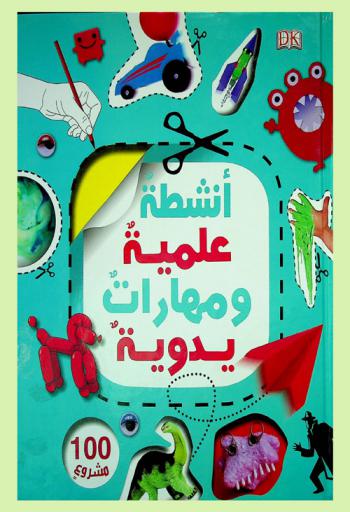
The big book of crafts & activities : grab your stuff and get creative!
\"This book is packed with crafts, recipes, games and activities for children who want to get creative and try new things\"--P. [4] of cover.
Book

Mitchem's back--and a Demon
IF MAINE GUARD Rick Carlisle had a vote in the polls, he would not cast it for De Paul as the No. 1 team in the country.
Newspaper Article

Injury may sideline Mitchem
De Paul's chances of winning the national basketball championship received a serious setback Tuesday when senior forward James Mitchem suffered a fracture of the fifth metacarpal bone on his left hand, just below the little finger.
Newspaper Article

Evaluation of a Tumor-Targeting, Near-Infrared Fluorescent Peptide for Early Detection and Endoscopic Resection of Polyps in a Rat Model of Colorectal Cancer
The goal of these studies was to use a tumor-targeting, near-infrared (NIR) fluorescent peptide to evaluate early detection and to guide surgical removal of polyps in a genetically engineered rat model of spontaneous colorectal cancer. This peptide, LS301, was conjugated to Cy7.5 and applied topically to the colon of adenoma-bearing Pirc rats. Ten minutes after administration, rats underwent targeted NIR laser colonoscopy. Rats were also evaluated by white light colonoscopy and narrow-band imaging, for comparison to the NIR technique. Unlike white light and narrow-band colonoscopy, NIR imaging detected unexpected flat lesions in young Pirc rats. NIR imaging was also used to assess resection margins after electrocauterization of polyps. Tumor margins remained negative at 5 weeks postsurgery, demonstrating successful polypectomy. The present studies show that NIR-targeted colonoscopy is an attractive strategy to improve screening for and resection of colorectal neoplasia.
Journal Article

Counting with a ladybug : explore the finger trails and cut-out shapes
Follow die-cut trails an go on a counting adventure! From one little ladybug with cutaway spots to ten yellow ducklings with tactile tummies, count and feel the garden friends in the animal-packed number rhyme.
Book

Climate research priorities for policy-makers, practitioners, and scientists in Georgia, USA
Climate change has far-reaching effects on human and ecological systems, requiring collaboration across sectors and disciplines to determine effective responses. To inform regional responses to climate change, decision-makers need credible and relevant information representing a wide swath of knowledge and perspectives. The southeastern U. S. State of Georgia is a valuable focal area for study because it contains multiple ecological zones that vary greatly in land use and economic activities, and it is vulnerable to diverse climate change impacts. We identified 40 important research questions that, if answered, could lay the groundwork for effective, science-based climate action in Georgia. Top research priorities were identified through a broad solicitation of candidate research questions (180 were received). A group of experts across sectors and disciplines gathered for a workshop to categorize, prioritize, and filter the candidate questions, identify missing topics, and rewrite questions. Participants then collectively chose the 40 most important questions. This cross-sectoral effort ensured the inclusion of a diversity of topics and questions (e.g., coastal hazards, agricultural production, ecosystem functioning, urban infrastructure, and human health) likely to be important to Georgia policy-makers, practitioners, and scientists. Several cross-cutting themes emerged, including the need for long-term data collection and consideration of at-risk Georgia citizens and communities. Workshop participants defined effective responses as those that take economic cost, environmental impacts, and social justice into consideration. Our research highlights the importance of collaborators across disciplines and sectors, and discussing challenges and opportunities that will require transdisciplinary solutions.
Journal Article

Establishing royal paulownia on the Virginia Piedmont
A study was established in the Virginia Piedmont to investigate theeffects of site preparation treatments (subsoiling and trenching) and the useofweed mats on royal paulownia survival and growth. Seedlings were monitored inthree study blocks for seven years. Following the seventh growing season,survival was low, ranging from 11% in the control plots to 27% in the trenchedplots. Plot volume index averaged 28,633 for the subsoil plots, while controlplots had an average plot volume index of 12,685. Weed mats significantlyincreased soil moisture from 18.7 to 20.4%. Likewise, weed mats significantlyimproved seedling survival after seven years, from 9% to 30%.[PUBLICATION ABSTRACT]
Journal Article

Compositional Analysis of Glazed Earthenwares from Eighteenth-Century Sites on the Northern Gulf Coast
Compositional classification of colonial-era ceramics using neutron activation analysis has heretofore focused primarily on majolicas from Spain and Mexico. In order to expand the chemical database to include 18th-century French ceramics, 186 sherds from Old Mobile and nearby sites on the north-central Gulf Coast have been analyzed, including faïence blanche, faïence brune, Mexican majolicas, and several types of coarse earthenwares. Quantitative analysis of 23 elements provides a basis for distinguishing French and Spanish-colonial earthenwares, as well as suggesting some preliminary chemical groupings of French faience.
Journal Article