
Catalogue Search | MBRL


هل أنت متأكد أنك تريد إزالة الكتاب من الرف؟

{{itemTitle}}
1,043
نتائج ل
"الأدب الألماني"
صنف حسب:


Die Literatur der 90er Jahre
In general, society, political and economic developments, social traditions are linked to literature and the latter is influenced by them. According to the scale and importance of perjury, literary trends, genres, and forms appear to be proportionate. This is also true of German literature, which deals with the major situations and events that result in a profound transformation of the political and social order and reflects them in a variety of creative works, particularly novels. This study illuminates the 1989-1990 events that resulted in the fall of Berlin Wall, the subsequent breakdown and collapse of the German Democratic Republic, the proclamation of unification with the Federal Republic of Germany, and the literary currents and trends that accompanied these events in Germany and its effects on East German writers, as well as the ongoing literary Germany- Germany struggle. This phenomenon was noteworthy in the history of German writing during this time and lasted for at least 10 years. It occupied the press and the media and served as inspiration for many aspiring young writers. The events of these years significantly influenced the emergence of new currents, including \"transformation literature\" or \"transformation novels,\" \"pop literature,\" \"immigrant literature,\" \"the wonder girl\" literature, and other currents, as well as a reversion to previously popular literary techniques and trends. The nineteenth and twentieth centuries witnessed, among other things, a resurgence of literary literature, which is evident in their works, particularly the novels. Additionally, writers addressed the issues of identity, the fall of the wall, and the renaissance of the myth, which they used to express the perception of reality.
Journal Article

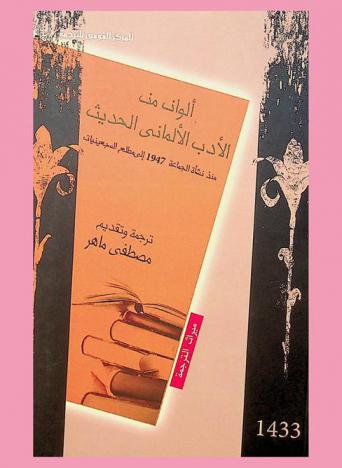
ألوان من الأدب الألماني الحديث : (منذ نشأة الجماعة (1947) إلى مطلع السبعينيات)
يختار هذا الكتاب من بين الأنواع الأدبية أربعة بعينها يوفيها حقها القصة والشعر والمقال والمناقشة ويختار من بين الأدباء، كلهم من الأحياء، إلا من مات منهم مؤخرا، وإن تفاوتت أعمارهم تفاوتا شديدا، فمنهم من ولد في مطلع القرن، أو في السنوات الأخيرة من القرن الماضي، وأكثرهم من مواليد العقد الثالث والرابع من قرننا الحالي. أما اتجاهاتهم الأدبية فتختلف إختلافا شديدا بعضها عن البعض الآخر، وإن استطعنا في أحوال غير قليلة أن نجد قاسما مشتركا بينها جميعا.
BOOK

Egomania, Self-Certainty, and Thinghood
This paper aims to read Rousseau's Julie, or the New Heloise and Goethe's The Sorrows of Young Werther in light of the Hegelian dialectic of lordship and bondage. The appreciation of these novels lies in the fact that they have triggered social changes, mutinous attitudes, most importantly, the socio-political emergence for the French Revolution. They are pragmatic texts that implicate certain purposes and ideological tenets toward social and cultural rejuvenations. Subsequently, Hegel's ideas of the \"struggle for recognition\" in subject-object relationship will be utilised to interpret the relationships between Julie and Saint-Preux, on one hand, and Lotte and Werther, on the other. These characters are determined by love and domination, their encounters as self-consciousnesses are analogised to the battle to death. Each consciousness endeavours to oblige their point of view on the other while extracting his/her recognition from that other. The self-consciousnesses of these characters are traced through three particular phases: confrontation as a position of power, recognition and acceptance. As roles of ascendency and captivity are ultimately reversed, the process reveals itself as constituted of the Hegelian stages of thesis, antithesis and synthesis.
Journal Article