
Catalogue Search | MBRL


Are you sure you want to remove the book from the shelf?

{{itemTitle}}
354
result(s) for
"American fiction 19th century History and criticism."
Sort by:

Reading the American novel 1865-1914
\"An indispensable tool for teachers and students of American literature, Reading the American Novel 1865-1914 provides a comprehensive introduction to the American novel in the post-civil war period. Locates American novels and stories within a specific historical and literary context Offers fresh analyses of key selected literary works Addresses a wide audience of academics and non-academics in clear, accessible prose Demonstrates the changing mentality of 19th-century America entering the 20th century Explores the relationship between the intellectual and artistic output of the time and the turbulent socio-political context\"-- Provided by publisher.
Book

London and the Making of Provincial Literature
In the early nineteenth century, London publishers dominated the transatlantic book trade. No one felt this more keenly than authors from Ireland, Scotland, and the United States who struggled to establish their own national literary traditions while publishing in the English metropolis. Authors such as Maria Edgeworth, Sydney Owenson, Walter Scott, Washington Irving, and James Fenimore Cooper devised a range of strategies to transcend the national rivalries of the literary field. By writing prefaces and footnotes addressed to a foreign audience, revising texts specifically for London markets, and celebrating national particularity, provincial authors appealed to English readers with idealistic stories of cross-cultural communion. From within the messy and uneven marketplace for books, Joseph Rezek argues, provincial authors sought to exalt and purify literary exchange. In so doing, they helped shape the Romantic-era belief that literature inhabits an autonomous sphere in society.
London and the Making of Provincial Literaturetells an ambitious story about the mutual entanglement of the history of books and the history of aesthetics in the first three decades of the nineteenth century. Situated between local literary scenes and a distant cultural capital, enterprising provincial authors and publishers worked to maximize success in London and to burnish their reputations and build their industry at home. Examining the production of books and the circulation of material texts between London and the provincial centers of Dublin, Edinburgh, and Philadelphia, Rezek claims that the publishing vortex of London inspired a dynamic array of economic and aesthetic practices that shaped an era in literary history.
eBook


Love in the Time of Revolution
In 1798, English essayist and novelist William Godwin ignited a transatlantic scandal withMemoirs of the Author of \"A Vindication of the Rights of Woman.\"Most controversial were the details of the romantic liaisons of Godwin's wife, Mary Wollstonecraft, with both American Gilbert Imlay and Godwin himself. Wollstonecraft's life and writings became central to a continuing discussion about love's place in human society. Literary radicals argued that the cultivation of intense friendship could lead to the renovation of social and political institutions, whereas others maintained that these freethinkers were indulging their own desires with a disregard for stability and higher authority. Through correspondence and novels, Andrew Cayton finds an ideal lens to view authors, characters, and readers all debating love's power to alter men and women in the world around them.Cayton argues for Wollstonecraft's and Godwin's enduring influence on fiction published in Great Britain and the United States and explores Mary Godwin Shelley's endeavors to sustain her mother's faith in romantic love as an engine of social change.
eBook

Literary experiments in magazine publishing : beyond serialisation
As the nineteenth century came to an end, a number of voices within the British and American magazine industries pushed back against serialisation as the dominant publication mode, experimenting instead with less conventional magazine formats. This book explores these formats, focusing (in particular) on the ways in which the periodical press first published 'The Adventures of Huckleberry Finn', 'The Picture of Dorian Gray' and 'The Return of Sherlock Holmes'.
Book
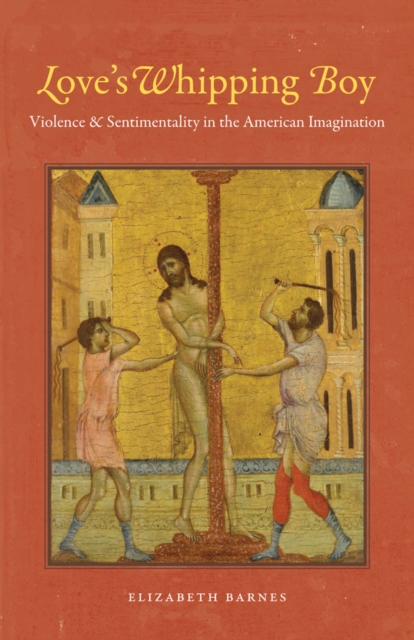
Love's Whipping Boy
Working to reconcile the Christian dictum to \"love one's neighbor as oneself\" with evidence of U.S. sociopolitical aggression, including slavery, corporal punishment of children, and Indian removal, Elizabeth Barnes focuses her attention on aggressors--rather than the weak or abused--to suggest ways of understanding paradoxical relationships between empathy, violence, and religion that took hold so strongly in nineteenth-century American culture.Looking at works by Herman Melville, Frederick Douglass, Nathaniel Hawthorne, and Louisa May Alcott, among others, Barnes shows how violence and sensibility work together to produce a more \"sensitive\" citizenry. Aggression becomes a site of redemptive possibility because salvation is gained when the powerful protagonist identifies with the person he harms. Barnes argues that this identification and emotional transformation come at a high price, however, as the reparative ends are bought with another's blood.Critics of nineteenth-century literature have tended to think about sentimentality and violence as opposing strategies in the work of nation-building and in the formation of U.S. national identity. Yet to understand how violence gets folded into sentimentality's egalitarian goals is to recognize, importantly, the deep entrenchment of aggression in the empathetic structures of liberal, Christian culture in the United States.
eBook


The Genius of Democracy
In the late nineteenth- and early twentieth-century United States, ideas of genius did more than define artistic and intellectual originality. They also provided a means for conceptualizing women's participation in a democracy that marginalized them. Widely distributed across print media but reaching their fullest development in literary fiction, tropes of female genius figured types of subjectivity and forms of collective experience that were capable of overcoming the existing constraints on political life. The connections between genius, gender, and citizenship were important not only to contests over such practical goals as women's suffrage but also to those over national membership, cultural identity, and means of political transformation more generally. InThe Genius of DemocracyVictoria Olwell uncovers the political uses of genius, challenging our dominant narratives of gendered citizenship. She shows how American fiction catalyzed political models of female genius, especially in the work of Louisa May Alcott, Henry James, Mary Hunter Austin, Jessie Fauset, and Gertrude Stein. From an American Romanticism that saw genius as the ability to mediate individual desire and collective purpose to later scientific paradigms that understood it as a pathological individual deviation that nevertheless produced cultural progress, ideas of genius provided a rich language for contests over women's citizenship. Feminist narratives of female genius projected desires for a modern public life open to new participants and new kinds of collaboration, even as philosophical and scientific ideas of intelligence and creativity could often disclose troubling and more regressive dimensions. Elucidating how ideas of genius facilitated debates about political agency, gendered identity, the nature of consciousness, intellectual property, race, and national culture, Olwell reveals oppositional ways of imagining women's citizenship, ways that were critical of the conceptual limits of American democracy as usual.
eBook

The Dream of the Great American Novel
The first book in many years to take in the full sweep of national fiction, The Dream of the Great American Novel explains why this supposedly antiquated idea continues to thrive. It shows that four G.A.N. \"scripts\" are keys to the dynamics of American literature and identity--and to the myth of a nation perpetually under construction.
eBook