
Catalogue Search | MBRL


Are you sure you want to remove the book from the shelf?

{{itemTitle}}
1,144
result(s) for
"Apparitions."
Sort by:

The night child : a novel
Nora Brown teaches high school English and lives a quiet life in Seattle with her husband and six-year-old daughter. But one November day, moments after dismissing her class, a girl's face appears above the students' desks and terror rushes through Nora's body. Twenty-four hours later, while on Thanksgiving vacation, the face appears again. Shaken and unsteady, Nora meets with neurologists and eventually, a psychiatrist. As the story progresses, a terrible secret is discovered--a secret that pushes Nora toward an even deeper psychological breakdown.
Book

An incurable past : Nasser's Egypt then and now
Mid-century Egypt seems to shift its shape in light of ordinary peoples’ memories. In An Incurable Past , Mériam Belli examines collective memory, oral histories, and everyday communications to reveal not just the history of mid-twentieth-century Egypt but also the ways in which ordinary people experience and remember the past. Using official archives, government publications, press reportage, fiction, textbooks, cinema, art, and public rituals, Belli constructs a ground-breaking theoretical framework of historical utterances which provokes questions about the relationship between remembrance and reality. Belli argues that such personal testimonies and public representations allow us a deeper understanding of Egypt’s many sociocultural layers in the 1950s and 1960s. She spotlights three topics of vernacular expression in modern Egypt: education, the anti-colonial Limby Festival, and the 1968 apparition of the Virgin Mary at a Coptic Orthodox Church in Cairo. Linked by the mid-century shift from communal life to an industrial and individuated society, these expressions also disclose the contradictory influence of ideologically homogenizing state policies.
Examining history not as it was but as it is remembered, this book contextualizes the classist and deeply disappointing post-Nasserist period that has inspired today’s Egyptian revolutionaries.
eBook

The ghost in the tree house
A group of girls in Claires town have noticed strange sights and sounds coming from the tree house where their club meets. Is it a rival boys club trying to scare them away? Or is it a ghost? The girls ask Claire to tackle the mystery--and Kaz hopes to finally find the rest of his missing family members!
Book

Apparitions of Virgin Mary: Sociological Analysis
The main purpose of this article is to discuss the social aspects of the apparitions of the Virgin Mary, the development of apparition places, as well as the motivation and behavioral characteristics of pilgrims going to the miraculous places of the Virgin Mary in Lithuania. The article reviews the criteria recognized by the Church for assessment of the authenticity of apparitions, their characteristics, paradigm, and other scientific researches, a list of the Vatican-approved apparitions and apparition places in Lithuania. We used the main elements of the paradigm of apparitions for an empirical study of the officially recognized apparition in Šiluva, Lithuania. Finally, we also explore the complex motivation of religious tourism and pilgrimage. It relates to the manifestation of pilgrims’ personal or community values and identity as well as other cognitive or social motives. The paper concludes that the apparitions of the Virgin Mary take place in locations where social groups resist political, social, or moral change. Therefore, places of apparitions become a continuously re-created and re-interpreted social reality.
Journal Article

Shutter
Seventeen-year-old MIcheline Helsing is a tetrachcromat, able to see ghosts in color and capture them on film. But when a routine hunt goes awry, Micheline is infected with a curse known as a soulchain .If she is unable to exorcise the entity in seven days, she will be destroyed, body and soul.
Book

Our Lady of the Rock
For more than twenty years, Maria Paula Acuña has claimed to see the Virgin Mary, once a month, at a place called Our Lady of the Rock in the Mojave Desert of California. Hundreds of men, women, and children follow her into the desert to watch her see what they cannot. While she sees and speaks with the Virgin, onlookers search the skies for signs from heaven, snapping photographs of the sun and sky. Not all of them are convinced that Maria Paula can see the Virgin, yet at each vision event they watch for subtle clues to Mary's presence, such as the unexpected scent of roses or a cloud in the shape of an angel. The visionary depends on her audience to witness and authenticate her visions, while observers rely on Maria Paula and the Virgin to create a sacred space and moment where they, too, can experience firsthand one of the oldest and most fundamental promises of Christianity: direct contact with the divine. Together, visionary and witnesses negotiate and enact their monthly liturgy of revelations.
Our Lady of the Rock, which features text by Lisa M. Bitel and more than sixty photographs by Matt Gainer, shows readers what happens in the Mojave Desert each month and tells us how two thousand years of Christian revelatory tradition prepared Maria Paula and her followers to meet in the desert. Based on six years of observation and interviews, chapters analyze the rituals, iconographies, and physical environment of Our Lady of the Rock. Bitel and Gainer also provide vivid portraits of the pilgrims-who they are, where they come from, and how they practice the traditional Christian discernment of spirits and visions.
Our Lady of the Rockfollows three pilgrims as they return home with relics and proofs of visions where, out of Maria Paula's sight, they too have learned to see the Virgin. The book also documents the public response from the Catholic Church and popular news media to Maria Paula and other contemporary visionaries. Throughout,Our Lady of the Rocklocates Maria Paula and her followers in the context of recent demographic and cultural shifts in the American Southwest, the astonishing increase in reported apparitions and miracles from around the world, the latest developments in communications and visual technologies, and the never-ending debate among academics, faith leaders, scientists, and citizen observers about sight, perception, reason, and belief.
eBook

The secret room
Now that Kaz can finally pass through walls without feeling all \"skizzy,\" he can go explore Beckett's secret room at the back of the library. What he finds there is a mystery he never expected!
Book
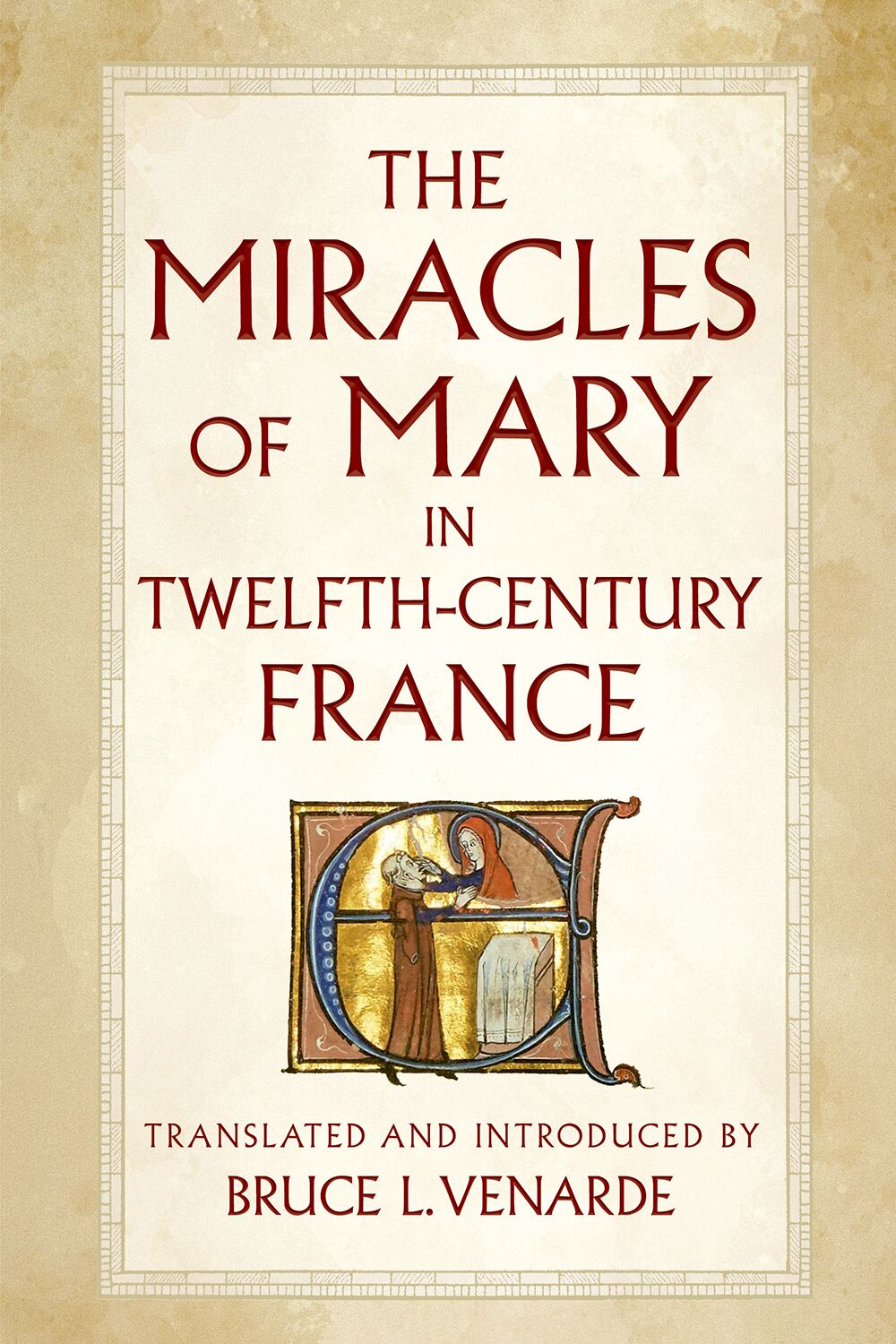
The Miracles of Mary in Twelfth-Century France
Murder in a cathedral, horrific illnesses and
deformities, narrow escapes from injury and death, a vengeful
dragon, a wandering eyeball, a bawdy monk and other sinners
redeemed-the accounts of miracles performed by the Virgin Mary
gathered and translated in The Miracles of
Mary in Twelfth-Century France provide vivid
glimpses into medieval life and beliefs. Bruce L. Venarde
provides fluent translations of the first five collections of
Marian miracle narratives from France, written in the second
quarter of the twelfth century and never before available in
English.
The stories recorded in these collections-by Herman of Tournai;
Hugh Farsit; Haimo of Saint-Pierre-sur-Dives; John, son of Peter;
and Gautier of Compiègne-offer descriptions of travel, living
conditions, medical knowledge, conflict between and among lay and
religious authorities, and the burgeoning cult of the Virgin Mary,
which had only recently become important in Western Europe.
Including notes, tables, and maps that orient and illuminate the
texts, The Miracles of Mary in Twelfth-Century France
makes these riveting tales available to readers seeking a view into
the medieval past.
eBook


Guadalupan Nahua Stories: An Analysis of the Inner Indigenous Influence in Nahuatl Accounts of Guadalupe
The historical debate over the apparitions’ historicity has overshadowed the beauty of the Guadalupe message. An understudied aspect warrants further analysis: the Indigenous interpretations and background of the Nahua stories of Our Lady of Guadalupe. In this paper, I will analyze the inner Indigenous Nahua meanings of the following Guadalupe Accounts: Nican Mopohua, Tepoanxcuicatl, Inin Hueitlamahuilzoltzin, and Relación Mercuriana. The sources will be studied in the context of Nahuatl literature, particularly the Nican Mopohua, in comparison with the Cantares Mexicanos (Songs of the Aztecs) and the Romances (Ballads of the Lords of New Spain). This work will complement Timothy Matovina’s scholarship on indigenous devotion and on the Indigenous interpretation of the Image. Therefore, the three sources of Guadalupan knowledge (Image, devotion, and the story) could be read through a Nahua-Indigenous lens. This piece will close the gap in the story source, arguing for the “nahuatization of Christianity” and presenting the extent of the Nahua worldview’s influence on Colonial Christianity.
Journal Article