
Catalogue Search | MBRL


Are you sure you want to remove the book from the shelf?

{{itemTitle}}
3,570
result(s) for
"COOKING / General."
Sort by:

Falafel Nation
When people discuss food in Israel, their debates ask politically charged questions: Who has the right to falafel? Whose hummus is better? But Yael Raviv'sFalafel Nationmoves beyond the simply territorial to divulge the role food plays in the Jewish nation. She ponders the power struggles, moral dilemmas, and religious and ideological affiliations of the different ethnic groups that make up the \"Jewish State\" and how they relate to the gastronomy of the region. How do we interpret the recent upsurge in the Israeli culinary scene-the transition from ideological asceticism to the current deluge of fine restaurants, gourmet stores, and related publications and media?
Focusing on the period between the 1905 immigration wave and the Six-Day War in 1967, Raviv explores foodways from the field, factory, market, and kitchen to the table. She incorporates the role of women, ethnic groups, and different generations into the story of Zionism and offers new assertions from a secular-foodie perspective on the relationship between Jewish religion and Jewish nationalism. A study of the changes in food practices and in attitudes toward food and cooking,Falafel Nationexplains how the change in the relationship between Israelis and their food mirrors the search for a definition of modern Jewish nationalism.
eBook

A History of Cookbooks
A History of Cookbooks provides a sweeping literary and historical overview of the cookbook genre, exploring its development as a part of food culture beginning in the Late Middle Ages. Studying cookbooks from various Western cultures and languages, Henry Notaker traces the transformation of recipes from brief notes with ingredients into detailed recipes with a specific structure, grammar, and vocabulary. In addition, he reveals that cookbooks go far beyond offering recipes: they tell us a great deal about nutrition, morals, manners, history, and menus while often providing entertaining reflections and commentaries. This innovative book demonstrates that cookbooks represent an interesting and important branch of nonfiction literature.
eBook

Cuisine and empire
Rachel Laudan tells the remarkable story of the rise and fall of the world’s great cuisines—from the mastery of grain cooking some twenty thousand years ago, to the present—in this superbly researched book. Probing beneath the apparent confusion of dozens of cuisines to reveal the underlying simplicity of the culinary family tree, she shows how periodic seismic shifts in “culinary philosophy”—beliefs about health, the economy, politics, society and the gods—prompted the construction of new cuisines, a handful of which, chosen as the cuisines of empires, came to dominate the globe. Cuisine and Empire shows how merchants, missionaries, and the military took cuisines over mountains, oceans, deserts, and across political frontiers. Laudan’s innovative narrative treats cuisine, like language, clothing, or architecture, as something constructed by humans. By emphasizing how cooking turns farm products into food and by taking the globe rather than the nation as the stage, she challenges the agrarian, romantic, and nationalistic myths that underlie the contemporary food movement.
eBook

The Expert Cook in Enlightenment France
In the eighteenth-century French household, the servant cook held a special place of importance, providing daily meals and managing the kitchen and its finances. In this scrupulously researched and witty history, Sean Takats examines the lives of these cooks as they sought to improve their position in society and reinvent themselves as expert, skilled professionals. Much has been written about the cuisine of the period, but Takats takes readers down into the kitchen and introduces them to the men and women behind the food. It is only in that way, Takats argues, that we can fully recover the scientific and cultural significance of the meals they created, and, more important, the contributions of ordinary workers to eighteenth-century intellectual life. He shows how cooks, along with decorators, architects, and fashion merchants, drove France's consumer revolution, and how cooks' knowledge about a healthy diet and the medicinal properties of food advanced their professional status by capitalizing on the Enlightenment's new concern for bodily and material happiness. The Expert Cook in Enlightenment France explores a unique intersection of cultural history, labor history, and the history of science and medicine. Relying on an unprecedented range of sources, from printed cookbooks and medical texts to building plans and commercial advertisements, Takats reconstructs the evolving role of the cook in Enlightenment France. Academics and students alike will enjoy this fascinating study of the invention of the professional chef, of how ordinary workers influenced emerging trends of scientific knowledge, culture-creation, and taste in eighteenth-century France.
eBook
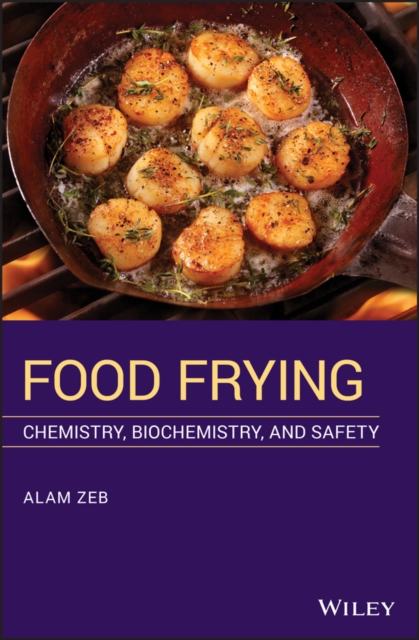
Food Frying
A wide-ranging exploration of the science and practice of food frying Frying is one of the world's most popular methods of food preparation. Whether using oils or fats, it is valued for the particular flavors and textures it can bring, and represents a multibillion-dollar sector of the global economy. Food Frying: Chemistry, Biochemistry and Safety explores this important cooking technique in its scientific dimensions, charting the relationships between the chemical reactions produced during frying, the changes in food quality that these engender, and associated digestive and health-related issues. By outlining these connections, the author provides an aid to a safer, healthier approach to food frying. Topics covered range from culturally specific forms of frying to detailed analyses of the chemical and biochemical processes involved in its practice. Delivering these insights in a practical and easy-to-follow manner, this unique text includes: * A complete survey of food frying, encompassing cultural, chemical, biochemical, and toxicological concerns * Guidance on the accurate assessment of health, quality, and safety issues associated with food frying Coverage of the latest technologies and methods involved with frying * Information on the possible future development of fried foods Food Frying: Chemistry, Biochemistry and Safety is an invaluable resource for all those who work with fried foods, whether they be food industry professionals, food scientists, or workers in the oil and fat industries.
eBook

Tastes of Faith
\"Tell me what you eat, and I will tell you what you are,\" wrote the eighteenth-century French politician and musician Jean Brillat-Savarin, giving expression to long held assumptions about the role of food, taste, and eating in the construction of cultural identities. Foodways-the cultural, religious, social, economic, and political practices related to food consumption and production-unpack and reveal the meaning of what we eat, our tastes. They explain not just our flavor profiles, but our senses of refinement and judgment. They also reveal quite a bit about the history and culture of how food operates and performs in society. Jewish food practices and products expose and explain how different groups within American society think about what it means to be Jewish and the values (as well as the prejudices) people have about what \"Jewish\" means. Food-what one eats, how one eats it, when one eats it-is a fascinating entryway into identity; for Jews, it is at once a source of great nostalgia and pride, and the central means by which acculturation and adaptation takes place. In chapters that trace the importance and influence of the triad of bagels, lox, and cream cheese, southern kosher hot barbecue, Jewish vegetarianism, American recipes in Jewish advice columns, the draw of eating treyf (nonkosher), and the geography of Jewish food identities, this volume explores American Jewish foodways, predilections, desires, and presumptions.
eBook

Should we eat meat?
Meat eating is often a contentious subject, whether considering the technical, ethical, environmental, political, or health-related aspects of production and consumption. This book is a wide-ranging and interdisciplinary examination and critique of meat consumption by humans, throughout their evolution and around the world. Setting the scene with a chapter on meat's role in human evolution and its growing influence during the development of agricultural practices, the book goes on to examine modern production systems, their efficiencies, outputs, and impacts. The major global trends of meat consumption are described in order to find out what part its consumption plays in changing modern diets in countries around the world. The heart of the book addresses the consequences of the \"massive carnivory\" of western diets, looking at the inefficiencies of production and at the huge impacts on land, water, and the atmosphere. Health impacts are also covered, both positive and negative. In conclusion, the author looks forward at his vision of \"rational meat eating\", where environmental and health impacts are reduced, animals are treated more humanely, and alternative sources of protein make a higher contribution. Should We Eat Meat? is not an ideological tract for or against carnivorousness but rather a careful evaluation of meat's roles in human diets and the environmental and health consequences of its production and consumption. It will be of interest to a wide readership including professionals and academics in food and agricultural production, human health and nutrition, environmental science, and regulatory and policy making bodies around the world.
eBook

Culinary Colonialism, Caribbean Cookbooks, and Recipes for National Independence
Women across the Caribbean have been writing, reading, and
exchanging cookbooks since at least the turn of the nineteenth
century. These cookbooks are about much more than cooking. Through
cookbooks, Caribbean women, and a few men, have shaped, embedded,
and contested colonial and domestic orders, delineated the contours
of independent national cultures, and transformed tastes for
independence into flavors of domestic autonomy. Culinary
Colonialism, Caribbean Cookbooks, and Recipes for National
Independence integrates new documents into the Caribbean
archive and presents them in a rare pan-Caribbean perspective. The
first book-length consideration of Caribbean cookbooks,
Culinary Colonialism joins a growing body of work in
Caribbean studies and food studies that considers the intersections
of food writing, race, class, gender, and nationality. A selection
of recipes, culled from the archive that Culinary
Colonialism assembles, allows readers to savor the confluence
of culinary traditions and local specifications that connect and
distinguish national cuisines in the Caribbean.
eBook

Taste as experience
Taste as Experienceputs the pleasure of food at the center of human experience. It shows how the sense of taste informs our preferences for and relationship to nature, pushes us toward ethical practices of consumption, and impresses upon us the importance of aesthetics. Eating is often dismissed as a necessary aspect of survival, and our personal enjoyment of food is considered a quirk. Nicola Perullo sees food as the only portion of the world we take in on a daily basis, constituting our first and most significant encounter with the earth.
Perullo has long observed people's food practices and has listened to their food experiences. He draws on years of research to explain the complex meanings behind our food choices and the thinking that accompanies our gustatory actions. He also considers our indifference toward food as a force influencing us as much as engagement. For Perullo, taste is value and wisdom. It cannot be reduced to mere chemical or cultural factors but embodies the quality and quantity of our earthly experience.
eBook

From Cooking Vessels to Cultural Practices in the Late Bronze Age Aegean
Late Bronze Age Aegean cooking vessels illuminate prehistoric cultures, foodways, social interactions, and communication systems. While many scholars have focused on the utility of painted fineware vessels for chronological purposes, the contributors to this volume maintain that cooking wares have the potential to answer not only chronological but also economic, political, and social questions when analysed and contrasted with assemblages from different sites or chronological periods. The text is dedicated entirely to prehistoric cooking vessels, compiles evidence from a wide range of Greek sites and incorporates new methodologies and evidence. The contributors utilise a wide variety of analytical approaches and demonstrate the impact that cooking vessels can have on the archaeological interpretation of sites and their inhabitants. These sites include major Late Bronze Age citadels and smaller settlements throughout the Aegean and surrounding Mediterranean area, including Greece, the islands, Crete, Italy, and Cyprus. In particular, contributors highlight socio-economic connections by examining the production methods, fabrics and forms of cooking vessels. Recent improvements in excavation techniques, advances in archaeological sciences, and increasing attention to socioeconomic questions make this is an opportune time to renew conversations about and explore new approaches to cooking vessels and what they can teach us.
eBook