
Catalogue Search | MBRL


Are you sure you want to remove the book from the shelf?

{{itemTitle}}
4,451
result(s) for
"Civilization, Medieval"
Sort by:

Whose Middle Ages? : teachable moments for an ill-used past
\"Whose Middle Ages? is an interdisciplinary collection of short, accessible essays intended for the nonspecialist reader and ideal for teaching at an undergraduate level. Each of twenty-two essays takes up an area where digging for meaning in the medieval past has brought something distorted back into the present: in our popular entertainment; in our news, our politics, and our propaganda; and in subtler ways that inform how we think about our histories, our countries, and ourselves. Each author looks to a history that has refused to remain past and uses the tools of the academy to read and re-read familiar stories, objects, symbols, and myths\"-- Provided by publisher.
Book

Visions and ruins
This book is a study of cultural memory in and of the British Middle Ages. It works with material drawn from across the medieval period – in Old English, Middle English and Latin, as well as material and visual culture – and explores modern translations, reworkings and appropriations of these texts to examine how images of the past have been created, adapted and shared. It interrogates how cultural memory formed, and was formed by, social identities in the Middle Ages and how ideas about the past intersected with ideas about the present and future. It also examines how the presence of the Middle Ages has been felt, understood and perpetuated in modernity and the cultural possibilities and transformations this has generated. The Middle Ages encountered in this book is a site of cultural potential, a means of imagining the future as well as imaging the past.The scope of this book is defined by the duration of cultural forms rather than traditional habits of historical periodization and it seeks to reveal connections across time, place and media to explore the temporal complexities of cultural production and subject formation. It reveals a transtemporal and transnational archive of the modern Middle Ages.
eBook

Medieval life
An illustrated look at various aspects of life in medieval Europe, covering everyday life, religion, royalty, and more.
Book

The Medieval Culture of Disputation
Scholastic disputation, the formalized procedure of debate in the medieval university, is one of the hallmarks of intellectual life in premodern Europe. Modeled on Socratic and Aristotelian methods of argumentation, this rhetorical style was refined in the monasteries of the early Middle Ages and rose to prominence during the twelfth-century Renaissance. Strict rules governed disputation, and it became the preferred method of teaching within the university curriculum and beyond. In The Medieval Culture of Disputation, Alex J. Novikoff has written the first sustained and comprehensive study of the practice of scholastic disputation and of its formative influence in multiple spheres of cultural life.Using hundreds of published and unpublished sources as his guide, Novikoff traces the evolution of disputation from its ancient origins to its broader impact on the scholastic culture and public sphere of the High Middle Ages. Many examples of medieval disputation are rooted in religious discourse and monastic pedagogy: Augustine's inner spiritual dialogues and Anselm of Bec's use of rational investigation in speculative theology laid the foundations for the medieval contemplative world. The polemical value of disputation was especially exploited in the context of competing Jewish and Christian interpretations of the Bible. Disputation became the hallmark of Christian intellectual attacks against Jews and Judaism, first as a literary genre and then in public debates such as the Talmud Trial of 1240 and the Barcelona Disputation of 1263. As disputation filtered into the public sphere, it also became a key element in iconography, liturgical drama, epistolary writing, debate poetry, musical counterpoint, and polemic. The Medieval Culture of Disputation places the practice and performance of disputation at the nexus of this broader literary and cultural context.
eBook

The civilization of the Middle Ages : a completely revised and expanded edition of Medieval history, the life and death of a civilization
Surveys the history of the Middle Ages, describes the most influential political and social forces, and looks at everyday life.
BOOK
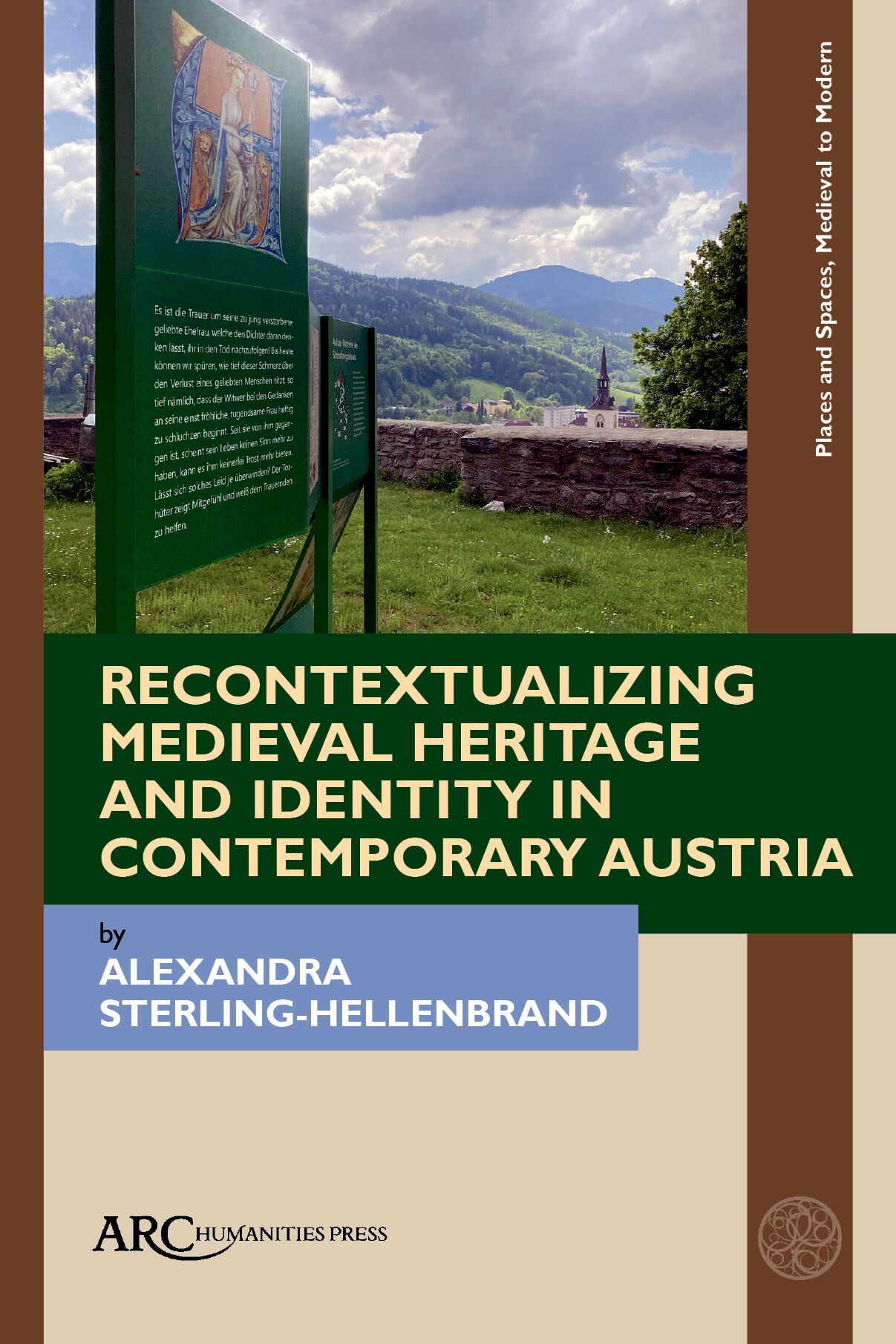
Recontextualizing Medieval Heritage and Identity in Contemporary Austria
This book explores ways in which the medieval narrative past has been re-imagined in contemporary Austria. Focusing on the Styrian Literature Pathways of the Middle Ages, the Nibelung monuments in the cities of Tulln and Pöchlarn on the Danube River, and the Siegfriedskopf at the University of Vienna, it argues that each installation constructively applies medievalism to the process of working through the twentieth-century past. Sterling-Hellenbrand uncovers how medieval texts have been re-created in the Austrian landscape and how public installations make visible the values of the communities that build them. The author demonstrates how these modern installations facilitate an innovative process of engaged remembering: they prompt us to initiate challenging conversations about the past to tell different stories for the future.
eBook

The legend of Broken
Some years ago, a remarkable manuscript long rumored to exist was discovered: The Legend of Broken. It tells of a prosperous fortress city where order reigns at the point of a sword--even as scheming factions secretly vie for control of the surrounding kingdom. Meanwhile, outside the city's granite walls, an industrious tribe of exiles known as the Bane forages for sustenance in the wilds of Davon Wood. At every turn, the lives of Broken's defenders and its would-be destroyers intertwine: Sixt Arnem, the widely respected and honorable head of the kingdom's powerful army, grapples with his conscience and newfound responsibilities amid rumors of impending war. Lord Baster-kin, master of the Merchants' Council, struggles to maintain the magnificence of his kingdom even as he pursues vainglorious dreams of power. And Keera, a gifted female tracker of the Bane tribe, embarks on a perilous journey to save her people, enlisting the aid of the notorious and brilliant philosopher Caliphestros. Together, they hope to exact a ruinous revenge on Broken, ushering in a day of reckoning when the mighty walls will be breached forever in a triumph of science over superstition.
Book

The Intellectual Dynamism of the High Middle Ages
The essays in The Intellectual Dynamism of the High Middle Ages pay tribute to the work and impact of Constant J. Mews, in spirit and in content, revealing a nuanced and integrated vision of the intellectual history of the medieval West. Mews's groundbreaking work has revealed the wide world of medieval letters: looking beyond the cathedral and the cloister for his investigations, and taking a broad view of intellectual practice in the Middle Ages, Mews has demanded that we expand our horizons as we explore the history of ideas. Alongside his cutting-edge work on Abelard, he has been a leader in the study of medieval women writers, paying heed to Hildegard and Heloise in particular. In Mews' Middle Ages, the world of ideas always belongs to a larger world: one that is cultural, gendered, and politicized.
eBook


Medieval Perceptions of Magic, Science, and the Natural World
This volume presents new research in medieval conceptions of magic, science, and the natural world, bringing not only medicine but also meteorology and navigation into the discussion. Ground-breaking theoretical chapters on theology, natural sciences, and the writing of history are presented by established experts in their fields. These are accompanied by case studies of interactions between magic, science, and natural philosophy. Each chapter offers new findings while contributing to a comprehensive survey of the shifting boundaries between natural and supernatural across both space and time. Emerging areas, such as the study of prognostics, are represented by challenging new work. This collection will prove fascinating to everyone engaging with this expanding field.
eBook