
Catalogue Search | MBRL


Are you sure you want to remove the book from the shelf?

{{itemTitle}}
1,174
result(s) for
"Colonies Economic conditions."
Sort by:

The starving empire : a history of famine in France's colonies
\"This book is a history of famine in the modern French Empire. It considers food crises in Algeria, West and Equatorial Africa, and Indochina to show how the French colonial state and the international community took increasing responsibility for subsistence, and ultimately failed to fulfill this responsibility\"-- Provided by publisher.
BOOK

Imperial expectations and realities
This volume explores how imperial powers established and expanded their empires through decisions that were often based on exaggerated expectations and wishful thinking, rather than on reasoned and scientific policies. It explores these exaggerations through the concepts of El Dorado, utopias and dystopias – undertakings based on irrational perceived values – in case studies from across the sixteenth to the twentieth centuries, and incorporates imperial traditions including Scottish, British, French, German, Italian and American. Various colonial spaces are considered, from the Mediterranean, Middle East, Africa, Australia, Asia and the Americas, and in doing so, the contributors offer new insights into the nature of imperialism and colonial settlement.
eBook


The Starving Empire
The Starving Empire traces the history of famine in the modern French Empire, showing that hunger is intensely local and sweepingly global, shaped by regional contexts and the transnational interplay of ideas and policies all at once. By integrating food crises in Algeria, West and Equatorial Africa, and Vietnam into a broader story of imperial and transnational care, Yan Slobodkin reveals how the French colonial state and an emerging international community took increasing responsibility for subsistence, but ultimately failed to fulfill this responsibility. Europeans once dismissed colonial famines as acts of god, misfortunes of nature, and the inevitable consequences of backward races living in harsh environments. But as Slobodkin recounts, drawing on archival research from four continents, the twentieth century saw transformations in nutrition, scientific racism, and international humanitarianism that profoundly altered ideas of what colonialism could accomplish. A new confidence in the ability to mitigate hunger, coupled with new norms of moral responsibility, marked a turning point in the French Empire's relationship to colonial subjects—and to nature itself. Increasingly sophisticated understandings of famine as a technical problem subject to state control saddled France with untenable obligations. The Starving Empire not only illustrates how the painful history of colonial famine remains with us in our current understandings of public health, state sovereignty, and international aid, but also seeks to return food—this most basic of human needs—to its central place in the formation of modern political obligation and humanitarian ethics.
eBook


Dutch Commerce and Chinese Merchants in Java
Dutch Commerce and Chinese Merchants in Javadescribes the vanished commercial world of colonial Java. Alexander Claver shows the challenges of a demanding business environment by highlighting trade and finance mechanisms, and the relationships between the participants involved.
eBook

Sovereignty and revolution in the Iberian Atlantic
An account of Spain's and Portugal's empires in the age of revolutions, this book argues that modern notions of sovereignty in the Atlantic world have been unstable, contested, and equivocal from the start.
Book


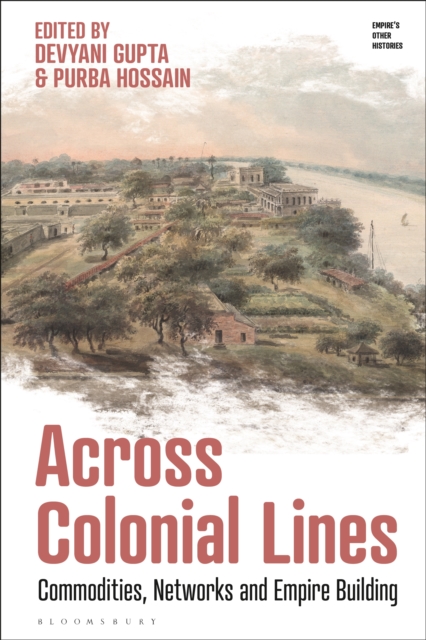
Across Colonial Lines
Across Colonial Lines takes a multi-perspective approach to the study of empire and commodities, and encourages readers to look at commodity histories in alternative spatial and temporal contexts.It offers a comparative understanding of commodities in the Venetian, Portuguese, Dutch, French and British Empires.
eBook