
Catalogue Search | MBRL


Are you sure you want to remove the book from the shelf?

{{itemTitle}}
317
result(s) for
"Egypt Fiction."
Sort by:
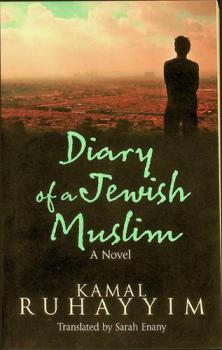
Diary of a Jewish Muslim
Egyptian Muslims and Jews were not always at odds. Before the Arab-Israeli wars, before the mass exodus of Jews from Egypt, there was harmony. Spanning the 1930s to the 1960s, this sweeping novel accompanies Galal, a young boy with a Jewish mother and a Muslim father, through his childhood and boyhood in a vibrant popular quarter of Cairo. With his schoolboy crushes and teen rebellions, Galal is deeply Egyptian, knit tightly into the middle-class fabric of manners, morals, and traditions that cheerfully incorporates and transcends religion -- a fabric about to be torn apart by a bigger world of politics that will put Galal's very identity to the test.
BOOK

Remembering Cosmopolitan Egypt
Remembering Cosmopolitan Egypt examines the link between cosmopolitanism in Egypt, from the nineteenth century through to the mid-twentieth century, and colonialism. While it has been widely noted that such a relationship exists, the nature and impact of this dynamic is often overlooked. Taking a theoretical, literary and historical approach, the author argues that the notion of the cosmopolitan is inseparable from, and indebted to, its foundation in empire.
Since the late 1970s a number of artistic works have appeared that represent the diversity of ethnic, national, and religious communities present in Egypt in the nineteenth and early twentieth centuries. During this period of direct and indirect European domination, the cosmopolitan society evident in these texts thrived. Through detailed analysis of these texts, which include contemporary novels written in Arabic and Hebrew as well as Egyptian films, the implications of the close relationship between colonialism and cosmopolitanism are explored.
This comparative study of the contemporary literary and cultural revival of interest in Egypt’s cosmopolitan past will be of interest to students of Middle Eastern Studies, Literary and Cultural Studies and Jewish Studies.
Introduction Part 1: Colonial Anxieties and Cosmopolitan Desires 1. Literary Alexandria 2. Poetics of Memory: Edwar al-Kharrat 3. Polis and Cosmos: Ibrahim Abdel Meguid Part 2: Counterpoint New York 4. Why New York?: Youssef Chahine Part 3: A Mobile Levant 5. Gazing Across Sinai 6. A Mediterranean Vigor that Never Wanes: Yitzhaq Gormezano Goren 7. Unmasking Levantine Blindness: Ronit Matalon. Conclusion
Deborah A. Starr is Associate Professor of Modern Arabic and Hebrew Literature at Cornell University. Her research and teaching interests include contemporary literature and film, minorities of the Middle East, cosmopolitanism, postcolonial studies, and urban studies.
\"[An] incisive study, which clearly establishes the fact that the phenomenon of cosmopolitanism could be both historical and ahistorical—a binary that is by no means contradictory, and can in fact be deployed to foster harmony in contemporary diversities in which ‘adversarial discourse’ (p. 149) dominates. All students of history and theorists on political ideas will forever be beholden to this remarkable effort by Starr.\" - Amidu Olalekan Sanni, Lagos State University, Nigeria; British Journal of Middle Eastern Studies, 39:1
eBook
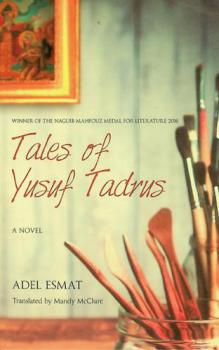
Tales of Yusuf Tadrus : a novel
Born into a working-class Coptic family in the provincial town of Tanta, in Egypt's lush Nile Delta, Yusuf Tadrus is fascinated from a young age by light and shadow, spending his time drawing, making toys out of discarded objects he finds in the alley, and dreaming of becoming an artist and stepping into a broader world. As he grows into adulthood, he hones his talent, but his ambitions are checked: by the responsibilities of family, marriage, and work; by his own lack of self-confidence, his ambivalence, and at times his recklessness; and by society's expectations and prejudices. Adel Esmat provides an intimate glimpse into Egyptian Christian life and, with sensitivity and honesty, tells of the struggles faced by an artist who seeks to remain true to his calling.
Book

Prophetic Translation
Considers the changing role of literary translation in Egypt from the 1910s to the 1940sIn this novel and pioneering study Maya I. Kesrouany explores the move from Qur'anic to secular approaches to literature in early 20th-century Egyptian literary translations, asking what we can learn from that period and the promise that translation held for the Egyptian writers of fiction at that time. Through their early adaptations, these writers crafted a prophetic, secular vocation for the narrator that gave access to a world of linguistic creation and interpretation unavailable to the common reader or the religious cleric. This book looks at the writers' claim to secular prophecy as it manifests itself in the adapted narrative voice of their translations to suggest an original sense of literary resistance to colonial oppression and occupation in the early Arabic novel.
eBook

Gender, nation, and the Arabic novel Egypt , 1892–2008
A nuanced understanding of literary imaginings of masculinity and femininity in the Egytian novelGender studies in Arabic literature have become equated with women's writing, leaving aside the possibility of a radical rethinking of the Arabic literary canon and Arab cultural history. While the 'woman question' in the Arabic novel has received considerable attention, the 'male question' has gone largely unnoticed. Now, Hoda Elsadda bucks that trend.Foregrounding voices that have been marginalised alongside canonical works, she engages with new directions in the novel tradition.Sheds new light on key debates, including: >The project of nation-building in the modern periodThe process of inclusion and exclusion in canon formationThe geopolitics of definitions of national or cultural identity in the global worldThe conceptual discourses on gender and nationThe meaning of national identity in a global context
eBook

Death on the Nile
Linnet Doyle is young, beautiful, and rich. She's the girl who has everything--including the man her best friend loves. Linnet and her new husband take a cruise on the Nile, where they meet the brilliant detective Hercule Poirot. It should be an idyllic trip, yet Poirot has a vague, uneasy feeling that something is dangerously amiss.
Book

Otared
2025: fourteen years after the failed revolution, Egypt is invaded once more. As traumatized Egyptians eke out a feral existence in Cairo's dusty downtown, former cop Ahmed Otared joins a group of fellow officers seeking Egypt's liberation through the barrel of a gun.As Cairo becomes a foul cauldron of drugs, sex, and senseless violence, Otared finally understands his country's fate.In this unflinching and grisly novel, Mohammad Rabie envisages a grim future for Egypt, where death is the only certainty.
eBook


Alexandrian Summer
Alexandrian Summer is the story of two Jewish families living their frenzied last days in the doomed cosmopolitan social whirl of Alexandria just before fleeing Egypt for Israel in 1951. The conventions of the Egyptian upper-middle class are laid bare in this dazzling novel, which exposes startling sexual hypocrisies and portrays a now vanished polyglot world of horse-racing, seaside promenades, and elegant night clubs.
eBook