
Catalogue Search | MBRL


Are you sure you want to remove the book from the shelf?

{{itemTitle}}
4,342
result(s) for
"English language Fiction."
Sort by:

Silent letters loud and clear
When Mr. Wright's students express a dislike for silent letters, the offended letters decide to teach them a lesson by going on strike.
Book

Happily Ever After
\"Find your one true love and live happily ever after.\" The trials of love and desire provide perennial story material, from the BiblicalSong of Songsto Disney's princesses, but perhaps most provocatively in the romance novel, a genre known for tales of fantasy and desire, sex and pleasure. Hailed on the one hand for its women-centered stories that can be sexually liberating, and criticized on the other for its emphasis on male/female coupling and mythical happy endings, romance fiction is a multi-million dollar publishing phenomenon, creating national and international societies of enthusiasts, practitioners, and scholars. Catherine M. Roach, alongside her romance-writer alter-ego, Catherine LaRoche, guides the reader deep into Romancelandia where the smart and the witty combine with the sexy and seductive to explore why this genre has such a grip on readers and what we can learn from the romance novel about the nature of happiness, love, sex, and desire in American popular culture.
eBook

Nouns and verbs have a field day
When the children in Mr. Wright's class have a field day, nouns and verbs in the classroom make their own fun.
Book

Right Romance
In this book, Emily Griffiths Jones examines the intersections of romance, religion, and politics in England between 1588 and 1688 to show how writers during this politically turbulent time used the genre of romance to construct diverse ideological communities for themselves.
Right Romance argues for a recontextualized understanding of romance as a multigeneric narrative structure or strategy rather than a prose genre and rejects the common assumption that romance was a short-lived mode most commonly associated with royalist politics. Puritan republicans likewise found in romance strength, solace, and grounds for political resistance. Two key works that profoundly influenced seventeenth-century approaches to romance are Philip Sidney’s New Arcadia and Edmund Spenser’s The Faerie Queene , which grappled with romance’s civic potential and its limits for a newly Protestant state. Jones examines how these works influenced writings by royalists and republicans during and after the English Civil War. Remaining chapters pair writers from both sides of the war in order to illuminate the ongoing ideological struggles over romance. John Milton is analyzed alongside Margaret Cavendish and Percy Herbert, and Lucy Hutchinson alongside John Dryden. In the final chapter, Jones studies texts by John Bunyan and Aphra Behn that are known for their resistance to generic categorization in an attempt to rethink romance’s relationship to election, community, gender, and generic form.
Original and persuasive, Right Romance advances theoretical discussion about romance, pushing beyond the limits of the genre to discover its impact on constructions of national, communal, and personal identity.
eBook

I wish you more
In simple text and pictures, the author and illustrator create a compendium of small daily moments.
Book

Right Romance
In this book, Emily Griffiths Jones examines the intersections
of romance, religion, and politics in England between 1588 and 1688
to show how writers during this politically turbulent time used the
genre of romance to construct diverse ideological communities for
themselves.
Right Romance argues for a recontextualized
understanding of romance as a multigeneric narrative structure or
strategy rather than a prose genre and rejects the common
assumption that romance was a short-lived mode most commonly
associated with royalist politics. Puritan republicans likewise
found in romance strength, solace, and grounds for political
resistance. Two key works that profoundly influenced
seventeenth-century approaches to romance are Philip Sidney's
New Arcadia and Edmund Spenser's The Faerie
Queene , which grappled with romance's civic potential and its
limits for a newly Protestant state. Jones examines how these works
influenced writings by royalists and republicans during and after
the English Civil War. Remaining chapters pair writers from both
sides of the war in order to illuminate the ongoing ideological
struggles over romance. John Milton is analyzed alongside Margaret
Cavendish and Percy Herbert, and Lucy Hutchinson alongside John
Dryden. In the final chapter, Jones studies texts by John Bunyan
and Aphra Behn that are known for their resistance to generic
categorization in an attempt to rethink romance's relationship to
election, community, gender, and generic form.
Original and persuasive, Right Romance advances
theoretical discussion about romance, pushing beyond the limits of
the genre to discover its impact on constructions of national,
communal, and personal identity.
eBook

Phoebe sounds it out
When Phoebe's class begins practicing writing their names, her teacher tells her to sound it out, but Phoebe struggles with the correct spelling.
Book
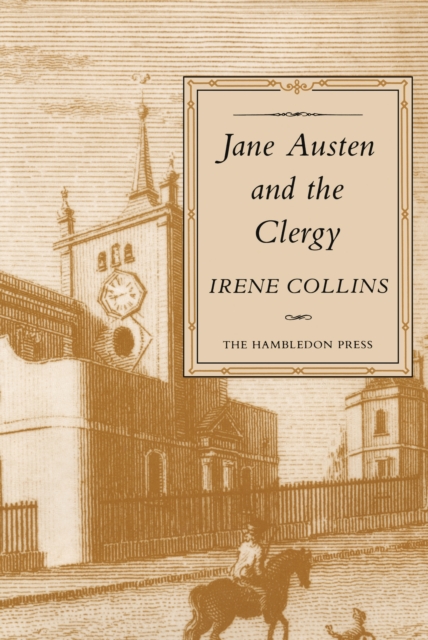
Jane Austen and the clergy
Jane Austen was the daughter of a clergyman, the sister of two others and the cousin of four more.Her principal acquaintances were clergymen and their families, whose social, intellectual and religious attitudes she shared.Yet while clergymen feature in all her novels, often in major roles, there has been little recognition of their significance.
eBook

Happy endings : a story about suffixes
When Mr. Wright makes his students study word endings on the last day of school, even the suffixes rebel.
Book

Potboilers
Potboilers looks at the many forms of popular narrative - in print, film and TV. It considers the ways in they have been analysed in literary criticism, sociology, communications, media and cultural studies. The book introduces and summarizes two decades of debate about mass-produced fictions and their position within popular culture. It assesses the methods that have been used in these debates, focussing both on narrative analysis and the communications process. It explores generic conventions, the role of commercial strategies, and the nature of the audience with reference to crime fiction, soap opera, romance and TV sitcom. Distinctions between `high' and `low' culture have relegated many popular forms to the trash-can of `great' literature. This book takes stock of the methods and concepts used to analyse popular culture and argues for a non-elitist approach to the study of literature, film and television.
eBook