
Catalogue Search | MBRL


Are you sure you want to remove the book from the shelf?

{{itemTitle}}
54,895
result(s) for
"French literature"
Sort by:
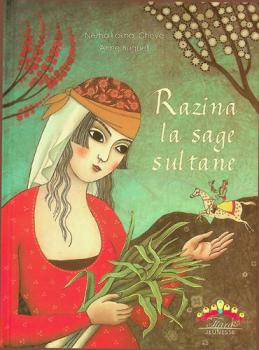
Razina la sage sultane
Razina tend à Mahmoud une outre en peau de chèvre. Il tombe sous le charme de sa beauté. Troublé, il demande sa main. Elle lui répond : - Dans tes yeux, beau cavalier, j'ai perçu ta bonté. Avant de consentir à t'épouser, dis-moi, as-tu un métier? Un brin agacé, il répond fièrement : - Je suis un prince, mes serviteurs travaillent pour moi! - Les jours se suivent mais ne se ressemblent pas. Aujourd'hui, tu es prince, mais demain est incertain ... Un métier dans les mains met à l'abri du besoin. Quand tu en auras un, je t'accorderai ma main. [decitre]
Book

The Anatomy of Blackness
2012 Outstanding Academic Title, Choice Magazine
This volume examines the Enlightenment-era textualization of the Black African in European thought. Andrew S. Curran rewrites the history of blackness by replicating the practices of eighteenth-century readers. Surveying French and European travelogues, natural histories, works of anatomy, pro- and anti-slavery tracts, philosophical treatises, and literary texts, Curran shows how naturalists and philosophes drew from travel literature to discuss the perceived problem of human blackness within the nascent human sciences, describes how a number of now-forgotten anatomists revolutionized the era's understanding of black Africans, and charts the shift of the slavery debate from the moral, mercantile, and theological realms toward that of the \"black body\" itself. In tracing this evolution, he shows how blackness changed from a mere descriptor in earlier periods into a thing to be measured, dissected, handled, and often brutalized. Penetrating and comprehensive, The Anatomy of Blackness shows that, far from being a monolithic idea, eighteenth-century Africanist discourse emerged out of a vigorous, varied dialogue that involved missionaries, slavers, colonists, naturalists, anatomists, philosophers, and Africans themselves.
eBook

Postcolonial Francophone Autobiographies
Bringing a comparative perspective to the study of autobiography, Edgard Sankara considers a cross-section of postcolonial francophone writing from Africa and the Caribbean in order to examine and compare for the first time their transnational reception. Sankara not only compares the ways in which a wide selection of autobiographies were received locally (as well as in France) but also juxtaposes reception by the colonized and the colonizer to show how different meanings were assigned to the works after publication.
Sankara's geographical and cultural coverage of Africa and its diaspora is rich, with separate chapters devoted to the autobiographies of Hampâté Bâ, Valentin Mudimbé, Kesso Barry, Patrick Chamoiseau, Raphaël Confiant, and Maryse Condé. The author combines close reading, reception study, and postcolonial theory to present an insightful survey of the literary connections among these autobiographers as well as a useful point of departure for further exploration of the genre itself, of the role of reception studies in postcolonial criticism, and of the stance that postcolonial francophone writers choose to take regarding their communities of origin.
Modern Language Initiative
eBook


Multilingualism and mother tongue in medieval French, Occitan, and Catalan narratives
The Occitan literary tradition of the later Middle Ages is a marginal and hybrid phenomenon, caught between the preeminence of French courtly romance and the emergence of Catalan literary prose. In this book, Catherine Léglu brings together, for the first time in English, prose and verse texts that are composed in Occitan, French, and Catalan-sometimes in a mixture of two of these languages. This book challenges the centrality of \"canonical\" texts and draws attention to the marginal, the complex, and the hybrid. It explores the varied ways in which literary works in the vernacular composed between the twelfth and fifteenth centuries narrate multilingualism and its apparent opponent, the mother tongue. Léglu argues that the mother tongue remains a fantasy, condemned to alienation from linguistic practices that were, by definition, multilingual. As most of the texts studied in this book are works of courtly literature, these linguistic encounters are often narrated indirectly, through literary motifs of love, rape, incest, disguise, and travel.
eBook

Diaries real and fictional in twentieth-century French writing
\"This volume is the first study of the diary in French writing across the twentieth century, as a genre which includes both fictional and non-fictional works. From the 1880s it became apparent to writers in France that their diaries--a supposedly private form of writing--would probably come to be published, strongly affecting the way their readers viewed their other published works, and their very persona as an author. More than any other, Andre Gide embraced the literary potential of the diary: the first part of this book follows his experimentation with the diary in the fictional works Les Cahiers d'Andre Walter (1891) and Paludes (1895), in his diary of the composition of his great novel, Le Journal des faux-monnayeurs (1926), and in his monumental Journal 1889-1939 (1939). The second part follows developments in diary-writing after the Second World War, inflected by radical changes in attitudes towards the writing subject. Raymond Queneau's works published under the pseudonym of Sally Mara (1947-1962) used the diary playfully at a time when the writing subject was condemned by the literary avant-garde. Roland Barthes's experiments with the diary (1977-1979) took it to the extremes of its formal possibilities, at the point of a return of the writing subject. Annie Ernaux's published diaries (1993-2011) demonstrate the role of the diary in the modern field of life-writing. Throughout the century, the diary has repeatedly been used to construct an oeuvre and author, but also to call these fundamental literary concepts into question.\"-- Provided by publisher.
Book

The familiar enemy : Chaucer, language, and nation in the Hundred Years War
The Familiar Enemy re‐examines the linguistic, literary, and cultural identities of England and France within the context of the Hundred Years War. During this war, two highly intertwined peoples developed complex strategies for expressing their aggressively intimate relationship. The special connection between the English and the French has endured into the modern period as a model for Western nationhood. This book reassesses the concept of ‘nation’ in this period through a wide‐ranging discussion of writing produced in war, truce or exile from the thirteenth to the fifteenth century, concluding with reflections on the retrospective views of this time of war created by the trials of Jeanne d'Arc and by Shakespeare's Henry V. It considers works and authors writing in French, ‘Anglo‐Norman’, and in English, in England and on the continent, with attention to the tradition of comic Anglo‐French jargon (a kind of medieval franglais), to Machaut, Deschamps, Froissart, Chaucer, Gower, Charles d'Orléans and many lesser‐known or anonymous works. Chaucer traditionally has been seen as a quintessentially English author. This book argues that he needs to be resituated within the deeply francophone context, not only of England but the wider multilingual cultural geography of medieval Europe. It thus argues that a modern understanding of what ‘English’ might have meant in the fourteenth century cannot be separated from ‘French’, and that this has far‐reaching implications both for our understanding of English and the English, and of French and the French.
eBook

Pulp Surrealism
In addition to its more well known literary and artistic origins,
the French surrealist movement drew inspiration from currents of
psychological anxiety and rebellion running through a shadowy side
of mass culture, specifically in fantastic popular fiction and
sensationalistic journalism. The provocative nature of this
insolent mass culture resonated with the intellectual and political
preoccupations of the surrealists, as Robin Walz demonstrates in
this fascinating study. Pulp Surrealism weaves an
interpretative history of the intersection between mass print
culture and surrealism, re-evaluating both our understanding of
mass culture in early twentieth-century Paris and the revolutionary
aims of the surrealist movement. Pulp Surrealism presents
four case studies, each exploring the out-of the-way and
impertinent elements which inspired the surrealists. Walz discusses
Louis Aragon's Le paysan de Paris, one of the great
surrealist novels of Paris. He goes on to consider the popular
series of Fantômes crime novels; the Parisan press coverage of the
arrest, trial, and execution of mass-murderer Landru; and the
surrealist inquiry \"Is Suicide a Solution?\", which Walz juxtaposes
with reprints of actual suicide faits divers
(sensationalist newspaper blurbs). Although surrealist interest in
sensationalist popular culture eventually waned, this exploration
of mass print culture as one of the cultural milieux from which
surrealism emerged ultimately calls into question assumptions about
the avant-garde origins of modernism itself.
eBook