
Catalogue Search | MBRL


Are you sure you want to remove the book from the shelf?

{{itemTitle}}
35
result(s) for
"Gangsters Fiction."
Sort by:

Bad dad
Dads come in all sorts of shapes and sizes. There are fat ones and thin ones, tall ones and short ones. There are young ones and old ones, clever ones and stupid ones. There are silly ones and serious ones, loud ones and quiet ones. Of course, there are good dads, and bad dads. A high-speed cops and robbers adventure with heart and soul about a father and son taking on the villainous Mr Big - and winning! This riches-to-rags story will have you on the edge of your seat and howling with laughter! Bad Dad is a fast and furious, heart-warming story of a father and son on an adventure - and a thrilling mission to break an innocent man into prison!
BOOK

Gangs and Mobs
This chapter contains sections titled:
Towards a History of Gangster Fiction
Original Gangsters: Lippard and Fitzgerald
The Legacy of the Reforming Gaze: From Riis to Asbury
New Perspectives: Burnett and Clarke
After Prohibition: Fuchs, Wolfert, and the Pathology of the Organization Man
Future Gangster: Nostalgia or Global Corruption ‐ Puzo or Winslow?
Book Chapter

To kill for
A poignant thriller about love, revenge and redemption set in the savage ganglands of East London.
Book

Crime Fiction and Film Noir
American writers such as Jack Lait of the New York Daily Mirror, understood the gangster Al Capone as literary capital, and knew that they could give them a style attractive to Hollywood. In his “hard‐boiled” period, Dashiell Hammett created heroes who were fiercely idealistic and independent; they were tougher than the Capones, and, while verbally direct, more polished in locution. Beginning in 1940, the words “black,” “dark,” and “death” appeared in so many of Cornell Woolrich's titles that he was almost synonymous with “film noir.” World War II created a “counter public” in noir writing; millions shared the experience of shell shock, trench hysteria, bombardment, prison camps, and brainwashing. The chapter also discusses four different counterpublics, namely, detective fiction, sex and cynicism, irrationality and psychosis, as well as connoisseurship, iconicity, and intertextuality.
Book Chapter
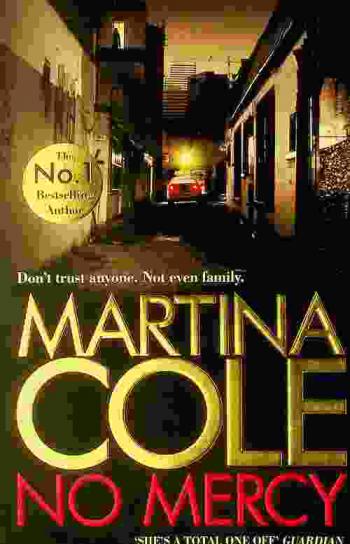
No mercy
\"Diana Davies has been head of the family business since the death of her husband, an infamous bank robber. She's a woman in a man's world, but no one messes with her. Her only son, Angus, is a natural born villain, but he needs to earn Diana's trust before she'll allow him into the business. Once he's proved he has the brains to run their clubs in Marbella, he is given what he's always wanted. It's the beginning of a reign of terror that knows no bounds. But Angus has a blind spot: his wife, Lorna, and their three kids, Angus Junior, Sean and Eilish. And as the next generation enters the business, Angus has a painful truth to learn. Even when it comes to family, he must show no mercy.

Jew Gangster/Brownsville
Joe Kubert's Jew Gangster, a melodrama apparently infused with memories of the author's own boyhood, makes wide use of grey to reflect the ambivalent sense its protagonist has over his drifting into the violent world of his neighborhood's gangsters. Neil Kleid's and Jake Allen's Brownsville, however, is all starkly drawn black and white, an evocative setting for its more or less historically accurate account of the Brooklyn boys who came to be known as Murder, Inc. Both works begin by exploiting the surprising juxtaposition of Jew and gangster, but Kubert's-which challenges grammar by forcing the two terms together in its title-does so at a more personal and mournful level.
Book Review

For those who know the ending
\"Martin Sivok is in trouble. Tied to a chair, plastic strips biting his wrists, inside a deserted warehouse...There are only so many ways this scenario can end, most of them badly. For now his best hope is figuring out who put him here--and staying conscious long enough to confront them\"-- Provided by publisher.
Book

“Let Us All Mutate Together”: Cracking the Code in Laing’s Big Bishop Roko and the Altar Gangsters
Both Derek Wright and Francis Ngaboh-Smart have interpreted Laing’s Major Gentl and the Achimota Wars (1992) as an allegory for the emergence of the Internet. In that novel, a future Africa has been digitally erased from the Web archive, and the story follows a civil war aimed at reintegrating the continent into the global scene. Beginning from this reading, I approach Laing’s next work, Big Bishop Roko and the Altar Gangsters (2006), as a formal sequel to Major Gentl, investigating the changing landscape of global digital access and its potential as a site of resistance over the decade that separates their publication. If, in Major Gentl, West Africans have been exiled from the Web, the eponymous protagonist in Roko uses networked access to interrupt neoliberal economic and social engineering underway in the global North. Through experiments in “genetic mutation”—a metaphor for cyborgian transformation from biological to networked existence—Roko hacks the evolutionary process and forces Africa’s voice into the digital sphere in an attempt to remedy that technology’s unequal distribution. In both novels, Laing indigenizes science fiction using a technique I refer to as jujutech—a hybrid of science fiction and African folk traditions. The resulting style identifies the ways the genre itself mutates and evolves as it escapes the gravity of its Euro-American roots. Laing’s decision to publish Roko electronically further points to form following function, highlighting new avenues for the dissemination of experimental African works in underrepresented genres.
Journal Article

Iron cast
In 1919 Boston, best friends Corinne and Ada perform illegally as illusionists in an infamous gangster's nightclub, using their \"afflicted\" blood to con Boston's elite, until the law closes in.
BOOK

The Thriller and Northern Ireland since 1969
For the past 30 years, the so-called 'Troubles' thriller has been the dominant fictional mode for representing Northern Ireland, leading to the charge that the crudity of this popular genre appropriately reflects the social degradation of the North. Aaron Kelly challenges both these judgments, showing that the historical questions raised by setting a thriller in Northern Ireland disrupt the conventions of the crime novel and allow for a new understanding of both the genre and the country. Two essays on crime fiction by Walter Benjamin and Berthold Brecht appear here for the first time in English translation. By demonstrating the relevance of these theorists as well as other key European thinkers such as Antonio Gramsci, Louis Althusser, and Slavoj Zizek to his interdisciplinary study of Irish culture and the crime novel, Kelly refutes the idea that Northern Ireland is a stagnate anomaly that has been bypassed by European history and remained impervious to cultural transformation. On the contrary, Kelly's examination of authors such as Jack Higgins, Tom Clancy, Gerald Seymour, Colin Bateman, and Eoin McNamee shows that profound historical change and complexity have characterized both Northern Ireland and the thriller form.
Contents: Introduction: 'You didn't need a reason to kill people, not here': narrative, the north, and historical agency; 'The green unpleasant land': the political unconscious of the British 'Troubles' thriller; 'And what do you call it?': the thriller and the problematics of home in Northern Irish writing; 'New languages would have to be invented': representations of Belfast and urban space; 'A man could get lost': constructions of gender; 'It's not for the likes of us to philosophize': the pleasure and politics of thrills, or, towards a political aesthetics; Appendices; Bibliography; Index.
Aaron Kelly is a Lecturer in Modern and Contemporary Literature in English at the University of Edinburgh, UK.
eBook