
Catalogue Search | MBRL


Are you sure you want to remove the book from the shelf?

{{itemTitle}}
217
result(s) for
"Genius Fiction."
Sort by:

Genius: : the revolution
\"Three teen geniuses from diverse backgrounds must take down an online terrorist ring, rescue an imprisoned father, and prepare for their final showdown with a misguided mastermind in this third and final book in the Genius YA trilogy by Leopoldo Gout\"-- Provided by publisher
Book
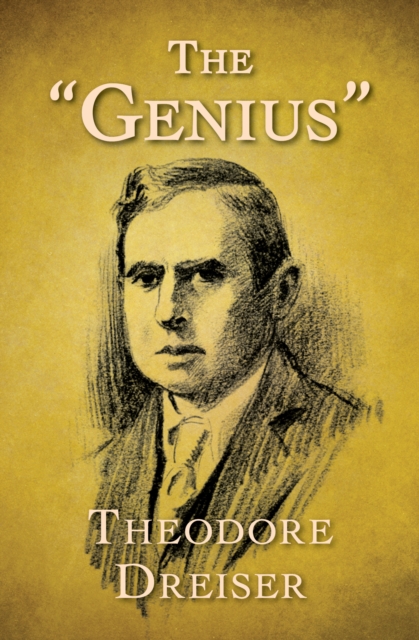
The \Genius\
The gritty, controversial story of a life devoted to art and sensuality from the Nobel Prize–winning author of Sister Carrie and An American Tragedy. Driven to experience life beyond the small Illinois town of his youth, Eugene Witla makes his way to Chicago, where he is immediately drawn to the buzz of the city and the sexual freedom of bohemian life. At the Chicago Art Institute, he studies painting, soon making a name for himself as a gifted urban realist. Throughout his life, Witla's commitment to his art is rivaled only by his need for erotic adventure. In love and marriage, and from Chicago to New York to the cities of Europe, Witla finds himself at odds with convention and pays a profound cost for his struggle. First published in 1915, The \"Genius\", Theodore Dreiser's most personal and provocative novel, was declared obscene by the New York Society for the Suppression of Vice, and under threat of legal action, it was recalled from bookstores. Rereleased in 1923, it went on to establish Dreiser's reputation as a writer ahead of his time, giving unparalleled insight into the mind of a prodigy. This ebook has been professionally proofread to ensure accuracy and readability on all devices.
eBook

Genius : the con
\"Three teen geniuses from diverse backgrounds must work together to stop a vicious warlord, protect their families, and save the world...\"--Amazon.com.
Book
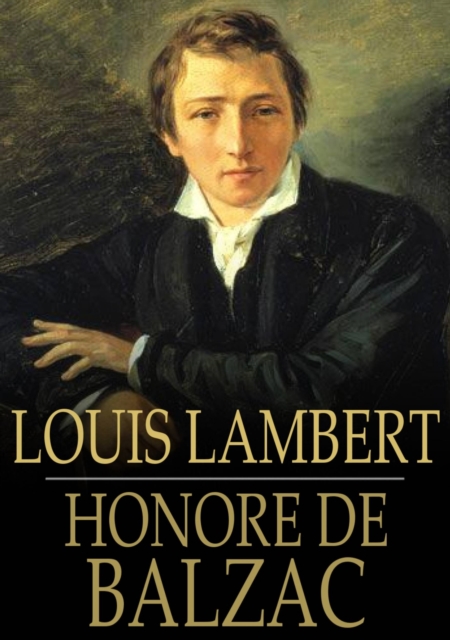
Louis Lambert
There's no debate over the fact that philosophers and thinkers have profoundly shaped and influenced human civilization. But how does this transformation take place at the level of the individual? That's the fascinating issue that Honore de Balzac takes on in the novel
eBook

One awesome thing
\"Waylon, a boy with the mind of a scientific genius and the vulnerable heart of an eight-year-old, is trying to understand his older sister and deal with changes among the kids at school\"-- Provided by publisher.
Book


No rules
After Friday Barnes is deported to Switzerland, Highcrest Academy descends into chaos as all their teachers are fired as an epic prank, but Friday tries to find the prankster, prove the innocence of her nemesis Ian Wainscott, and save the school.
Book

Bringing down the mouse
A mathematically gifted sixth-grader is recruited by a group of students to game the system at the biggest theme park in the world--and win the big prize.
Book

The Genius of Democracy
In the late nineteenth- and early twentieth-century United States, ideas of genius did more than define artistic and intellectual originality. They also provided a means for conceptualizing women's participation in a democracy that marginalized them. Widely distributed across print media but reaching their fullest development in literary fiction, tropes of female genius figured types of subjectivity and forms of collective experience that were capable of overcoming the existing constraints on political life. The connections between genius, gender, and citizenship were important not only to contests over such practical goals as women's suffrage but also to those over national membership, cultural identity, and means of political transformation more generally. InThe Genius of DemocracyVictoria Olwell uncovers the political uses of genius, challenging our dominant narratives of gendered citizenship. She shows how American fiction catalyzed political models of female genius, especially in the work of Louisa May Alcott, Henry James, Mary Hunter Austin, Jessie Fauset, and Gertrude Stein. From an American Romanticism that saw genius as the ability to mediate individual desire and collective purpose to later scientific paradigms that understood it as a pathological individual deviation that nevertheless produced cultural progress, ideas of genius provided a rich language for contests over women's citizenship. Feminist narratives of female genius projected desires for a modern public life open to new participants and new kinds of collaboration, even as philosophical and scientific ideas of intelligence and creativity could often disclose troubling and more regressive dimensions. Elucidating how ideas of genius facilitated debates about political agency, gendered identity, the nature of consciousness, intellectual property, race, and national culture, Olwell reveals oppositional ways of imagining women's citizenship, ways that were critical of the conceptual limits of American democracy as usual.
eBook