
Catalogue Search | MBRL


Are you sure you want to remove the book from the shelf?

{{itemTitle}}
41
result(s) for
"Kreta."
Sort by:

Final Neolithic Crete and the southeast Aegean
\"This book presents an archaeological study of Crete in transition from the Neolithic to the Early Bronze Age (c. 4000 to 3000 BC) within the broader South Aegean context. The study, based on the author's own fieldwork, contains a gazetteer of over 170 sites. The material from these sites will prompt archaeologists in Greece, Turkey, and the Middle East to reconsider their understanding of the foundation of Bronze Age civilization in the Aegean\"-- Provided by publisher.
Book

Thirsty Seafarers at Temple B of Kommos
The island of Crete was an important place for cultural and economic exchanges between Greeks and Near Easterners in the Aegean during the 1st millennium BC. Kommos and its temple provided materials that attest the connections between different populations, such as Greeks and Phoenicians. An examination of these objects and those from other Cretan sites such as Knossos, the Idaean Cave and Eleutherna is presented in this book. Moreover, the case of Kommos is compared to other Aegean cult structures with similar characteristics, such as the Sanctuary of Apollo in Eretria, the Heraion of Samos, the temple of Kition in Cyprus and the Temple of Vroulia in Southern Rhodes. These appear to be not just religious spaces but also economic and social meeting points, integrated into networks of commercial districts connected by land and sea routes. The book aims to understand the Phoenician presence and trade in Aegean temples, as well as how Crete shaped its role within the context of Mediterranean trade routes from the East to the West.
eBook

Using data envelopment analysis to measure hotel efficiency in Crete
Purpose
– The purpose of this paper is to: study the relative efficiency between hotels operating under a brand and hotels operating independently, on the island of Crete, Greece; identify the inefficiency causes; and suggest managerial implications to relevant business experts and managers in order to increase hotel efficiency in Crete and in other tourism destinations with similar characteristics.
Design/methodology/approach
– The sample is constituted by 50 superior hotels (luxury and class A) operating in Crete in 2008: 25 hotels are operating as totally independent and 25 hotels are operating under a brand. The efficiency for the above hotels is estimated through the data envelopment analysis methodology.
Findings
– First, nationally branded hotels are relatively the most efficient; internationally branded are the least efficient, while those operating under a local brand and the independent ones lie in between. This efficiency ranking can be explained by the interplay between operating under a brand and being flexible to changes in the local market's conditions. Second, the hotels' inefficiency cause is mainly due to the input/output configuration and not due to their management teams' performance to organize the inputs in the production process.
Research limitations/implications
– A direction for future research could be to enrich input and output variables. The paper could also be extended through a larger sample of hotels and an enriched data set covering more variables for more than one year, so as to study the dynamics of hotel efficiency. The larger sample could also contain hotels from other popular tourist destinations in Greece.
Practical implications
– The inefficiency causes are identified and, moreover, suggestions are made to hotel owners and managers, at the level of strategic and operational management, so as to increase hotel efficiency.
Originality/value
– This is the first study measuring hotel efficiency in Greece. Moreover, it identifies the inefficiency causes of hotels and offers suggestions, at the level of strategic and operational management, so as to increase hotel efficiency, which are applicable to Crete as well as to other tourism destinations with similar characteristics.
Journal Article


Architecture of Minoan Crete
Ever since Sir Arthur Evans first excavated at the site of the Palace at Knossos in the early twentieth century, scholars and visitors have been drawn to the architecture of Bronze Age Crete. Much of the attraction comes from the geographical and historical uniqueness of the island. Equidistant from Europe, the Middle East, and Africa, Minoan Crete is on the shifting conceptual border between East and West, and chronologically suspended between history and prehistory. In this culturally dynamic context, architecture provided more than physical shelter; it embodied meaning. Architecture was a medium through which Minoans constructed their notions of social, ethnic, and historical identity: the buildings tell us about how the Minoans saw themselves, and how they wanted to be seen by others. Architecture of Minoan Crete is the first comprehensive study of the entire range of Minoan architecture—including houses, palaces, tombs, and cities—from 7000 BC to 1100 BC. John C. McEnroe synthesizes the vast literature on Minoan Crete, with particular emphasis on the important discoveries of the past twenty years, to provide an up-to-date account of Minoan architecture. His accessible writing style, skillful architectural drawings of houses and palaces, site maps, and color photographs make this book inviting for general readers and visitors to Crete, as well as scholars.
eBook


Island and empire : how civil war in Crete mobilized the Ottoman world
\"In the 1890s, conflict erupted on the Ottoman island of Crete. At the heart of the Crete Question, as it came to be known around the world, were clashing claims of sovereignty between Greece and the Ottoman Empire. The island was of tremendous geostrategic value, boasting one of the deepest natural harbors in the Mediterranean, and the conflict quickly gained international dimensions with an unprecedented collective military intervention by six European powers. Island and Empire shows how events in Crete ultimately transformed the Middle East. Ugur Zekeriya Peçe narrates a connected history of international intervention, mass displacement, and popular mobilization. The conflict drove a wedge between the island's Muslims and Christians, quickly acquiring a character of civil war. Civil war in turn unleashed a humanitarian catastrophe with the displacement of more than seventy thousand Muslims from Crete. In years following, many of thos
eBook
Minoan Architectural Design
No detailed description available for \"Minoan Architectural Design\".
eBook

Final Neolithic Crete and the Southeast Aegean
This book presents an archaeological study of Crete in transition from the Neolithic to the Early Bronze Age (c. 4000 to 3000 BC) within the broader South Aegean context. The study, based on the author's own fieldwork, contains a gazetteer of over 170 sites. The material from these sites will prompt archaeologists in Greece, Turkey, and the Middle East to reconsider their understanding of the foundation of Bronze Age civilization in the Aegean.
eBook
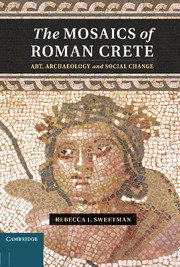
The Mosaics of Roman Crete
This book examines the rich corpus of mosaics created in Crete during the Roman and Late Antique eras. It provides essential information on the style, iconography and chronology of the material, as well as discussion of the craftspeople who created them and the technologies they used. The contextualized mosaic evidence also reveals a new understanding of Roman and Late Antique Crete. It helps shed light on the processes by which Crete became part of the Roman Empire, its subsequent Christianization and the pivotal role the island played in the Mediterranean network of societies during these periods. This book provides an original approach to the study of mosaics and an innovative method of presenting a diachronic view of provincial Cretan society.
eBook