
Catalogue Search | MBRL


Are you sure you want to remove the book from the shelf?

{{itemTitle}}
224
result(s) for
"MICRO-ORGANISME"
Sort by:
The Plant Microbiome in Sustainable Agriculture
The most up-to-date reference on phytomicrobiomes available today The Plant Microbiome in Sustainable Agriculture combines the most relevant and timely information available today in the fields of nutrient and food security. With a particular emphasis on current research progress and perspectives of future development in the area, The Plant Microbiome in Sustainable Agriculture is an invaluable reference for students and researchers in the field, as well as those with an interest in microbiome research and development. The book covers both terrestrial and crop associated microbiomes, unveiling the biological, biotechnological and technical aspects of research. Topics discussed include: * Developing model plant microbiome systems for various agriculturally important crops * Defining core microbiomes and metagenomes in these model systems * Defining synthetic microbiomes for a sustainable increase in food production and quality The Plant Microbiome in Sustainable Agriculture is written to allow a relative neophyte to learn and understand the basic concepts involved in phytomicrobiomes and discuss them intelligently with colleagues.
eBook
Phytomicrobiome Interactions and Sustainable Agriculture
A guide to the role microbes play in the enhanced production and productivity of agriculture to feed our growing population Phytomicrobiome Interactions and Sustainable Agriculture offers an essential guide to the importance of 'Phytomicrobiome' and explores its various components.
eBook

Ecological and physiological characterization shows that Fibrobacter succinogenes is important in rumen fiber digestion - review
Fibrobacter succinogenes is a major cellulolytic species in the rumen. On the basis of molecular data, this species can be classified into four phylogenetic groups. Recently gathered ecological and physiological data have revealed the importance of this species, particularly phylogenetic group 1, in rumen fiber digestion. These data indicate that group 1 should be the focus of future efforts to maximize the fibrolytic function of the rumen.
Journal Article

Occurrence of biogenic amines and amines degrading bacteria in fish sauce
The contents of biogenic amines histamine, putrescine, and cadaverine in fish sauce were determined and the bacteria isolated from the samples were evaluated for their amines degradation activity. Five fish sauce samples contained 62.5-393.3 ppm of histamine, 5.6-242.8 ppm of putrescine, and 187.1-704.7 ppm of cadaverine. Thirty three bacterial isolates produced all three amines, seven isolates produced one or two amines, and one isolate did not produce any amine in differential agar media. Since the strains that produced amines were not supposed to degrade them, only eight isolates were further identified and evaluated for their amines degrading capability. Bacillus amyloliquefaciens FS-05 and Staphylococcus carnosus FS-19 degraded histamine up to 59.9% and 29.1% from its initial concentration, respectively. Staphylococcus intermedius FS-20 and Bacillus subtilis FS-12 degraded putrescine and cadaverine up to 30.4% and 28.9%, respectively. Most isolates tolerated the salt concentration of up to 15% and temperature of up to 45 deg C. The current study provided new information on biogenic amines degrading bacteria, isolated from high-salt-content food products. The amines degradation activity of the bacteria is considered as strain rather than species specific.
Journal Article
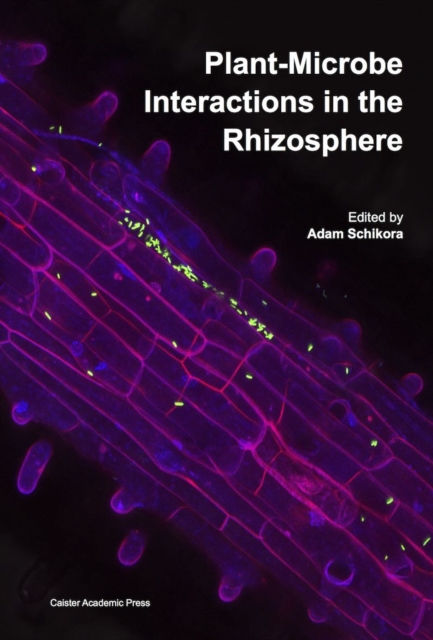
Plant-Microbe Interactions in the Rhizosphere
In this volume expert authors review current research on diverse aspects of the interactions which occur in the rhizosphere between the host plant and the microorganisms. The chapters focus on specific phenomena, from the biochemical and genetical level to complex inter-organism communication. The authors provide valuable insights into phenomena which are exemplary for diverse types of interaction and highlight emerging research providing important new insights into the interaction networks. Topics include: bacterial metabolism in the rhizosphere, the role of plasmids, plant immunity, the MTI-ETI model, endofungal bacteria, plant-nematode interactions, and apple replant disease. This excellent volume is recommended for anyone involved in plant science or environmental microbiology and is indispensable for scientists working in the areas of soil microbiology and plant-microbe interactions.
eBook


Crop residue management in arable cropping systems under temperate climate. Part 1: Soil biological and chemical (phosphorus and nitrogen) properties. A review
Interacting soil organisms support biological processes that participate in soil functions, organic matter decomposition, and nutrient cycling. Earthworms and microorganisms play a range of beneficial roles in agricultural systems, including increased organic matter mineralization, nutrient cycling, and soil structure stabilization. The following aspects of crop residue management effects are examined in this paper: (i) earthworm composition and structure; (ii) soil microbial communities; and (iii) phosphorus (P) and nitrogen (N) element availability and distribution in the soil profile. Conventional tillage (ploughing) is often reported to generate decreased soil organism abundance and diversity, primarily earthworms and microorganisms, as well as a uniform distribution of the nutrients P and N within the ploughed soil horizon. Soil residue incorporation of mineral particles can maintain P and N levels, however returning soil also increases aeration and the activation of microbial activity. Hence, comparisons of tillage effects on soil biological functioning and nutrient cycling remain unclear. This review highlights the challenges in establishing definitive evidence regarding the effects of crop residue management on soil organisms and nutrient dynamics. The studies examined reported variability in soil and climate, and the complexity of soil processes contributed to the absence of clear findings. Further research is required under temperate climate conditions.
Journal Article

The influence of heavy metals on soil biological and chemical properties
Soil samples were collected at alluvial sites of the Litavka River, which flows through the Beroun and Příbram cities in Central Bohemia Region of the Czech Republic in 2005 and 2006. Higher heavy metal content in soils (Cd, Pb, Zn, Cu) is due to composition of the parent rock, emissions from lead processing industry and the leak of toxic material from the steel works sludge ponds in the 1970s and 1980s. The samples were collected from six sites located at different distances from the contamination source (the former sludge ponds) and chemical and biological properties were determined. The ratio of the microbial biomass carbon to oxidisable carbon content dropped down significantly on more heavily contaminated sites. Basal respiration activity did not correlate with the content of heavy metals in soil, but there was certain declining tendency with increasing intensity of soil contamination. Respiration activities significantly correlated with the total carbon, oxidisable carbon and the total nitrogen content. The metabolic quotient showed higher values with increasing contamination. Dehydrogenases and arylsulphatase activities decreased with increasing contamination. Urease activity has also a declining tendency but its relation to different intensity of contamination was not unambiguous. Urease activity has shown a relationship with the content of total nitrogen in soil. No relationship was found between the total sulphur content and arylsulphatase activity. Dehydrogenases, arylsulfatase and urease activities significantly correlated with the microbial biomass carbon.
Journal Article
Antimicrobial properties of some essential oils against some pathogenic microorganisms
Investigations were carried out to assess the efficiency of five plant essential oils: thyme, myrtle, laurel, sage, and orange oils as natural food preservatives. The effect of the plant essential oils against Escherichia coli, Listeria monocytogenes, Staphylococcus aureus and Candida albicans at concentrations of 5-20 microL/disk (diameter 6 mm) and 0.5-3% (v/v) was studied in agar diffusion test medium and milk medium. The essential oils of these extracts exhibited markedly antibacterial and bacteriostatic activity, with thyme showing the highest inhibition and orange the lowest. However, with thyme extract, high inhibitory activity was observed for all tested concentrations, L. monocytogenes showed less sensitivity towards essential oil extracts.
Journal Article
The influence of biocalcification on soil-cement interlocking block compressive strength
Soil-cement interlocking block is used as the building block for many civil structures in Thailand. The addition of many alternative materials into interlocking block in order to improve compressive strength has been reported. However, there is currently no report on the influence of application of biocalcification or microbiologically induced calcite precipitation (MICP) on interlocking block compressive strength. This study aimed to investigate the effect of biocalcification on compressive strength of soil-cement interlocking block. Soil bacterium, Bacillus pasteurii KCTC 3558, and Effective Microorganisms (EM) were added into interlocking block before molding as the replacement of mixing water. The change of compressive strength in interlocking block at 3, 7, 14 and 28 days of incubation was determined. At 28 days, the compressive strength of interlocking block supplemented with B. pasteurii KCTC 3558 and 5% EM were 7.38% and 9.79% significantly higher than control. Calcium carbonate crystals were also observed under scanning electron microscope which suggested that an increased compressive strength of interlocking block was caused by biocalcification. Our results showed that microbiologically induced calcite precipitation could help increasing the compressive strength of soil-cement interlocking block.
Journal Article