
Catalogue Search | MBRL


Are you sure you want to remove the book from the shelf?

{{itemTitle}}
45,783
result(s) for
"Materials Computer simulation."
Sort by:

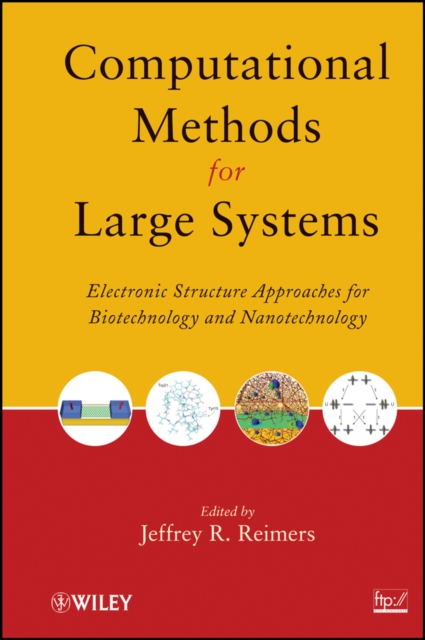
Computational methods for large systems
\"While its results normally complement the information obtained by chemical experiments, computer computations can in some cases predict unobserved chemical phenomena Electronic-Structure Computational Methods for Large Systems gives readers a simple description of modern electronic-structure techniques. It shows what techniques are pertinent for particular problems in biotechnology and nanotechnology and provides a balanced treatment of topics that teach strengths and weaknesses, appropriate and inappropriate methods. It's a book that will enhance the your calculating confidence and improve your ability to predict new effects and solve new problems\"--
\"Provides a simple description of modern electronic-structure techniques. Shows what techniques are pertinent for particular problems in biotechnology and nanotechnology. Provides a balanced treatment of the topics that teaches strengths and weaknesses, appropriate and inappropriate methods. Provides confidence to calculators that their results are useful for predicting new effects and for interpreting newly presented problem scenarios - reference tool for industrial scientists who develop applications as well as a teaching aid for new graduate students in computational chemistry, physics, biochemistry, biotechnology, materials science and nanoscience\"--
eBook

Multiscale Materials Modeling
This book presents current spatial and temporal multiscaling approaches of materials modeling. Recent results demonstrate the deduction of macroscopic properties at the device and component level by simulating structures and materials sequentially on atomic, micro- and mesostructural scales. The book covers precipitation strengthening and fracture processes in metallic alloys, materials that exhibit ferroelectric and magnetoelectric properties as well as biological, metal-ceramic and polymer composites. The progress which has been achieved documents the current state of art in multiscale materials modelling (MMM) on the route to full multi-scaling. Contents: Part I: Multi-time-scale and multi-length-scale simulations of precipitation and strengthening effects Linking nanoscale and macroscale Multiscale simulations on the coarsening of Cu-rich precipitates in ?-Fe using kinetic Monte Carlo, Molecular Dynamics, and Phase-Field simulations Multiscale modeling predictions of age hardening curves in Al-Cu alloys Kinetic Monte Carlo modeling of shear-coupled motion of grain boundaries Product Properties of a two-phase magneto-electric composite Part II: Multiscale simulations of plastic deformation and fracture Niobium/alumina bicrystal interface fracture Atomistically informed crystal plasticity model for body-centred cubic iron FE2AT ? finite element informed atomistic simulations Multiscale fatigue crack growth modeling for welded stiffened panels Molecular dynamics study on low temperature brittleness in tungsten single crystals Multi scale cellular automata and finite element based model for cold deformation and annealing of a ferritic-pearlitic microstructure Multiscale simulation of the mechanical behavior of nanoparticle-modified polyamide composites Part III: Multiscale simulations of biological and bio-inspired materials, bio-sensors and composites Multiscale Modeling of Nano-Biosensors Finite strain compressive behaviour of CNT/epoxy nanocomposites Peptide?zinc oxide interaction
eBook

Design energy simulation for architects : guide to 3D graphics
\"Energy modeling calculations for urban, complex buildings are most effective during the early design phase. And most analysis takes only four to sixteen hours to get results you can use. This software-agnostic book, which is intended for you to use as a professional architect, shows you how to reduce the energy use of all buildings. Written by a practicing architect who specializes in energy modeling, the book includes case studies of net-zero buildings, of Living Building Challenge-certified buildings, as well as of projects with less lofty goals to demonstrate how energy simulation has helped designers make early decisions. Within each case study, author Kjell Anderson mentions the software used and other software that could have been used to get similar results so that you learn general concepts without being tied to particular programs. Each chapter builds on the theory from previous chapters, includes a summary of concept-level hand calculations (if applicable), and gives comprehensive explanations with examples. Topics covered include comfort, design energy simulation, climate analysis, master planning, conceptual design, design development, and existing buildings so that you can create more responsive designs quicker\"-- Provided by publisher.
Book
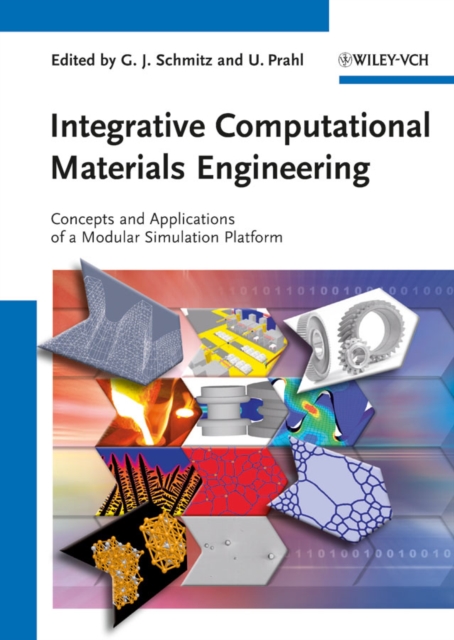
Integrative Computational Materials Engineering
Presenting the results of an ambitious project, this book summarizes the efforts towards an open, web-based modular and extendable simulation platform for materials engineering that allows simulations bridging several length scales.
eBook

Practical multiscaling
Practical Multiscaling covers fundamental modelling techniques aimed at bridging diverse temporal and spatial scales ranging from the atomic level to a full-scale product level. It focuses on practical multiscale methods that account for fine-scale (material) details but do not require their precise resolution. The text material evolved from over 20 years of teaching experience at Rensselaer and Columbia University, as well as from practical experience gained in the application of multiscale software. This book comprehensively covers theory and implementation, providing a detailed exposition of the state-of-the-art multiscale theories and their insertion into conventional (single-scale) finite element code architecture. The robustness and design aspects of multiscale methods are also emphasised, which is accomplished via four building blocks: upscaling of information, systematic reduction of information, characterization of information utilizing experimental data, and material optimization. To ensure the reader gains hands-on experience, a companion website hosting a lite version of the multiscale design software (MDS-Lite) is available. Key features: * Combines fundamental theory and practical methods of multiscale modelling * Covers the state-of-the-art multiscale theories and examines their practical usability in design * Covers applications of multiscale methods * Accompanied by a continuously updated website hosting the multiscale design software * Illustrated with colour images Practical Multiscaling is an ideal textbook for graduate students studying multiscale science and engineering. It is also a must-have reference for government laboratories, researchers and practitioners in civil, aerospace, pharmaceutical, electronics, and automotive industries, and commercial software vendors.
eBook
Computational Materials Discovery
New technologies are made possible by new materials, and until recently new materials could only be discovered experimentally. Recent advances in solving the crystal structure prediction problem means that the computational design of materials is now a reality. This book provides a comprehensive review of this field covering different computational methodologies as well as specific applications of materials design. The book starts by illustrating how and why first-principle calculations have gained importance in the process of materials discovery. The book is then split into three sections, the first exploring different approaches and ideas including crystal structure prediction from evolutionary approaches, data mining methods and applications of machine learning. Section two then looks at examples of designing specific functional materials with special technological relevance for example photovoltaic materials, superconducting materials, topological insulators and thermoelectric materials. The final section considers recent developments in creating low-dimensional materials.
eBook
Interatomic Bonding in Solids
The connection between the quantum behavior of the structure elements of a substance and the parameters that determine the macroscopic behavior of materials has a major influence on the properties exhibited by different solids. Although quantum engineering and theory should complement each other, this is not always the case. This book aims to demonstrate how the properties of materials can be derived and predicted from the features of their structural elements, generally electrons. In a sense, electronic structure forms the glue holding solids together and it is central to determining structural, mechanical, chemical, electrical, magnetic, and vibrational properties. The main part of the book is devoted to an overview of the fundamentals of density functional theory and its applications to computational solid-state physics and chemistry. The author shows the technique for construction of models and the computer simulation methods in detail. He considers fundamentals of physical and chemical interatomic bonding in solids and analyzes the predicted theoretical outcome in comparison with experimental data. He applies first-principle simulation methods to predict the properties of transition metals, semiconductors, oxides, solid solutions, and molecular and ionic crystals. Uniquely, he presents novel theories of creep and fatigue that help to anticipate, and prevent, possibly fatal material failures. As a result, readers gain the knowledge and tools to simulate material properties and design materials with desired characteristics. Due to the interdisciplinary nature of the book, it is suitable for a variety of markets from students to engineers and researchers.
eBook
Kinetics in Nanoscale Materials
As the ability to produce nanomaterials advances, it becomes more important to understand how the energy of the atoms in these materials is affected by their reduced dimensions. Written by an acclaimed author team, Kinetics in Nanoscale Materials is the first book to discuss simple but effective models of the systems and processes that have recently been discovered. The text, for researchers and graduate students, combines the novelty of nanoscale processes and systems with the transparency of mathematical models and generality of basic ideas relating to nanoscience and nanotechnology.
eBook