
Catalogue Search | MBRL


Are you sure you want to remove the book from the shelf?

{{itemTitle}}
30,200
result(s) for
"Minnesota."
Sort by:


Campus with Purpose
\"When Stephen Lehmkuhle became the chancellor of the brand new University of Minnesota-Rochester campus, he had to start from scratch. He did not inherit a legacy mission that established what the campus did and how to do it; rather, he needed to find a way to rationalize the existence of the nascent campus. Lehmkuhle recognized that without a shared understanding of purpose the scope of a new campus expands at an unsustainable rate as it tries to be all things to all people, and so his first act was to decide on the driving purpose of the campus. He then used this purpose to make decisions about institutional design, scope, programs, and campus activities. Through personal and engaging anecdotes about his experience as the inaugural chancellor at the University of Minnesota-Rochester, Lehmkuhle describes how higher education leaders can focus on campus purpose to create new and fresh ways to think about many elements of campus operation and function, and how leaders can protect the campus's purpose from the pervasive higher education culture that is hardened by history and habit\"--. Contents: Preface -- The interview -- Why does the new campus exist? -- Building a campus with purpose : managing the past and the future -- Structure with purpose -- Buildings versus space -- Building and flying the plane at the same time -- What I learned about students and faculty -- Leading by purpose in higher education -- Closing comments -- Epilogue : purpose and innovation.
eBook


Emancipation's Diaspora
Most studies of emancipation's consequences have focused on the South. Moving the discussion to the North, Leslie Schwalm enriches our understanding of the national impact of the transition from slavery to freedom.Emancipation's Diasporafollows the lives and experiences of thousands of men and women who liberated themselves from slavery, made their way to overwhelmingly white communities in Iowa, Minnesota, and Wisconsin, and worked to live in dignity as free women and men and as citizens.Schwalm explores the hotly contested politics of black enfranchisement as well as collisions over segregation, civil rights, and the more informal politics of race--including how slavery and emancipation would be remembered and commemorated. She examines how gender shaped the politics of race, and how gender relations were contested and negotiated within the black community. Based on extensive archival research,Emancipation's Diasporashows how in churches and schools, in voting booths and Masonic temples, in bustling cities and rural crossroads, black and white Midwesterners--women and men--shaped the local and national consequences of emancipation.
eBook


Peril in the Ponds
Peril in the Ponds tells the story of a government biologist’s investigation into the mystery of deformed frogs, an epidemic that grew during the 1990s and continues today. It provides an inside view of a highly charged environmental issue that aroused the attention of the public and the media and sparked controversies among scientists, politicians, and government agencies. By the 1990s, wetlands across the United States were endangered from pollution and decades of drainage to convert them into farmland and urban developments. But when deformed frogs—many with missing legs or eyes, footless stumps, or misshapen jaws—began to emerge from Minnesota wetlands, alarm bells went off. What caused such deformities? Pollution? Ultraviolet rays? Biological agents? And could the mysterious cause also pose a threat to humans? Judy Helgen writes with passionate concern about vulnerable frogs and wetlands as she navigates through a maze of inquisitive media and a reluctant government agency. She reports on the complexity of a growing catastrophe for frogs and broadens the issue as she researches and meets with scientists from around the world. She affirms the importance of examining aquatic life to understand pollution and the need to rescue our remaining wetlands. She also shares the fears expressed by the teachers, students, and other citizens who found these creatures, sensed a problem, and looked to her for answers. Ultimately, this is a story about the biological beauty of wetlands and our need to pay attention to the environment around us.
eBook


Before the Museums Came
Before the Museums Came: A Social History of the Fine Arts in the Twin Cities gives an engaging portrayal of the fine arts scene of Minneapolis and St.Paul, Minnesota in the United States, spanning from the appearance of the earliest artists in 1835 to the opening of the first permanent museum, the Minneapolis Institute of Arts in 1915.
eBook

Complicated fun : the birth of Minneapolis punk and indie rock, 1974-1984, an oral history
\"In the early 1970s, the Minneapolis music scene was no scene at all. Radio stations played Top 40 music; bars and clubs booked only rock cover bands and blues bands. Meanwhile, cities like New York, Detroit, and London were spawning fresh and innovative--and loud and raw--sounds by musicians creating a new punk and rock movement. A small but daring group of Twin Cities musicians, artists, entrepreneurs, and enthusiasts wanted a piece of that action. To do it, they had to build it themselves. Complicated Fun brings together the recollections of the men and women who built Minnesota's vibrant and vital indie rock scene. Through interviews with dozens of musicians, producers, managers, journalists, fans, and other scenesters, Cyn Collins chronicles the emergence of seminal bands like the Suicide Commandos, the Hypstrz, Curtiss A, Flamingo, the Suburbs, Hلeusker Dلeu, the Replacements, and more. The subjects reflect on the key role that Oar Folkjokeopus record store, Jay's Longhorn bar, and Twin/Tone Records played by providing outlets for hearing, performing, and recording these new sounds. Complicated Fun explores the influences, motivations, moments, and individuals that propelled Minneapolis to its status as a premier music scene and, in turn, inspired future generations of rockers\"--Publisher's website.
Book
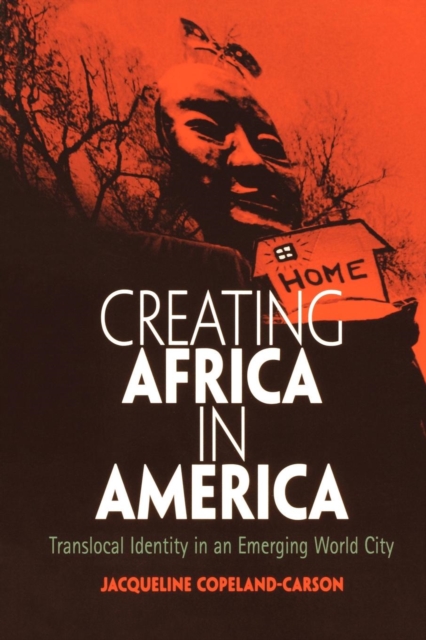
Creating Africa In America: Translocal Identity In An Emerging World City
\"'Who is 'African' in a global ecumene? Anthropologist Copeland Carson poses this challenging question in her study of cultural dynamics in Minneapolis-Saint Paul. . . . Highly recommended.\"--Choice.
eBook