
Catalogue Search | MBRL


Are you sure you want to remove the book from the shelf?

{{itemTitle}}
4,802
result(s) for
"Museum objects"
Sort by:

The lives of the objects : collecting design / edited by Tristram Hunt
\"Here, ten world-renowned curators from the Victoria and Albert Museum in London tell the story of ten of the most famous and curious objects acquired by the museum over its history. Among these are \"Tipu's Tiger,\" an almost life-size wooden mechanical toy of a tiger mauling a European soldier; the \"Great Bed of Ware,\" a 10 1/2-foot-wide Elizabethan bed; and a \"Shakespeare First Folio,\" one of the few survivors of an estimated 750 that were originally printed. Learn too about collection building and how careful curation and fortuitous optimism drive and change museum priorities over time.\"-- Provided by publisher.
Book
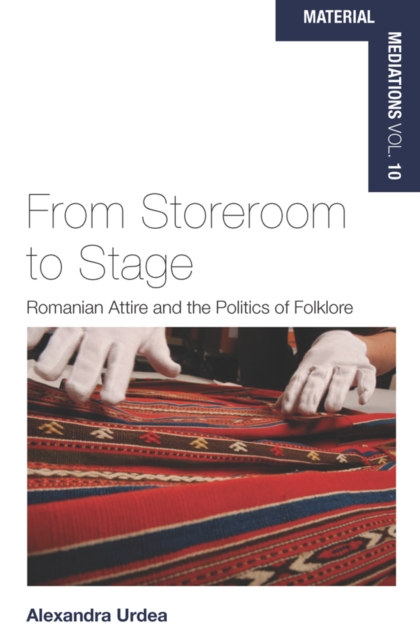
From Storeroom to Stage
Departing from an ethnographic collection in London, From Storeroom to Stage traces the journey of its artefacts back to the Romanian villages where they were made 70 years ago, and to other places where similar objects are still in use. The book explores the role that material culture plays in the production of value and meaning by examining how folk objects are mobilized in national ideologies, transmissions of personal and family memory, museological discourses, and artistic acts.
eBook


Photo-Museology
Ethnographic museums, now often rebranded as collections of 'world cultures', appear permanently problematic, even as their contexts and the orientation of their activities change. Across Europe and elsewhere, curators and other museum staff are committed to dialogue and collaboration with the peoples from whom collections were made. But their vast assemblages of artefacts, removed from countries of origin primarily during the colonial period, and assumed, mostly inaccurately, to have been looted, seem always in question. Photo-Museology arises from an art project undertaken over 25 years. From the early 1990s, Mark Adams and Nicholas Thomas together investigated sites of cross-cultural encounter in the Pacific and associated places in Europe, ranging from Captain Cook memorials to ethnographic museums. Some of those museums still exhibited colonial symbols and forms of knowledge, others had attempted to displace such histories, foregrounding more inclusive or progressive stories. Complementing the academic studies in the Pacific Presences series, this book offers what John Berger referred to as 'another way of telling'. Through photography, it revisits the places collections were made, and the places they ended up in. It is a meditation on presence and absence.
eBook

Tiny treasures : the magic of miniatures
Intricate and appealing, curious and uncanny, miniature works of art exert surprising power. Over thousands of years and across cultures, artists and artisans have created small objects for many purposes: tiny gold amulets of ancient Egyptian gods to protect the wearer; portable European medieval shrines made of precious materials to hold the relics of saints; English and American miniature painted portraits to keep loved ones close; Dutch dollhouse furnishings to display the maker's skill and the owner's social standing; pocket-size tools and globes from the age of exploration; Japanese netsuke carved in the shape of auspicious animals; and everyday objects transformed into statement jewelry by contemporary makers. 'Tiny Treasures' looks closely at more than 75 fascinating miniature objects from across the collections of the Museum of Fine Arts, Boston.
Book

Provenance and historical warrants: histories of cataloguing at the Museum of Anthropology
PurposeThis paper considers how knowledge has been organized about museum objects and belongings at the Museum of Anthropology, in what is now known as British Columbia, and proposes the concept of historical or provenance warrant to understand how cataloguing decisions were made and are limited by current museum systems.Design/methodology/approachThrough interviews and archival research, we trace how cataloguing was done at the museum through time and some of the challenges imposed by historical documentation systems.FindingsReading from the first attempts at standardizing object nomenclatures in the journals of private collectors to the contemporary practices associated with object documentation in the digital age, we posit that historic or provenance warrant is crafted through donor attribution or association, object naming, the concept of geo-cultural location and the imposition of unique identifiers, numbers and direct labels that physically mark belongings.Originality/valueThe ultimate goal and contribution of this research is to understand and describe the systems that structure and organize knowledge, in an effort to repair the history and terminologies moving forward.
Journal Article

Across Asia and the Islamic world : movement and mobility in the arts of East Asian, South and Southeast Asian, and Islamic cultures
\"The Walters Art Museum is among America's most distinctive museums, forging connections between people and art from cultures around the world that span seven millennia. The museum holds a stunning array of objects, from richly illuminated Qur'ans and images of the Buddha to captivating narrative paintings and artfully crafted ceramics and metalworks. Highlighting the strengths, variety, and sheer wonder of the Walters Art Museum's unique Asian and Islamic collections, Across Asia and the Islamic World is the first volume in a series of titles that break away from the traditional academic approach. It is built around themes that transcend period, form, locale, and medium, and showcases the museum's initiative to develop new ways of interpreting its collections\"-- Provided by publisher.
BOOK

Object-love at the Science Museum
The field of museum geography is taking on new significance as geographers and museum-studies scholars make sense of the spatial relations between the people, things, practices and buildings that make and remake museums. In order to strengthen this spatial interest in museums, this paper makes important connections between recent work in cultural geography and museum studies on love, materiality and the museum effect. This paper marks a departure from the preoccupation with the public spaces of museums to go behind the scenes of the Science Museum in London to explore its rarely visited, but nonetheless lively, small-to-medium-sized object storerooms at Blythe House. Incorporating field diary entries and interview extracts from two research projects based upon the museum storerooms at Blythe House, this paper brings to life the social interactions that take place between museum curators and conservators and the objects they care for. This focus on object-love enables scholars to consider anew what museums are and what they are for, the life of the museum object in the storeroom, and the emotional practices of professional curatorship and conservation. This journey into the storeroom at Blythe House makes explicit how object-love shapes museum space.
Journal Article

The object at hand : intriguing and inspiring stories from the Smithsonian collections
\"This authoritative guide delivers in-depth reportage on the history of remarkable objects from the Smithsonian's collections\"-- Provided by publisher.
Book

An archaeology of dementia
Around the world, millions of people live with dementia. Archaeologists have advanced heritage engagement as a form of therapy, for example, through museum object handling. Here, the author proposes an alternative focus, arguing that archaeology can contribute to research on the materialities of care. Through a case study of a ‘dementia assemblage’ curated by an avocational archaeologist, the author documents the embodied and material traces of the collector's earlier archaeological practices, their increasing comfort in handling stone as dementia progressed and their sustained interest in the pareidolic properties of things. The results contribute to a wider understanding of the important role of materiality for those living with dementia.
Journal Article