
Catalogue Search | MBRL


Are you sure you want to remove the book from the shelf?

{{itemTitle}}
7,915
result(s) for
"Nuclear weapons History"
Sort by:


Downwind
Downwindis an unflinching tale of the atomic West that reveals the intentional disregard for human and animal life through nuclear testing by the federal government and uranium extraction by mining corporations during and after the Cold War.
Sarah Alisabeth Fox highlights the personal cost of nuclear testing and uranium extraction in the American West through extensive interviews with \"downwinders,\" the Native American and non-Native residents of the Great Basin region affected by nuclear environmental contamination and nuclear-testing fallout. These downwinders tell tales of communities ravaged by cancer epidemics, farmers and ranchers economically ruined by massive crop and animal deaths, and Native miners working in dangerous conditions without proper safety equipment so that the government could surreptitiously study the effects of radiation on humans.
In chilling detailDownwindbrings to light the stories and concerns of these groups whose voices have been silenced and marginalized for decades in the name of \"patriotism\" and \"national security.\"
With the renewed boom in mining in the American West, Fox's look at this hidden history, unearthed from years of field interviews, archival research, and epidemiological studies, is a must-read for every American concerned about the fate of our western lands and communities.
eBook


Nuclear Apartheid
After World War II, an atomic hierarchy emerged in the noncommunist world.Washington was at the top, followed over time by its NATO allies and then Israel, with the postcolonial world completely shut out.An Indian diplomat called the system nuclear apartheid.Drawing on recently declassified sources from U.S.
eBook

Nuclear weapons : a very short introduction
This Very Short Introduction looks at the science of nuclear weapons and how they differ from conventional weapons. Tracing the story of the nuclear bomb, Joseph Siracusa chronicles the race to acquire the H-bomb, a thermonuclear weapon with revolutionary implications; and the history of early arms control, nuclear deterrence, and non-proliferation. He also tracks the development of nuclear weapons from the origins of the Cold War in 1945 to the end of Moscow-dominated Communism in 1991, and examines the promise and prospect of missile defence, including Ronald Reagan's 'Star Wars' and George W. Bush's National Missile Defence. This third edition includes a new chapter on the development of nuclear weapons and the policies they have generated since the end of the Cold War.
Book
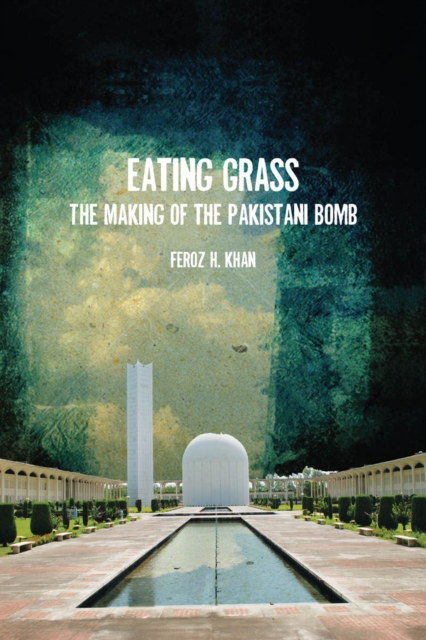
Eating grass : the making of the Pakistani bomb
The history of Pakistan's nuclear program is the history of Pakistan. Fascinated with the new nuclear science, the young nation's leaders launched a nuclear energy program in 1956 and consciously interwove nuclear developments into the broader narrative of Pakistani nationalism. Then, impelled first by the 1965 and 1971 India-Pakistan Wars, and more urgently by India's first nuclear weapon test in 1974, Pakistani senior officials tapped into the country's pool of young nuclear scientists and engineers and molded them into a motivated cadre committed to building the 'ultimate weapon.' The tenacity of this group and the central place of its mission in Pakistan's national identity allowed the program to outlast the perennial political crises of the next 20 years, culminating in the test of a nuclear device in 1998. Written by a 30-year professional in the Pakistani Army who played a senior role formulating and advocating Pakistan's security policy on nuclear and conventional arms control, this book tells the compelling story of how and why Pakistan's government, scientists, and military, persevered in the face of a wide array of obstacles to acquire nuclear weapons. It lays out the conditions that sparked the shift from a peaceful quest to acquire nuclear energy into a full-fledged weapons program, details how the nuclear program was organized, reveals the role played by outside powers in nuclear decisions, and explains how Pakistani scientists overcome the many technical hurdles they encountered. Thanks to General Khan's unique insider perspective, it unveils and unravels the fascinating and turbulent interplay of personalities and organizations that took place and reveals how international opposition to the program only made it an even more significant issue of national resolve. Listen to a podcast of a related presentation by Feroz Khan at the Stanford Center for International Security and Cooperation at cisac.stanford.edu/events/recording/7458/2/765 [http://cisac.stanford.edu/events/recording/7458/2/765].
eBook
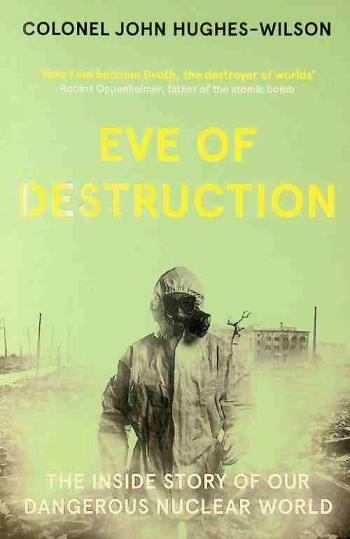
Eve of destruction : the inside story of our dangerous nuclear world
Truman evidently understood the terrifying power of atomic weaponry, but no one could have realised its full potential when he ordered the bombings of Hiroshima and Nagasaki in August 1945. Those military attacks, along with the disasters at the Fukashima and Chernobyl nuclear reactors, might immediately spring to mind at the mention of nuclear destruction, but the vast majority of the events recorded in this book are entirely unknown to most people. This book records the facts, many of them still shrouded in secrecy - which show a worrying truth: we have teetered precariously on the brink of Armageddon far more frequently than the general public realises. Since that first and last atomic war in 1945, there have been a terrifying number of nuclear accidents and mishaps, from the careless or accidental to the genuinely intentional and only narrowly averted. Despite the catastrophic nature of any nuclear conflict, we have come to the very borders of such a situation ten times since the 1960s. Most people know about the Cuba Missile Crisis, and a few about Operation Able Archer in 1984, which, if anything, was even more frightening than Cuba, but there have been eight other occasions that might easily have toppled over into outright war. These were potential conflicts; but there have been other accidents, such as the reactor meltdown at the nuclear generating plant at Three Mile Island, Pennsylvania, in 1979, or the 'Palomares Incident' in 1966, when a USAF B-52 bomber crashed after a mid-air collision, dropping four hydrogen bombs on Spanish soil. Eve of Destruction is a warning from history, recent history. It is a call to sit up and listen, and to take note of the very real danger of nuclear catastrophe. It is a timely and important book because, after all, the future of our planet has to concern us all.

Nuclear Statecraft
\"Gavin not only succeeds in disentangling postwar
nuclear history from the US-Soviet rivalry of the Cold War, but
provides a deeper and more complex understanding of the long-term
effects of nuclear weapons on Great Power relations.\" -
Matthew Jones ― International Affairs
We are at a critical juncture in world politics. Nuclear
strategy and policy have risen to the top of the global policy
agenda, and issues ranging from a nuclear Iran to the global zero
movement are generating sharp debate. The historical origins of our
contemporary nuclear world are deeply consequential for
contemporary policy, but it is crucial that decisions are made on
the basis of fact rather than myth and misapprehension. In
Nuclear Statecraft , Francis J. Gavin
challenges key elements of the widely accepted narrative about the
history of the atomic age and the consequences of the nuclear
revolution.
On the basis of recently declassified documents, Gavin
reassesses the strategy of flexible response, the influence of
nuclear weapons during the Berlin Crisis, the origins of and
motivations for U.S. nuclear nonproliferation policy, and how to
assess the nuclear dangers we face today.
In case after case, he finds that we know far less than we think
we do about our nuclear history. Archival evidence makes it clear
that decision makers were more concerned about underlying
geopolitical questions than about the strategic dynamic between two
nuclear superpowers.Gavin's rigorous historical work not only tells
us what happened in the past but also offers a powerful tool to
explain how nuclear weapons influence international relations.
Nuclear Statecraft provides a solid
foundation for future policymaking.
We are at a critical juncture in world politics. Nuclear
strategy and policy have risen to the top of the global policy
agenda, and issues ranging from a nuclear Iran to the global zero
movement are generating sharp debate. The historical origins of our
contemporary nuclear world are deeply consequential for
contemporary policy, but it is crucial that decisions are made on
the basis of fact rather than myth and misapprehension. In
Nuclear Statecraft , Francis J. Gavin challenges key
elements of the widely accepted narrative about the history of the
atomic age and the consequences of the nuclear revolution.On the
basis of recently declassified documents, Gavin reassesses the
strategy of flexible response, the influence of nuclear weapons
during the Berlin Crisis, the origins of and motivations for U.S.
nuclear nonproliferation policy, and how to assess the nuclear
dangers we face today. In case after case, he finds that we know
far less than we think we do about our nuclear history. Archival
evidence makes it clear that decision makers were more concerned
about underlying geopolitical questions than about the strategic
dynamic between two nuclear superpowers.Gavin's rigorous historical
work not only tells us what happened in the past but also offers a
powerful tool to explain how nuclear weapons influence
international relations. Nuclear Statecraft provides a
solid foundation for future policymaking.
eBook

Destroyer of worlds : the deep history of the Nuclear age
\"The thrilling and terrifying seventy-year story of the physics that deciphered the atom and created the hydrogen bomb Although Henri Becquerel didn't know it at the time, he changed history in 1895 when he left photographic plates and some uranium rocks in a drawer. The rocks emitted something that exposed the plates: it was the first documented evidence of spontaneous radioactivity. So began one of the most exciting and consequential efforts humans have ever undertaken. As Frank Close recounts in Destroyer of Worlds, scientists confronting Becquerel's discovery had three questions: What was this phenomenon? Could it be a source of unlimited power? And (alas), could it be a weapon? Answering them was an epic journey of discovery, with Ernest Rutherford, Enrico Fermi, Irene Joliot-Curie, and many others jockeying to decipher the dance of particles in a decaying atom. And it was a terrifying journey as well, as Edward Teller and others pressed on from creating atom bombs to hydrogen bombs so powerful that they could destroy all life on Earth. The deep history of the nuclear age has never before been recounted so vividly. Centered on an extraordinary cast of characters, Destroyer of Worlds charts the course of nuclear physics from simple curiosity to potential Armageddon\"-- Provided by publisher.
BOOK

The nuclear crisis
In 1983, more than one million Germans joined to protest NATO's deployment of nuclear missiles in Europe. This volume survey of the \"Euromissiles\" crisis as experienced by its various protagonists in Germany, including NATO's strategic maneuvering and the contours of the German protest movement.
eBook