Catalogue Search | MBRL


Are you sure you want to remove the book from the shelf?

{{itemTitle}}
2,926
result(s) for
"Physical Fitness history."
Sort by:

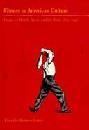
Getting physical : the rise of fitness culture in America
\"In this first book on the modern history of exercise in America, Shelly McKenzie chronicles the governmental, scientific, commercial, and cultural forces that united--sometimes unintentionally--to make exercise an all-American habit. She tracks the development of a new industry that gentrified exercise and made the pursuit of fitness the hallmark of a middle-class lifestyle. Along the way she scrutinizes a number of widely held beliefs about Americans and their exercise routines, such as the link between diet and exercise and the importance of workplace fitness programs.\"-- Book jacket flap.
Book

Bicycle Use in Germany: Explaining Differences between Municipalities with Social Network Effects
This paper aims to account for important factors influencing bicycle use and focuses in particular on differences between 20 selected German municipalities with considerable variation in their bicycle mode share. Using data from the nation-wide survey Mobility in Germany 2002, a mode choice model for bicycling is developed. In an extension to previous research, social network or spillover effects as a measure of the city's bicycling culture are also taken into account. These effects are modelled using an instrumental variable approach. It is shown that social network effects increase the probability of cycling for shopping and recreational trip purposes, but not for school, work or errands. Furthermore, it is found that cycling infrastructure matters only for shopping and errand trips. Finally, commuting trips by bicycle seem to be largely independent of any policy variables.
Journal Article

Lift : fitness culture, from naked Greeks and acrobats to jazzercise and ninja warriors
\"A cultural history of fitness explores the ways in which human ex ercise has changed over time and what can be learned from our athletic ancestors, evaluating whether today's high-tech exercise machines are actually productive while making recommendations based on early health practices\"--Novelist.
Book

C. H. McCloy Lecture
Over the past 50 years progress in fitness and activity research has been influenced by social events, technical innovations, and changes in the field of physical education and kinesiology. The conventional wisdom of the 1950s yielded to a new wisdom based on research evidence. The author's research, as well as the research of others, from 1960 to the present is discussed. The new wisdom focuses on health-related fitness and physical activity promotion based on health behavior change strategies.
Journal Article


Supple bodies, healthy minds: yoga, psychedelics and American mental health
Much discussion about mental health has revolved around treatment models. As interdisciplinary scholarship has shown, mental health knowledge, far from being a neutral product detached from the society that generated it, was shaped by politics, economics and culture. By drawing on case studies of yoga, religion and fitness, this article will examine the ways in which mental health practices—sometimes scientific, sometimes spiritual—have been conceived, debated and applied by researchers and the public. More specifically, it will interrogate the relationship between yoga, psychedelics, South Asian and Eastern religion (as understood and practiced in the USA) and mental health.
Journal Article

The temple of perfection : a history of the gym
Eric Chaline offers the first proper consideration of the gym's complex, layered history and the influence it has had on the development of Western individualism, society, education, and politics.
Book

Religiosity, Psychological Resources, and Physical Health
Various explanations have been given for the positive association between religiosity and physical health. Using data from two waves of the National Survey ofMidlife in the United States (1995, 2005) and retrospective data on the importance of religion in the home in which respondents were raised we find that psychological resources, ope rationalized by measures of emotional and psychological well-being, mediate the effect of this early exposure to religion but only on self-rated health and physical symptomatology; chronic illnesses and health limitations on activities of daily living are unaffected.
Journal Article