
Catalogue Search | MBRL


Are you sure you want to remove the book from the shelf?

{{itemTitle}}
22,567
result(s) for
"Physics Data processing."
Sort by:

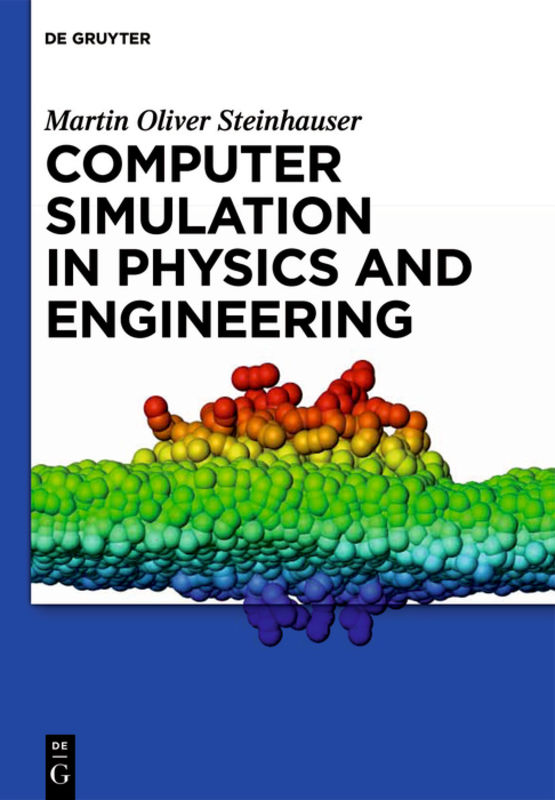
Computer Simulation in Physics and Engineering
This work is a needed reference for widely used techniques and methods of computer simulation in physics and other disciplines, such as materials science. Molecular dynamics computes a molecule's reactions and dynamics based on physical models; Monte Carlo uses random numbers to image a system's behaviour when there are different possible outcomes with related probabilities. The work conveys both the theoretical foundations as well as applications and \"tricks of the trade\", that often are scattered across various papers. Thus it will meet a need and fill a gap for every scientist who needs computer simulations for his/her task at hand. In addition to being a reference, case studies and exercises for use as course reading are included.
eBook

Lecture Notes in Numerical Analysis with Mathematica
The contents of this book include chapters on floating point computer arithmetic, natural and generalized interpolating polynomials, uniform approximation, numerical integration, polynomial splines and many more.This book is intended for undergraduate and graduate students in institutes, colleges, universities and academies who want to specialize in this field. The readers will develop a solid understanding of the concepts of numerical methods and their application. The inclusion of Lagrane and Hermite approximation by polynomials, Trapezian rule, Simpsons rule, Gauss methods and Romberg`s methods with illustrative examples is a valuable resource for the readers. Each chapter ends with examples and test questions.
eBook
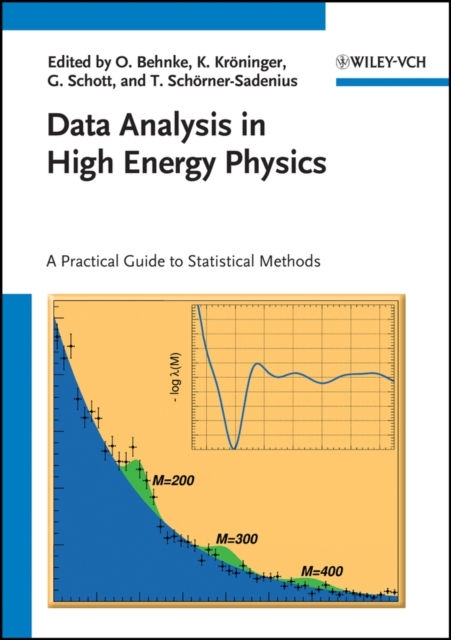
Data analysis in high energy physics
This practical guide covers the essential tasks in statistical data analysis encountered in high energy physics and provides comprehensive advice for typical questions and problems. The basic methods for inferring results from data are presented as well as tools for advanced tasks such as improving the signal-to-background ratio, correcting detector effects, determining systematics and many others. Concrete applications are discussed in analysis walkthroughs. Each chapter is supplemented by numerous examples and exercises and by a list of literature and relevant links. The book targets a broad readership at all career levels - from students to senior researchers. An accompanying website provides more algorithms as well as up-to-date information and links. * Free solutions manual available for lecturers at www.wiley-vch.de/supplements/
eBook

Number-Crunching
How do technicians repair broken communications cables at the bottom of the ocean without actually seeing them? What's the likelihood of plucking a needle out of a haystack the size of the Earth? And is it possible to use computers to create a universal library of everything ever written or every photo ever taken? These are just some of the intriguing questions that best-selling popular math writer Paul Nahin tackles inNumber-Crunching. Through brilliant math ideas and entertaining stories, Nahin demonstrates how odd and unusual math problems can be solved by bringing together basic physics ideas and today's powerful computers. Some of the outcomes discussed are so counterintuitive they will leave readers astonished.
Nahin looks at how the art of number-crunching has changed since the advent of computers, and how high-speed technology helps to solve fascinating conundrums such as the three-body, Monte Carlo, leapfrog, and gambler's ruin problems. Along the way, Nahin traverses topics that include algebra, trigonometry, geometry, calculus, number theory, differential equations, Fourier series, electronics, and computers in science fiction. He gives historical background for the problems presented, offers many examples and numerous challenges, supplies MATLAB codes for all the theories discussed, and includes detailed and complete solutions.
Exploring the intimate relationship between mathematics, physics, and the tremendous power of modern computers,Number-Crunchingwill appeal to anyone interested in understanding how these three important fields join forces to solve today's thorniest puzzles.
eBook
General Relativity
This book explores Einstein's theory of general relativity, which revolutionized our understanding of gravity and space-time. The book covers topics such as the curvature of space-time, black holes, and the expanding universe. It also discusses the applications of general relativity in modern physics and cosmology. This book is a must-read for anyone interested in understanding one of the most significant scientific theories of the 20th century.
eBook

Scientific Realism in Particle Physics
Particle physics studies highly complex processes which cannot be directly observed. Scientific realism claims that we are nevertheless warranted in believing that these processes really occur and that the objects involved in them really exist. This book defends a version of scientific realism, called causal realism, in the context of particle physics. The first part of the book introduces the central theses and arguments in the recent philosophical debate on scientific realism and discusses entity realism, which is the most important precursor of causal realism. It also argues against the view that the very debate on scientific realism is not worth pursuing at all. In the second part, causal realism is developed and the key distinction between two kinds of warrant for scientific claims is clarified. This distinction proves its usefulness in a case study analyzing the discovery of the neutrino. It is also shown to be effective against an influential kind of pessimism, according to which even our best present theories are likely to be replaced some day by radically distinct alternatives. The final part discusses some specific challenges posed to realism by quantum physics, such as non-locality, delayed choice and the absence of particles in relativistic quantum theories.
eBook
From physics to control through an emergent view
The book is a compilation of selected papers from the conference on Physics and Control 2009, presenting a unified perspective underlying the thematics and strategies related to the control of physical systems with emerging applications in physics, engineering, chemistry, biology and other natural sciences. The selected papers reflect the state-of-the-art of the more advanced theoretical and practical studies in the field of control of complex systems. The contributions provide a comprehensive view on some selected topics of particular importance at the disciplinary borderline between Physics and Control.
eBook

Robust Parametric Estimates of Heterogeneous Experimental Data
In the present work, a weighted maximum likelihood method (WMLM) is proposed to obtain robust estimates of experimental data containing outliers. The method allows asymptotically effective robust unbiased estimates to be obtained in the presence of not only external, but also internal asymmetric and symmetric outliers. Algorithms for obtaining robust WMLM estimates are considered at the parametric level of aprioristic uncertainty. It is demonstrated that these estimates converge to the maximum likelihood estimates of a heterogeneous data sample for each distribution within the Tukey supermodel.
Journal Article