Catalogue Search | MBRL


Are you sure you want to remove the book from the shelf?

{{itemTitle}}
488
result(s) for
"Revenge Drama."
Sort by:


Conrad's Victory
Basil Macdonald Hastings's dramatization of Joseph Conrad's Victory enjoyed a run of over eighty performances at London's Globe Theatre in 1919 with actor-producer Marie Löhr in the role of Lena. It remains the most successful stage adaptation of Conrad's fiction and Conrad himself was closely involved in the development of the script. This generously illustrated volume presents the complete script of Macdonald Hastings's play, the collected theatre reviews of the production, and the stage censor's confidential report on the script. The volume also features a substantial introduction placing the original novel and its subsequent dramatization in a stimulating critical and cultural context.
eBook

The white devil
\"Adultery, intrigue, murder, revenge: the densely-packed plot of The White Devil touches on topics that are representative of the atmosphere of Jacobean tragedy. Part tragedy, part satire of a corrupt political world, the play explores the relations of the powerful to the disempowered; the opportunities and constraints of women trying to survive in a male-dominated society; the complex distribution of social hierarchy by birth, wealth, gender, race; and the way the skills licensed by the theatre itself - including disguise and both the performance and interpretation of character - become crucial survival skills, in a world of hidden motives and concealed intentions. Now comprehensively re-edited, with an introduction that addresses issues of performance, cultural and historical context, and interpretation, exploring the dark energy that has impelled audiences and scholars to return to this play again and again across four centuries. Arden Early Modern Drama editions offer the best in contemporary scholarship, providing a wealth of helpful and incisive commentary and guiding the reader to a deeper understanding and appreciation of the play\"-- Provided by publisher.
Book

Revenge Tragedies of the Renaissance
In this study of revenge tragedies – notably by Thomas Kyd, William Shakespeare, Thomas Middleton, John Marston and John Webster – Janet Clare suggests that genres are not passively inherited, but made and re-made every time a new play is performed. The implication that there is an identifiable genre of revenge tragedy rehearsing common conventions is challenged as Clare examines Renaissance plays of revenge on their own terms. While disclosing evident inter-textual links and a similar appeal to classical material, revenge plays of the late Elizabethan and Jacobean period strive for a range of effects including satire, parody and farce. Some plays embody a providential outlook while others seem defiantly secular. Francis Bacon’s famous maxim ‘a kind of wild justice’ captures the moral ambivalence of revenge: a rough justice on the point of anarchy. Janet Clare demonstrates the problematic nature of revenge as it defines dramatic action As the exploration of plays in this study reveals, revenge is not only bound up with justice, honour and duty, but impelled by perverted impulses, envy and resentment.
eBook

The Orphan of Zhao: Chinese Revenge Drama and European Adaptations
This article is a comparative study of the thirteen-century Chinese revenge drama The Orphan of Zhao and its European adaptations from the eighteenth century to the present. Generally considered one of China's great tragedies and the first Chinese dramatic work introduced to Europe, this play makes a good case study as intercultural theater. Unlike the earlier studies which emphasized Chinese influence on European drama, this study examines how European adapters tried to remake the Chinese play to conform to Western criteria of drama, such as the three unities. It also discusses how the dramatic actions in William Hatchett's and Arthur Murphy's adaptations reflected the conditions of England rather than China, and how Voltaire appropriated the Chinese play to articulate his ideas of European Enlightenment. In contrast to the Eurocentric eighteenth-century adaptations, the 2012 production by the Royal Shakespeare Company represents a changing European attitude toward Chinese drama and a new direction in intercultural theater. This study provides a history of cultural exchanges between East and West through a systematic analysis of transnational transmissions of an important Chinese play.
Journal Article
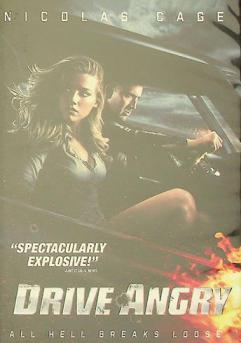
Drive angry
Strong brutal violence throughout, grisly images, some graphic sexual content, nudity and pervasive language.
DVD

Man Who Shot Liberty Valance
Journey into the Wild West, 1890, in this classic story of good versus evil, law versus the gun, one man versus Liberty Valance. A tale of love, hope and revenge set against the vicious backdrop of a lawless society. When a young scholar from New York City travels west in search of a new life he arrives beaten and half-dead on the dusty streets of Twotrees. Rescued from the plains, the town soon becomes his home. A local girl gives him purpose in a broken land, but is it enough to save him from the vicious outlaw who wants him dead? He must make the choice: to turn and run or to stand for what he believes, to live or to fight; to become the man who shot Liberty Valance.
eBook