
Catalogue Search | MBRL


Are you sure you want to remove the book from the shelf?

{{itemTitle}}
240
result(s) for
"Revolutions History Textbooks."
Sort by:

World histories from below : disruption and dissent, 1750 to the present
\"This textbook is the first to consider world history from below, providing an alternative to the privilege of Western powers and elite political structures found in conventional global history narratives\"-- Provided by publisher.
Book

Cairo collages
In Cairo collages, the large-scale political, economic, and social changes in Egypt brought on by the 2011 revolution are set against the declining fortunes of a single apartment building in a specific Cairo neighbourhood. The violence in Tahrir Square and Mohamed Mahmud Street; the post-January euphoric moment; the increasing militarisation of urban life; the flourishing of dystopian novels set in Cairo; the neo-liberal imaginaries of Dubai and Singapore as global models; gentrification and evictions in poor neighbourhoods; the forthcoming new administrative capital for Egypt – all are narrated in parallel to the ‘little’ story of the adventures and misfortunes of everyday interactions in a middle-class building in the neighbourhood of Doqi.
eBook

The Cato Street Conspiracy
On 23 February 1820 a group of radicals were arrested in Cato Street off the Edgware Road in London. They were within sixty minutes of setting out to assassinate the British cabinet. Five of the conspirators were subsequently executed and another five were transported for life to Australia. The plotters were a mixture of English, Scots and Irish tradesmen, and one was a black Jamaican. They were motivated by a desire to avenge the ‘Peterloo’ massacre and intended to declare a republic, which they believed would encourage popular risings in London and across Britain. This volume of essays uses contemporary reports by Home Office spies and informers to assess the seriousness of the conspiracy. It traces the practical and intellectual origins of the plotters’ willingness to use violence; describes the links between Irish and British radicals who were willing to take up arms; makes a contribution to early black history in Britain; examines the European context to events, and follows the lives and careers of those plotters exiled to Australia. A significant contribution to our understanding of a particularly turbulent period of British history, these well-written essays will find an appreciative audience among undergraduates, graduate students and scholars of British and Irish history and literature, black history, and the related fields of intelligence history and Strategic Studies.
eBook

Early modern war narratives and the Revolt in the Low Countries
In the sixteenth century, many different stories on the Revolt in the Low Countries spread throughout Europe, written by very different authors with very different intentions. Over time this plethora of sources and interpretations faded away, leaving us with only a couple of canonical narratives, extremely opposed in essence. In this way, the Dutch and Spanish national myths were forged on the basis of two different visions of the conflict: as a liberation war and act of rebellion against cruel Spanish oppressors or as a glorious part of the history of the Spanish Empire. This book revolves around the concept of episodic narratives, factual texts on the events and its protagonists, which can be seen at first sight as anecdotic, but that happen to be the building blocks of history. This approach renders the book thought-provoking for anybody interested in the history of the Revolt in the Low Countries, but also for those who wish to understand the dynamics of early modern narratives. Since it offers a wide array of sources in different languages it also provides readers with the chance to engage with texts they do not have easy access to. How did the Spanish write about the Revolt, what can we find in Italian chronicles, what were the Jesuits writing in their letters and how does the war look like from the perspective of a local nobleman or a Spanish commander?
eBook

The role of terrorism in twenty-first-century warfare
A critical reflection on the role of terrorism in major armed conflicts occurring during the 1990s and the first decade of the twenty first century. Case studies include Bosnia, Kosovo, Chechnya, Iraq, Afghanistan, and Syria.
eBook

Writing the history of parliament in Tudor and early Stuart England
This volume of essays explores the rise of parliament in the historical imagination of early modern England. The enduring controversy about the nature of parliament informs nearly all debates about the momentous religious, political and governmental changes of the period – most significantly, the character of the Reformation and the causes of the Revolution. Meanwhile, scholars of ideas have emphasised the historicist turn that shaped political culture. Religious and intellectual imperatives from the sixteenth century onwards evoked a new interest in the evolution of parliament, framing the ways that contemporaries interpreted, legitimised and contested Church, state and political hierarchies. Parliamentary ‘history’ is explored through the analysis of chronicles, more overtly ‘literary’ texts, antiquarian scholarship, religious polemic, political pamphlets, and of the intricate processes that forge memory and tradition.
eBook
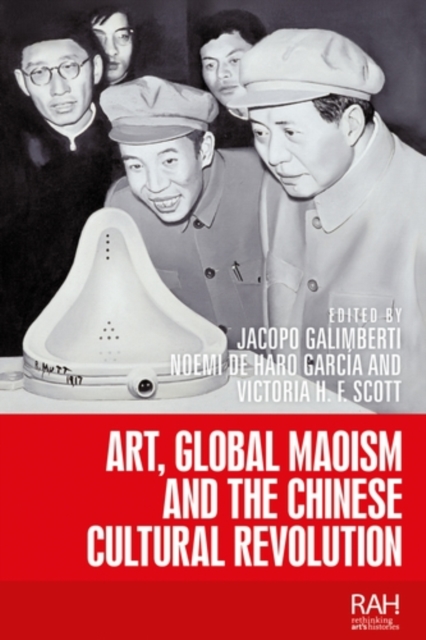
Art, Global Maoism and the Chinese Cultural Revolution
This lively anthology explores the impact of the art, images and ideas associated with Maoism on artistic practices around the world from 1945 to the present. It establishes that the chameleonic appearances of global Maoism deserve a more prominent place in the study of art history.
eBook

Na Fianna Éireann and the Irish Revolution, 1909–23
This book provides a scholarly yet accessible account of the Irish nationalist youth organisation Na Fianna Éireann and its contribution to the Irish Revolution in the period 1909–23. Countess Constance Markievicz and Bulmer Hobson established Na Fianna Éireann, or the Irish National Boy Scouts, in Dublin in 1909 as an Irish nationalist antidote to Robert Baden-Powell’s Boy Scout movement founded in the previous year. The Fianna soon spread beyond the Irish capital, offering their mainly male membership a combination of military training, outdoor adventure and Irish cultural activities. Between their inception in 1909 and near decimation during the Irish Civil War of 1922–23, Na Fianna Éireann recruited, trained and nurtured a cadre of young nationalist activists who made an essential contribution to the struggle for Irish independence. This book situates the Fianna within the wider international context of uniformed youth groups that arose in the late nineteenth and early twentieth centuries as a response to societal anxieties associated with the coming war in Europe. It compares and contrasts the Fianna to other Irish youth groups of the period and demonstrates how the Fianna served as a conduit for future members of adult paramilitary organisations, most notably the Irish Volunteers (later known as the Irish Republican Army).
eBook

Reformation without end
This study provides a radical reassessment of the English Reformation. No one in eighteenth-century England thought that they were living during ‘the Enlightenment’; instead, they saw themselves as facing the religious, intellectual and political problems unleashed by the Reformation, which began in the sixteenth century. Moreover, they faced those problems in the aftermath of two bloody seventeenth-century political and religious revolutions. This book examines how the eighteenth-century English debated the causes and consequences of those revolutions and the thing they thought had caused them, the Reformation. It draws on a wide array of manuscript sources to show how authors crafted and pitched their works.
eBook

Literature of the Stuart successions
Literature of the Stuart Successionsis an anthology of primary material relating to the Stuart successions. The six Stuart successions (1603, 1625, 1660, 1685, 1688-9, 1702) punctuate this turbulent period of British history. In addition, there were two accessions to the role of Lord Protector (those of Oliver and Richard Cromwell). Each succession generated an outpouring of publications in a wide range of forms and genres, including speeches, diary-entries, news reports, letters and sermons. Above all, successions were marked in poems, by some of the greatest writers of the age. By gathering together some of the very best Stuart succession writing, Literature of the Stuart Successions offers fresh perspectives upon the history and culture of the period. It includes fifty texts (or extracts), selected to demonstrate the breadth and significance of succession writing, as well as introductory and explanatory material.
eBook