
Catalogue Search | MBRL


Are you sure you want to remove the book from the shelf?

{{itemTitle}}
4,693
result(s) for
"Robots Programming."
Sort by:

Winning Design! : Lego Mindstorms Ev3 Design Patterns for Fun and Competition
Design that works. It's what you need if you're building and competing with LEGO MINDSTORMS EV3 robotics. It also brings full-color diagrams and pictures of design solutions. You'll find uses for the new light sensors and gyro sensors in navigation, helping you to follow lines and make turns more consistently. Approach collision detection with greater confidence through EV3's ultrasonic sensor. Learn new designs for power attachments.
Book
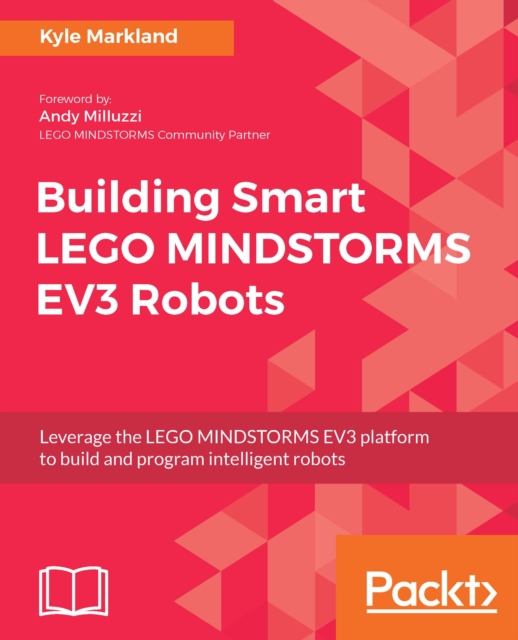
Building Smart LEGO MINDSTORMS EV3 Robots
LEGO MINDSTORMS EV3 is a robotics platform that allows enthusiasts of all ages and skill levels to prototype their own smart robots. This book will walk you through six EV3 projects that demonstrate engineering concepts used in real world smart robots, which will help you master the EV3 and develop the skills necessary to build your own smart.
eBook

Robot Operating System cookbook : over 70 recipes to help you master advanced ROS concepts
ROS is an open-source, meta-operating system for your robot which provides libraries and tools to help software developers create robot applications. This book will help you to design, build and simulate complex robots including mobile robots, robotic arms, and micro aerial vehicles, using this meta-operating system.
Book

Metaheuristics for Robotics
This book is dedicated to the application of metaheuristic optimization in trajectory generation and control issues in robotics.In this area, as in other fields of application, the algorithmic tools addressed do not require a comprehensive list of eligible solutions to effectively solve an optimization problem.
eBook


From Bricks to Brains: The Embodied Cognitive Science of Lego Robots
From Bricks to Brains introduces embodied cognitive science, and illustrates its foundational ideas through the construction and observation of LEGO Mindstorms robots. Discussing the characteristics that distinguish embodied cognitive science from classical cognitive science, From Bricks to Brains places a renewed emphasis on sensing and acting, the importance of embodiment, the exploration of distributed notions of control, and the development of theories by synthesizing simple systems and exploring their behaviour. Numerous examples are used to illustrate a key theme: the importance of an agent’s environment. Even simple agents, such as LEGO robots, are capable of exhibiting complex behaviour when they can sense and affect the world around them.
eBook


Learning robot differential movements using a new educational robotics simulation tool
The study of robotics has become a popular course among many educational programs, especially as a technical elective. A significant part of this course involves having the students learn how to program the movement of a robotic arm by controlling the velocity of its individual joint motors, a topic referred to as joint programming. They must learn how to develop algorithms to move the end effector of the arm by controlling the instantaneous velocity or some similar aspect, of each joint motor. To support this learning activity, physical or virtual robotic arms are typically employed. Visual observation of the movement of the arm provides feedback to the correctness of the student’s joint programming algorithms. A problem arises with supporting the student in learning how to move the robotic arm with precise velocity along some path, a subtopic of joint programming referred to as differential movements. To develop this knowledge, the student must produce and test differential movement algorithms and have the capability to verify its correctness. Regardless of the type of arm used, physical or virtual, the human eye cannot notice the difference between a correct or incorrect movement of the end effector as this will involve noticing small differences in velocities. This study found that by simulating the process of spray painting on a virtual canvas, the correctness of a differential movement algorithm may be accessed by observing the resulting paint on the canvas as opposed to observing the movement of the arm. A model of a set of spray-painting equipment and a canvas was added to an existing virtual robotic arm educational tool and used in an Introduction to Robotics class offered at Florida Gulf Coast University in Spring 2019 and Spring 2020. The class offered in Spring 2019 used the virtual arm but without the spray-painting feature while the class offered in Spring 2020 used the new spray-painting feature that was added to the virtual arm. Exam results show that 59.4% of the students that used the new feature scored at least an 85% on the corresponding differential movements exam question compared to only 5.6% of the class that did not use the added spray-painting feature. The differential movement exam question simply asked the student to produce a differential movements algorithm to move the arm with a specified velocity alone a straight line.
Journal Article

Robot programming : a guide to controlling autonomous robots
A beginner's guide to programming and automating modern robots. Drawing on their experience teaching thousands of robotics beginners, Cameron and Tracy Hughes show how to automate robots (or teams of robots), translating your ideas into specific tasks they can perform on their own, with no remote controls.
Book

Augmented Reality for Robotics: A Review
Augmented reality (AR) is used to enhance the perception of the real world by integrating virtual objects to an image sequence acquired from various camera technologies. Numerous AR applications in robotics have been developed in recent years. The aim of this paper is to provide an overview of AR research in robotics during the five year period from 2015 to 2019. We classified these works in terms of application areas into four categories: (1) Medical robotics: Robot-Assisted surgery (RAS), prosthetics, rehabilitation, and training systems; (2) Motion planning and control: trajectory generation, robot programming, simulation, and manipulation; (3) Human-robot interaction (HRI): teleoperation, collaborative interfaces, wearable robots, haptic interfaces, brain-computer interfaces (BCIs), and gaming; (4) Multi-agent systems: use of visual feedback to remotely control drones, robot swarms, and robots with shared workspace. Recent developments in AR technology are discussed followed by the challenges met in AR due to issues of camera localization, environment mapping, and registration. We explore AR applications in terms of how AR was integrated and which improvements it introduced to corresponding fields of robotics. In addition, we summarize the major limitations of the presented applications in each category. Finally, we conclude our review with future directions of AR research in robotics. The survey covers over 100 research works published over the last five years.
Journal Article