
Catalogue Search | MBRL


Are you sure you want to remove the book from the shelf?

{{itemTitle}}
2,794
result(s) for
"Science fiction, English."
Sort by:


Alien Constructions
Though set in other worlds populated by alien beings, science fiction is a site where humans can critique and re-imagine the paradigms that shape this world, from fundamentals such as the sex and gender of the body to global power relations among sexes, races, and nations. Feminist thinkers and writers are increasingly recognizing science fiction's potential to shatter patriarchal and heterosexual norms, while the creators of science fiction are bringing new depth and complexity to the genre by engaging with feminist theories and politics. This book maps the intersection of feminism and science fiction through close readings of science fiction literature by Octavia E. Butler, Richard Calder, and Melissa Scott and the movies The Matrix and the Alien series. Patricia Melzer analyzes how these authors and films represent debates and concepts in three areas of feminist thought: identity and difference, feminist critiques of science and technology, and the relationship among gender identity, body, and desire, including the new gender politics of queer desires, transgender, and intersexed bodies and identities. She demonstrates that key political elements shape these debates, including global capitalism and exploitative class relations within a growing international system; the impact of computer, industrial, and medical technologies on women's lives and reproductive rights; and posthuman embodiment as expressed through biotechnologies, the body/machine interface, and the commodification of desire. Melzer's investigation makes it clear that feminist writings and readings of science fiction are part of a feminist critique of existing power relations—and that the alien constructions (cyborgs, clones, androids, aliens, and hybrids) that populate postmodern science fiction are as potentially empowering as they are threatening.
eBook

The origins of science fiction : from Mary Shelley to W.E.B. Du Bois
A selection of science-fiction tales from the close of the 'Romantic' period to the end of the First World War. It gathers together classic short stories, from Edgar Allan Poe's playful hoaxes to Gertrude Barrows Bennett's feminist fantasy.
BOOK
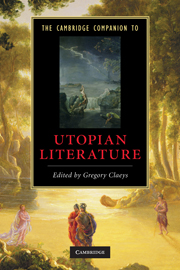
The Cambridge Companion to Utopian Literature
Since the publication of Thomas More's genre-defining work Utopia in 1516, the field of utopian literature has evolved into an ever-expanding domain. This Companion presents an extensive historical survey of the development of utopianism, from the publication of Utopia to today's dark and despairing tendency towards dystopian pessimism, epitomised by works such as George Orwell's Nineteen Eighty-Four and Margaret Atwood's The Handmaid's Tale. Chapters address the difficult definition of the concept of utopia, and consider its relation to science fiction and other literary genres. The volume takes an innovative approach to the major themes predominating within the utopian and dystopian literary tradition, including feminism, romance and ecology, and explores in detail the vexed question of the purportedly 'western' nature of the concept of utopia. The reader is provided with a balanced overview of the evolution and current state of a long-standing, rich tradition of historical, political and literary scholarship.
eBook


The very best of the best : 35 years of the Year's Best Science Fiction
\"For the first time in a decade, a compilation of the very best in science fiction, from a world authority on the genre. For decades, the Year's Best Science Fiction has been the most widely read short science fiction anthology of its kind. Now, after thirty-five annual collections. comes the ultimate in science fiction anthologies. In The Very Best of the Best, legendary editor Gardner Dozois selects the finest short stories for this landmark collection.\"--Publisher's description.
Book

Bodies of Tomorrow
Anxieties about embodiment and posthumanism have always found an outlet in the science fiction of the day. In Bodies of Tomorrow , Sherryl Vint argues for a new model of an ethical and embodied posthuman subject through close readings of the works of Gwyneth Jones, Octavia Butler, Iain M. Banks, William Gibson, and other science fiction authors. Vint’s discussion is firmly contextualized by discussions of contemporary technoscience, specifically genetics and information technology, and the implications of this technology for the way we consider human subjectivity.
Engaging with theorists such as Michel Foucault, Judith Butler, Anne Balsamo, N. Katherine Hayles, and Douglas Kellner, Bodies of Tomorrow argues for the importance of challenging visions of humanity in the future that overlook our responsibility as embodied beings connected to a material world. If we are to understand the post-human subject, then we must acknowledge our embodied connection to the world around us and the value of our multiple subjective responses to it. Vint’s study thus encourages a move from the common liberal humanist approach to posthuman theory toward what she calls ‘embodied posthumanism.’ This timely work of science fiction criticism will prove fascinating to cultural theorists, philosophers, and literary scholars alike, as well as anyone concerned with the ethics of posthumanism.
eBook


Science Fiction
From its beginnings in the works of H.G. Wells and Jules Verne to the virtual worlds of William Gibson's Neuromancer and The Matrix, Science Fiction: A Guide to the Perplexed helps students navigate the often perplexing worlds of a perennially popular genre. Drawing on literature as well as example from film and television, the book explores the different answers that criticism has offered to the vexed question, what is science fiction?' Each chapter of the book includes case studies of key texts, annotated guides to further reading and suggestions for class discussion to help students master the full range of contemporary critical approaches to the field, including the scientific, technological and political contexts in which the genre has flourished. Ranging from an understanding of the genre through the stereotypes of 1930s pulps through more recent claims that we are living in a science fictional moment, this volume will provide a comprehensive overview of this diverse and fascinating genre.
eBook