
Catalogue Search | MBRL


Are you sure you want to remove the book from the shelf?

{{itemTitle}}
189
result(s) for
"Spass"
Sort by:

The sociology of fun
What is fun? How is it distinct from happiness or pleasure? How do we know when we are having it? This book is the first to provide a comprehensive sociological account of this taken for granted social phenomenon. Fincham investigates areas such as our memories of fun in childhood, the fun we have as adults, our muted experiences of fun at work and our lived experiences of having fun. Using first-hand accounts and a new approach to interpreting fun, the paradox of fun as not serious or unimportant whilst at the same time essential for a happy life is exposed. Addressing questions of control, transgression and the primacy of social relationships in fun, The Sociology of Fun is intended to provoke discussion about how we want to have fun and who determines the fun we have.
Book

Activity achievement emotions and academic performance: A meta-analysis
Achievement emotions are emotions linked to academic, work, or sports achievement activities (activity emotions) and their success and failure outcomes (outcome emotions). Recent evidence suggests that achievement emotions are linked to motivational, self-regulatory, and cognitive processes that are crucial for academic success. Despite the importance of these emotions, syntheses of empirical findings investigating their relation with student achievement are scarce. We broadly review the literature on achievement emotions with a focus on activity-related emotions including enjoyment, anger, frustration, and boredom, and their links to educational outcomes with two specific aims: to aggregate all studies and determine how strongly related those emotions are to academic performance, and to examine moderators of those effects. A meta-analytical review was conducted using a systematic database of 68 studies. The 68 studies included 57 independent samples for enjoyment (N = 31,868), 25 for anger (N = 11,153), 9 for frustration (N = 1418), and 66 for boredom (N = 28,410). Results indicated a positive relation between enjoyment of learning and academic performance (p = .27), whereas the relations were negative for both anger (p = - 35) and boredom (p = -.25). For frustration, the relation with performance was near zero (p = -.02). Moderator tests revealed that relations of activity emotions with academic performance are stronger when (a) students are in secondary school compared with both primary school and college, and (b) the emotions are measured by the Achievement Emotions Questionnaires - Mathematics (AEQ-M). Theoretical and practical implications are discussed. (c) Springer Science+Business Media, LLC, part of Springer Nature 2021. (ZPID).
Journal Article

Control-value appraisals, enjoyment, and boredom in mathematics: A longitudinal latent interaction analysis
Based on the control-value theory of achievement emotions, this longitudinal study examined students' control-value appraisals as antecedents of their enjoyment and boredom in mathematics. Self-report data for appraisals and emotions were collected from 579 students in their final year of primary schooling over three waves. Data were analyzed using latent interaction structural equation modeling. Control-value appraisals predicted emotions interactively depending on which specific subjective value was paired with perceived control. Achievement value amplified the positive relation between perceived control and enjoyment, and intrinsic value reduced the negative relation between perceived control and boredom. These longitudinal findings demonstrate that control and value appraisals, and their interaction, are critically important for the development of students' enjoyment and boredom over time. (ZPID).
Journal Article

Enjoyment, boredom, anxiety in elementary schools in two domains: Relations with achievement
This study investigated the enjoyment, boredom, and anxiety of elementary school students and the relations of these emotions with achievement in two domains. 767 2nd- and 4th-graders completed an adaptation of the Achievement Emotions Questionnaire-Elementary School (AEQ-ES: Lichtenfeld, Pekrun, Stupnisky, Reiss, & Murayama, 2012) assessing their emotions in their native language and mathematics. The hierarchical model of the instrument was invariant across countries (Italy, Germany, United States), grades, gender, and domains. Anxiety related negatively to achievement, while enjoyment related positively to achievement only in mathematics. 2nd-graders reported more enjoyment and less boredom and anxiety than 4th-graders. Overall, mathematics resulted in better emotions than native language. The results have implications for future research on achievement emotions in elementary school. (ZPID).
Journal Article

Do quality teacher-student relationships protect teachers from emotional exhaustion? The mediating role of enjoyment and anger
Teaching can be an emotionally exhausting profession, thus mechanisms that protect teachers from feeling emotionally overextended need to be investigated. In two studies, we examined the indirect role teacher-student relationships have on teachers' level of emotional exhaustion through teachers' experiences of enjoyment and anger. In the first, we used a latent path analysis to examine the indirect effect of teacher-perceived (N=266) teacher-student-relationships on teachers' emotional exhaustion in a cross-sectional design. In the second study, we extended these findings to a longitudinal design that utilized student perceptions and replicated the indirect effect of teacher-student relationships on teachers' (N=69) emotional exhaustion using student (N=1643) perceptions of teacher-student relationships. The results from both studies indicated that high quality teacher-student relationships help protect teachers from being emotionally exhausted through increasing the amount of enjoyment and decreasing the amount of anger they experienced in the classroom. (c) Springer Nature B.V. 2018. (ZPID).
Journal Article

Teacher humor: Longitudinal effects on students' emotions
Characteristics of teaching are associated with the emotions students experience in the classroom; however, empirical evidence regarding longitudinal effects is scarce. The present study investigated changes in positive and negative achievement emotions (enjoyment, boredom, and anger) vis-a-vis different teacher humor types (course-related, course-unrelated, self-disparaging, and aggressive), using the instructional humor processing theory and control-value theory of achievement emotions as a theoretical foundation. A total of 668 German upper track secondary school students from 41 classrooms with a mean age of 12.7 years (SD=1.76) reported their perceptions of teacher humor and their experienced achievement emotions by completing online questionnaires (retest interval 6 months). Using the corresponding levels of emotions at the first measurement point as control values, results from multilevel analyses indicate that course-related humor weakens both decreases in enjoyment and increases in boredom and anger. Consistent with the hypotheses, aggressive humor leads to less enjoyment and more boredom and anger. Directions for future research are discussed and suggestions on how to best relate humor to course content are made. (ZPID).
Journal Article

When teacher enthusiasm is authentic or inauthentic: Lesson profiles of teacher enthusiasm and relations to students' emotions
It was recently proposed that teacher enthusiasm encompasses an experienced component as well as a behaviorally displayed component. Aiming to validate this proposition, the present study utilized lesson diaries to explore patterns of teacher-reported experienced enthusiasm and student-reported enthusiastic teaching behaviors and to investigate whether those patterns were related to students' enjoyment and boredom. Findings imply that the two enthusiasm components do not always co-occur. Four lesson profiles were identified: (1) experienced enthusiasm and enthusiastic teaching coinciding at a high level, (2) teachers reporting high levels of experienced enthusiasm but not being perceived as enthusiastic, (3) teachers being perceived as enthusiastic but not reporting high levels of experienced enthusiasm, and (4) low levels of experienced enthusiasm and enthusiastic teaching. The first pattern was superior to the other profiles regarding students' emotions. Study findings are discussed with respect to teachers' emotional well-being and teaching effectiveness. (ZPID).
Journal Article

Item position effects in a reading comprehension test: An IRT study of individual differences and individual correlates
Analyzed individual correlates of item position (IP) effects in a reading comprehension test, specifically, their size and meaning and the consequences for assessing students' reading comprehension abilities. IP effects are variations in item parameter estimates with respect to the position in which items are presented to test takers. They typically indicate that items become more difficult towards the end of a test, and are thought to reflect the persistence with which test takers invest effort and work precisely on the test. As such, it is argued that IP effects may be related to cognitive and motivational variables that are relevant for maintaining a high level of effort and precision. A large sample of fifth-grade students was analyzed, representative of the lower secondary school types in two German federal states. The authors propose an item response theory (IRT) model with random effects for item difficulties and fixed effects for item discriminations, and provide an Mplus syntax for its estimation. Results show evidence for gradually increasing item difficulties and decreasing discriminations. Variation in IP effects on the item difficulties was systematically related to students' decoding speed and reading enjoyment. It is concluded that the relationship between the overall scores and other variables is affected by respondents' test-taking behavior, which is reflected in the random IP effect. (ZPID).
Journal Article
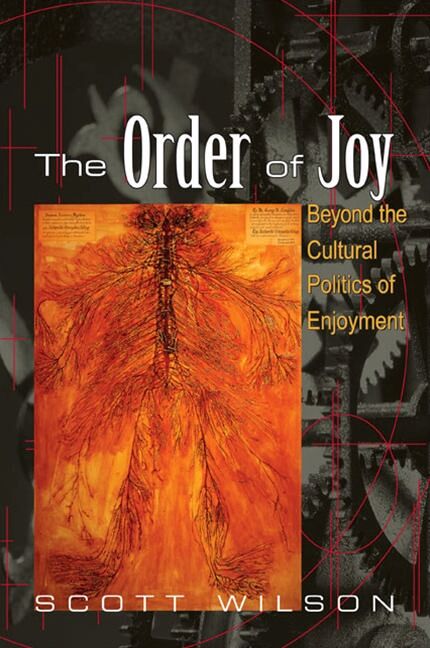
The Order of Joy
This provocative book introduces a new concept of \"joy\" within psychoanalytic and cultural studies that provides a different way of understanding the structures of affect produced by shifts in contemporary culture and economy. In so doing, the author offers a radically refigured Lacanianism that is developed through a critical reading of Deleuze.
eBook

Case Splitting in an Automatic Theorem Prover for Real-Valued Special Functions
Case splitting, with and without backtracking, is compared with straightforward ordered resolution. Both forms of splitting have been implemented for MetiTarski, an automatic theorem prover for real-valued special functions such as
, ln , sin, cos and tan
− 1
. The experimental findings confirm the superiority of true backtracking over the simulation of backtracking through the introduction of new predicate symbols, and the superiority of both over straightforward resolution.
Journal Article