
Catalogue Search | MBRL


Are you sure you want to remove the book from the shelf?

{{itemTitle}}
22,801
result(s) for
"Statues"
Sort by:

How Public Statues Wrong: Affective Artifacts and Affective Injustice
In what way might public statues wrong people? In recent years, philosophers have drawn on speech act theory to answer this question by arguing that statues constitute harmful or disrespectful forms of speech. My aim in this paper will be add a different theoretical perspective to this discussion. I will argue that while the speech act approach provides a useful starting point for thinking about what is wrong with public statues, we can get a fuller understanding of these wrongs by drawing on resources from recent work in situated affectivity. I will argue that public statues can be understood as affective artifacts and that this can both help us understand both the deep affective wrongs caused by public statues and offer a possible explanation as to why some people are so strongly opposed to their removal.
Journal Article


Man-made wonders of the world
\"Discover the most incredible statues, monuments, temples, bridges, and ancient cities, from Stonehenge to the Sagrada Familia, with this unparalleled survey of the most famous buildings and structures created by humans.\"--Provided by publisher.
Book

What color are the statues? Catholicism, colonisation et inculturation dans l'Eglise de Martinique
Through a reflection on the whiteness of statues in Catholic churches in Martinique, this article examines the mental representations and social and biblical meanings conveyed by these statues. An analysis of the devotion to saints, pilgrimages and canonizations shows how these practices contribute to maintaining attachment to France and how socially and racially situated figures of holiness are constructed. This preference for white statues highlights the weakness of inculturation within a church whose history remains linked to colonization and slavery.
Journal Article

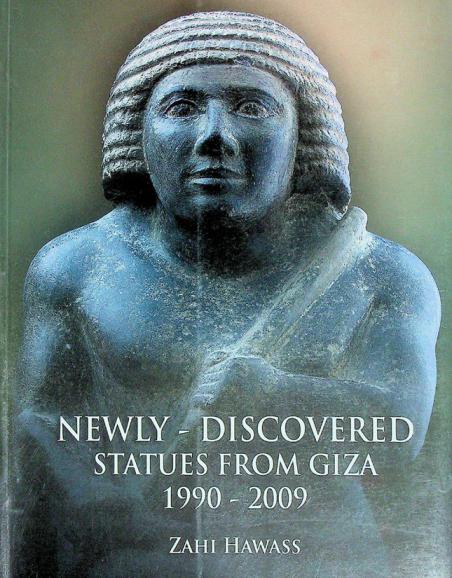
Ancient Egyptian statues : their many lives and deaths
\"Why do ancient Egyptian statues so often have their noses, hands, or genitals broken? Although Late Antiquity appears to have been one of the major moments of large-scale vandalism against pagan monuments, various contexts bear witness to several phases of reuse, modification, or mutilation of statues throughout and after the pharaonic period. Reasons for this range from a desire to erase the memory of specific rulers or individuals for ideological reasons to personal vengeance, war, tomb plundering, and the avoidance of a curse; or simply the reuse of material for construction or the need to ritually \"deactivate\" and bury old statues, without the added motive of explicit hostility toward the subject in question. Drawing on the latest scholarship and over 100 carefully selected illustrations, Ancient Egyptian Statues proceeds from a general discussion of the production and meaning of sculptures, and the mechanisms of their destruction, to review the role of ancient statuary in Egyptian history and belief. It then moves on to explore the various means of damage and their significance, and the role of restoration and reuse. Art historian Simon Connor offers an innovative and lucidly written reflection on beliefs and practices relating to statuary, and images more broadly, in ancient Egypt, showing how statues were regarded as the active manifestations of the entities they represented, and the ways in which they could endure many lives before being finally buried or forgotten.\"-- Provided by publisher.
BOOK

Exploring Daoist-Practicing Families in the Northern Dynasties Through Family-Sponsored Statues
Through the collection and analysis of family-sponsored statue remains from Shaanxi and surrounding regions, this study explores the practice of Daoism within local communities during the Northern Dynasties, where religious activities—such as the erection of statues—were organized around family units. Small families and households within three generations constituted the predominant organizational model of Daoist practice at the time. The primary participants were commoners, though local prominent clans also occasionally participated. While clan-sponsored statues were fewer in number, they played a significant role in local society by mobilizing statue projects and disseminating religious teachings. Religious beliefs centered on Daoism while also incorporating Buddhist elements, revealing a strong tendency toward Daoist–Buddhist interaction. This phenomenon may be attributed to the contemporary social climate that venerated both traditions, the functional similarities between Daoism and Buddhism, and the populace’s open attitude toward religious plurality. Research on these family-sponsored statue remains provides valuable materials and new perspectives for examining Daoist-practicing families of the Northern Dynasties—groups that are scarcely documented in historical texts and Daoist canons—particularly regarding their social stratification, belief structures, and lived religious practices.
Journal Article

Who could that be at this hour?
Thirteen-year-old Lemony Snicket begins his apprenticeship with S. Theodora Markson of the secretive V.F.D. in the tiny dot of a town called Stain'd By The Sea, where he helps investigate the theft of a statue.
Book

The Bronze Horseman
This book is the first comprehensive treatment in any language of the most consequential work of art ever to be executed in Russia-the equestrian monument to Peter the Great, orThe Bronze Horseman,as it has come to be known since it appeared in Alexander Pushkin's poem bearing that title.
The author deals with the cultural setting that prepared the ground for the monument and provides life stories of those who were involved in its creation: the sculptors Etienne-Maurice Falconet and Marie-Anne Collot, the engineer Marin Carburi, the diplomat Dmitry Golitsyn, and Catherine's \"commissar\" for culture, Ivan Betskoi. He also touches upon the extraordinary resonance of the monument in Russian culture, which, since the unveiling in 1782, has become the icon of St. Petersburg and has alimented the so-called \"St. Petersburg theme\" in Russian letters, familiar from the works of such writers as Pushkin, Dostoevsky, Gogol, and Bely.
eBook