
Catalogue Search | MBRL


Are you sure you want to remove the book from the shelf?

{{itemTitle}}
3,265
result(s) for
"Upper limb"
Sort by:

Myoelectric Control Systems for Upper Limb Wearable Robotic Exoskeletons and Exosuits—A Systematic Review
In recent years, myoelectric control systems have emerged for upper limb wearable robotic exoskeletons to provide movement assistance and/or to restore motor functions in people with motor disabilities and to augment human performance in able-bodied individuals. In myoelectric control, electromyographic (EMG) signals from muscles are utilized to implement control strategies in exoskeletons and exosuits, improving adaptability and human–robot interactions during various motion tasks. This paper reviews the state-of-the-art myoelectric control systems designed for upper-limb wearable robotic exoskeletons and exosuits, and highlights the key focus areas for future research directions. Here, different modalities of existing myoelectric control systems were described in detail, and their advantages and disadvantages were summarized. Furthermore, key design aspects (i.e., supported degrees of freedom, portability, and intended application scenario) and the type of experiments conducted to validate the efficacy of the proposed myoelectric controllers were also discussed. Finally, the challenges and limitations of current myoelectric control systems were analyzed, and future research directions were suggested.
Journal Article
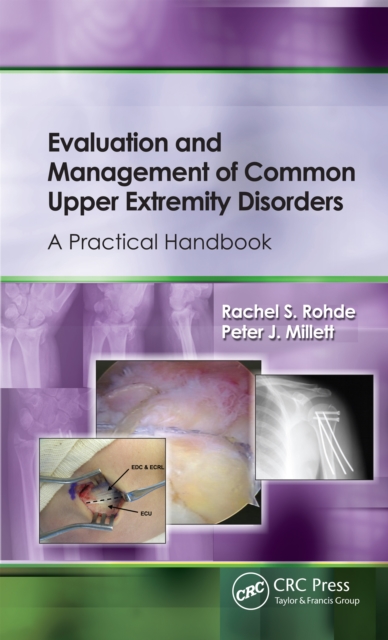
Evaluation and Management of Common Upper Extremity Disorders
Evaluation and Management of Common Upper Extremity Disorders: A Practical Handbook
answers the need for a comprehensive, yet concise reference that addresses practical solutions to everyday conditions that general orthopedic surgeons, and specialists alike, as well those involved with general musculoskeletal surgical and nonsurgical care, may encounter.
User friendly and pocket size,
Evaluation and Management of Common Upper Extremity Disorders
by Drs. Rachel S. Rohde and Peter J. Millett provides information on how to diagnose, treat, and manage the most commonly encountered conditions of the upper extremity.
Each condition addresses:
Mechanism of injury
Key examination points
Additional testing or imaging
Treatment options (operative and nonoperative)
Surgical anatomy
Surgical procedures
Rehabilitation
Expected outcomes
Potential complications
Just a few of the conditions covered inside:
Trigger finger and de Quervain's tenosynovitis
Distal radius fractures
Cubital tunnel syndrome
Distal biceps tendon rupture
Rotator cuff tears
Shoulder instability
Written in a bullet format, and including photos for quick, easy reference
, Evaluation and Management of Common Upper Extremity Disorders: A Practical Handbook
contains valuable information for all levels of training and experience. General orthopedic surgeons, orthopedic surgery residents and fellows, orthopedic surgery physician assistants, nurse practitioners, and nonoperative sports medicine specialists will welcome this thorough evaluation of common upper extremity disorders.
eBook

A VR-Based Upper Limb Exoskeleton for Neuromotor Rehabilitation
This paper presents a novel upper limb rehabilitation system for stroke patients, combining a patient-specific exoskeleton with an integrated Augmented Reality (AR) platform. By leveraging advanced technologies such as gesture recognition and AR tools (e.g., Microsoft HoloLens), the system aims to enhance functional recovery and user engagement. A custom-designed exoskeleton prototype has been developed and tested, emphasizing precise joint trajectory control, kinematic accuracy, and adaptability to individual user needs. Validation has been conducted through bench tests and human-in-the-loop experiments, focusing on control performance, ergonomic design, and safety. Moreover, the development and testing of the AR-assisted exoskeleton system were carried out with continuous input from a physical therapist, ensuring that clinical expertise was embedded from the conceptual stage onward. These results support future integration into customized rehabilitation protocols for better neurofunctional outcomes by confirming the viability and clinical potential of intelligent, user-adaptive exoskeleton systems.
Journal Article

Robotic Exoskeletons: A Perspective for the Rehabilitation of Arm Coordination in Stroke Patients
Upper-limb impairment after stroke is caused by weakness, loss of individual joint control, spasticity, and abnormal synergies. Upper-limb movement frequently involves abnormal, stereotyped, and fixed synergies, likely related to the increased use of sub-cortical networks following the stroke. The flexible coordination of the shoulder and elbow joints is also disrupted. New methods for motor learning, based on the stimulation of activity-dependent neural plasticity have been developed. These include robots that can adaptively assist active movements and generate many movement repetitions. However, most of these robots only control the movement of the hand in space. The aim of the present text is to analyze the potential of robotic exoskeletons to specifically rehabilitate joint motion and particularly inter-joint coordination. First, a review of studies on upper-limb coordination in stroke patients is presented and the potential for recovery of coordination is examined. Second, issues relating to the mechanical design of exoskeletons and the transmission of constraints between the robotic and human limbs are discussed. The third section considers the development of different methods to control exoskeletons: existing rehabilitation devices and approaches to the control and rehabilitation of joint coordinations are then reviewed, along with preliminary clinical results available. Finally, perspectives and future strategies for the design of control mechanisms for rehabilitation exoskeletons are discussed.
Journal Article
Development of a Neural-Fuzzy-Based Variable Admittance Control Strategy for an Upper Limb Rehabilitation Exoskeleton
Upper limb motor dysfunction resulting from stroke requires effective rehabilitation solutions; however, current exoskeletons are limited by single-input control, inadequate adaptation to various rehabilitation stages, and restriction to one limb. This study presents the development of a three-degree-of-freedom upper limb rehabilitation exoskeleton with three core innovations: (1) a neuro-fuzzy adaptive admittance control architecture that integrates human–robot interaction force and joint angular velocity as dual inputs for real-time damping adjustment, enabling accurate capture of dynamic movement intentions; (2) a Brunnstrom stage-specific fuzzy rule base that directly links clinical rehabilitation needs to adaptive control parameters; (3) a bilateral adaptable mechanical structure, allowing dual-upper limb training to enhance practical application. By combining radial basis function (RBF) neural network-based adaptive proportional–integral–derivative (PID) control with fuzzy variable-parameter admittance control, the system achieves a maximum trajectory tracking error of less than 1.2° and a root mean square (RMS) error of ≤0.13°. Trajectory tracing experiments confirm an RMS error of 2.99 mm for a circular trajectory at Bd = 2. The proposed strategy, validated through position tracking, admittance interaction, and trajectory tracing experiments, effectively balances tracking accuracy and human–machine compliance, providing valuable technical support for robot-assisted upper limb rehabilitation.
Journal Article

Virtual Reality Enhanced Exercise Training in Upper Limb Function of Patients With Stroke: Meta-Analytic Study
Recovery of upper limb function after stroke secondary to ischemia or hemorrhage is crucial for patients' independence in daily living and quality of life. Virtual reality (VR) is a promising computer-based technology designed to enhance the effects of rehabilitation; however, the results of VR-based interventions remain equivocal.
This study aims to review the plausible factors that may have influenced VR's therapeutic effects on improving upper limb function in patients with stroke, with the goal of synthesizing an optimal VR intervention protocol.
The databases PubMed, EMBASE, Web of Science, and Cochrane Library were queried for English-language papers published from May 2022 onward. Two reviewers independently extracted data from the included papers, and discrepancies in their findings were resolved through consensus during joint meetings. The risk of bias was assessed using the Physiotherapy Evidence Database Scale and the Methodological Index for Non-Randomized Studies. Outcome variables included the Action Research Arm Test, Box-Block Test, Functional Independence Measure, Upper Extremity Fugl-Meyer Assessment, and Wolf Motor Function Test. The plausible factors examined were age, total dosage (hours), trial length (weeks), session duration (hours/session), frequency (sessions/week), and VR content design. The Bonferroni adjustment was applied to P values to prevent data from being incorrectly deemed statistically significant.
The final sample included 15 articles with a total of 1243 participants (age range 48.6-75.59 years). Participants in the VR therapy (VRT) group (n=455) demonstrated significantly greater improvements in upper limb function and independence in activities of daily living compared with those in the conventional therapy group (n=301). Significant factors contributing to improved outcomes in upper limb function were younger age (mean difference [MD] 5.34, 95% CI 2.18-8.5, P<.001; I2=0%), interventions lasting more than 15 hours (MD 9.67, 95% CI 4.19-15.15, P<.001; I2=0%), trial lengths exceeding 4 weeks (MD 4.02, 95% CI 1.39-6.65, P=.003; I2=15%), and more than 4 sessions per week (MD 3.48, 95% CI 0.87-6.09, P=.009; I2=0%). However, the design of the VR content, including factors such as the number of features (eg, offering exercise and functional tasks; individualized goals; activity quantification; consideration of comorbidities and baseline activity level; addressing patient needs; aligning with patient background such as education level; patient-directed goals and interests; goal setting; progressive difficulty levels; and promoting self-efficacy), did not demonstrate significant effects (MD 3.89, 95% CI -6.40 to 1.09; effect Z=1.36, P=.16).
Greater VR effects on improving upper limb function in patients with stroke were associated with higher training doses (exceeding 15 hours) delivered over 4-6 weeks, with shorter sessions (approximately 1 hour) scheduled 4 or more times per week. Additionally, younger patients appeared to benefit more from the VR protocol compared with older patients.
Journal Article
A Wearable Multi-Modal Digital Upper Limb Assessment System for Automatic Musculoskeletal Risk Evaluation
Continuous ergonomic risk assessment of the human body is critical to avoid various musculoskeletal disorders (MSDs) for people involved in physical jobs. This paper presents a digital upper limb assessment (DULA) system that automatically performs rapid upper limb assessment (RULA) in real-time for the timely intervention and prevention of MSDs. While existing approaches require human resources for computing the RULA score, which is highly subjective and untimely, the proposed DULA achieves automatic and objective assessment of musculoskeletal risks using a wireless sensor band embedded with multi-modal sensors. The system continuously tracks and records upper limb movements and muscle activation levels and automatically generates musculoskeletal risk levels. Moreover, it stores the data in a cloud database for in-depth analysis by a healthcare expert. Limb movements and muscle fatigue levels can also be visually seen using any tablet/computer in real-time. In the paper, algorithms of robust limb motion detection are developed, and an explanation of the system is provided along with the presentation of preliminary results, which validate the effectiveness of the new technology.
Journal Article
Determinants of Different Aspects of Upper-Limb Activity after Stroke
We examined factors associated with different aspects of upper-limb (UL) activity in chronic stroke to better understand and improve UL activity in daily life. Three different aspects of UL activity were represented by four sensor measures: (1) contribution to activity according to activity ratio and magnitude ratio, (2) intensity of activity according to bilateral magnitude, and (3) variability of activity according to variation ratio. We combined data from a Belgian and Danish patient cohort (n = 126) and developed four models to determine associated factors for each sensor measure. Results from standard multiple regression show that motor impairment (Fugl–Meyer assessment) accounted for the largest part of the explained variance in all sensor measures (18–61%), with less motor impairment resulting in higher UL activity values (p < 0.001). Higher activity ratio, magnitude ratio, and variation ratio were further explained by having the dominant hand affected (p < 0.007). Bilateral magnitude had the lowest explained variance (adjusted R2 = 0.376), and higher values were further associated with being young and female. As motor impairment and biological aspects accounted for only one- to two-thirds of the variance in UL activity, rehabilitation including behavioral strategies might be important to increase the different aspects of UL activity.
Journal Article

Surveying the interest of individuals with upper limb loss in novel prosthetic control techniques
Background
Novel techniques for the control of upper limb prostheses may allow users to operate more complex prostheses than those that are currently available. Because many of these techniques are surgically invasive, it is important to understand whether individuals with upper limb loss would accept the associated risks in order to use a prosthesis.
Methods
An online survey of individuals with upper limb loss was conducted. Participants read descriptions of four prosthetic control techniques. One technique was noninvasive (myoelectric) and three were invasive (targeted muscle reinnervation, peripheral nerve interfaces, cortical interfaces). Participants rated how likely they were to try each technique if it offered each of six different functional features. They also rated their general interest in each of the six features. A two-way repeated measures analysis of variance with Greenhouse-Geisser corrections was used to examine the effect of the technique type and feature on participants’ interest in each technique.
Results
Responses from 104 individuals were analyzed. Many participants were interested in trying the techniques – 83 % responded positively toward myoelectric control, 63 % toward targeted muscle reinnervation, 68 % toward peripheral nerve interfaces, and 39 % toward cortical interfaces. Common concerns about myoelectric control were weight, cost, durability, and difficulty of use, while the most common concern about the invasive techniques was surgical risk. Participants expressed greatest interest in basic prosthesis features (e.g., opening and closing the hand slowly), as opposed to advanced features like fine motor control and touch sensation.
Conclusions
The results of these investigations may be used to inform the development of future prosthetic technologies that are appealing to individuals with upper limb loss.
Journal Article
Efficacy of Brain-Computer Interface Therapy for Upper Limb Rehabilitation in Chronic Stroke: Systematic Review and Meta-Analysis of Randomized Controlled Trials
Over 50% of people with chronic stroke experience persistent upper limb dysfunction. Brain-computer interface (BCI) therapy, creating a sensorimotor loop via neural feedback, is a promising alternative; yet, its optimal application remains unclear.
This meta-analysis evaluates BCI's efficacy on motor function, tone, and activities of daily living (ADL) in chronic stroke and identifies optimal feedback modalities and intervention parameters.
We systematically searched Cochrane Library, Embase, PubMed, Scopus, Web of Science, and Wanfang Data from inception to October 2025 for randomized controlled trials (RCTs) comparing BCI-based training to control interventions in adults with chronic stroke. Primary outcomes were upper limb motor function (Fugl-Meyer Assessment for upper extremity [FMA-UE], Action Research Arm Test [ARAT]), muscle tone (Modified Ashworth Scale [MAS]), and ADL (Modified Barthel Index [MBI], Motor Activity Log [MAL]). Screening, data extraction, and risk-of-bias assessment were performed independently. Meta-analysis used a random-effects model with Hartung-Knapp-Sidik-Jonkman adjustment. Pooled mean differences (MDs) with 95% CIs and 95% prediction intervals (PIs) were calculated. Subgroup analyses examined feedback modalities, intervention intensity, and follow-up effects. Sensitivity analysis was also conducted.
From 3529 records, 21 RCTs (650 participants) were included. BCI training significantly improved motor function (FMA-UE: MD 2.50, 95% CI 0.60-4.40; P=.01; 95% PI -2.52 to 7.22) and ADL performance (MBI: MD 8.38, 95% CI 2.23-14.53; P=.02; 95% PI -3.92 to 20.53; MAL: MD 2.09, 95% CI 0.42-3.76; P=.03; 95% PI -0.69 to 4.54). No significant effects were observed for fine motor skills (ARAT: MD 0.18, 95% CI -0.27 to 0.62; P=.30; 95% PI -3.64 to 3.99) or muscle tone (MAS: MD -0.48, 95% CI -1 to 0.03; P=.06; 95% PI -1.27 to 0.35). Subgroup analyses revealed that BCI-functional electrical stimulation (FES) yielded the greatest improvement in motor recovery (FMA-UE: MD 5, 95% CI 1.86-8.13; P=.01). The optimal intervention protocol was identified as 30-minute sessions, administered 4-5 times per week over 2 weeks (total of 10-12 sessions). However, benefits were not sustained at follow-up.
Low- to moderate-certainty evidence suggests that BCI training, particularly the BCI-FES paradigm, can improve upper limb motor function and ADL in people with chronic stroke on average. However, wide prediction intervals indicate the effect may vary substantially across settings, ranging from negligible to beneficial. Subgroup analyses suggested a potential optimal protocol of 30-minute sessions, 4-5 times per week for 2 weeks, but these findings are limited by the small number of studies in each subgroup and the high risk of bias in several included trials. Therefore, this proposed protocol should be viewed as preliminary and requires validation in future, high-quality RCTs. Future research should also focus on identifying patient subgroups most likely to benefit and on strategies to sustain long-term gains.
PROSPERO CRD420251063808; https://www.crd.york.ac.uk/PROSPERO/view/CRD420251063808.
Journal Article