
Catalogue Search | MBRL


Are you sure you want to remove the book from the shelf?

{{itemTitle}}
6,811
result(s) for
"Versions"
Sort by:


A History of German Jewish Bible Translation
Between 1780 and 1937, Jews in Germany produced numerous new translations of the Hebrew Bible into German. Intended for Jews who were trilingual, reading Yiddish, Hebrew, and German, they were meant less for religious use than to promote educational and cultural goals. Not only did translations give Jews vernacular access to their scripture without Christian intervention, but they also helped showcase the Hebrew Bible as a work of literature and the foundational text of modern Jewish identity. This book is the first in English to offer a close analysis of German Jewish translations as part of a larger cultural project. Looking at four distinct waves of translations, Abigail Gillman juxtaposes translations within each that sought to achieve similar goals through differing means. As she details the history of successive translations, we gain new insight into the opportunities and problems the Bible posed for different generations and gain a new perspective on modern German Jewish history.
eBook


Randomized clinical trial of the use of Propofol as a sedative agent versus spinal analgesia with bupivacaine in External Cephalic Version (PropoSpinECV): study protocol for a randomized clinical trial
Background
External Cephalic Version (ECV) is an effective procedure for modifying fetal position to achieve a cephalic presentation. ECV is usually performed with tocolysis and spinal anesthesia. Recently, propofol has been proposed as a sedative agent for ECV, showing promising results in observational studies. This clinical trial aims to compare the outcomes of ECV performed under tocolysis with either propofol or spinal anesthesia.
Methods
The PropoSpinECV randomized clinical trial is designed as a single-center, randomized, open-label trial. Participation will be offered to every pregnant woman with a non-cephalic presentation undergoing external cephalic version. Sedation with propofol and spinal analgesia with bupivacaine and fentanyl will be compared for ECV with a 1:1 allocation ratio. All procedures will be performed under tocolysis with ritodrine. The breech progression angle before ECV will be measured for all participants. The main outcome will be the ECV success rate. ECV complication rates and post-procedure pain will also be evaluated.
Discussion
The PropoSpinECV trial will thoroughly evaluate the efficacy of propofol in ECV. Additionally, this trial will investigate the role of the breech progression angle prior to ECV as a predictive variable for the success of the procedure.
Trial registration
The PropoSpinECV clinical trial is registered in the European Union Clinical Trial Database (EU CT number: 2024-510701-29-00) and in the ClinicalTrials.gov Database (NCT06449430) with the Clinical Trial Registry (2024-06-03).
Journal Article
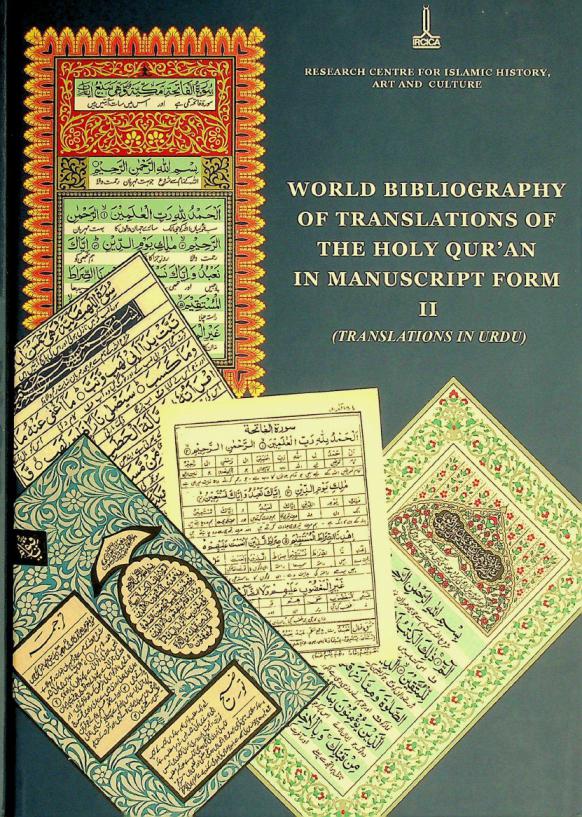

Reading the Qur'an in Latin Christendom, 1140-1560
Selected byChoicemagazine as an Outstanding Academic Title Most of what we know about attitudes toward Islam in the medieval and early modern West has been based on polemical treatises against Islam written by Christian scholars preoccupied with defending their own faith and attacking the doctrines of others. Christian readings of the Qur'an have in consequence typically been depicted as tedious and one-dimensional exercises in anti-Islamic hostility. InReading the Qur'an in Latin Christendom, 1140-1560, Thomas E. Burman looks instead to a different set of sources: the Latin translations of the Qur'an made by European scholars and the manuscripts and early printed books in which these translations circulated. Using these largely unexplored materials, Burman argues that the reading of the Qur'an in Western Europe was much more complex. While their reading efforts were certainly often focused on attacking Islam, scholars of the period turned out to be equally interested in a whole range of grammatical, lexical, and interpretive problems presented by the text. Indeed, these two approaches were interconnected: attacking the Qur'an often required sophisticated explorations of difficult Arabic grammatical problems. Furthermore, while most readers explicitly denounced the Qur'an as a fraud, translations of the book are sometimes inserted into the standard manuscript format of Christian Bibles and other prestigious Latin texts (small, centered blocks of text surrounded by commentary) or in manuscripts embellished with beautiful decorated initials and elegant calligraphy for the pleasure of wealthy collectors. Addressing Christian-Muslim relations generally, as well as the histories of reading and the book, Burman offers a much fuller picture of how Europeans read the sacred text of Islam than we have previously had.
eBook

Cover me : the stories behind the greatest cover songs of all time
\"From the creator of the popular website covermesongs.com comes the perfect book for music fans: the inside stories behind 20 iconic cover songs and the artists who turned them into classics. A great cover only makes a song stronger. Jimi Hendrix's version of Bob Dylan's 'All Along the Watchtower.' The Beatles rocking out with 'Twist and Shout.' Aretha Franklin demanding 'Respect.' Without covers, the world would have lost many unforgettable performances. This is the first book to explore the most iconic covers ever, from Elvis's 'Hound Dog' and Joe Cocker's 'With a Little Help from My Friends' to the Talking Heads' 'Take Me to the River' and Adele's 'Make You Feel My Love.' Written by the founder of the website covermesongs.com, each of the 19 chapters investigates the origins of a classic cover -- and uses it as a framework to tell the larger story of how cover songs have evolved over the decades. Cover Me is packed with insight, photography, and music history\"--Publisher's website.
Book

The Targums
The value and significance of the targums--translations of the Hebrew Bible into Aramaic, the language of Palestinian Jews for centuries following the Babylonian Exile--lie in their approach to translation: within a typically literal rendering of a text, they incorporate extensive exegetical material, additions, and paraphrases. These alterations reveal important information about Second Temple Judaism, its interpretation of its bible, and its beliefs. This remarkable survey introduces critical knowledge and insights that have emerged over the past forty years, including targum manuscripts discovered this century and targums known in Aramaic but only recently translated into English. Prolific scholars Flesher and Chilton guide readers in understanding the development of the targums, their relationship to the Hebrew Bible, their dates, their language, their place in the history of Christianity and Judaism, and their theologies and methods of interpretation.
eBook

The Bible in Arab Christianity
\"The contributions to this volume, which come from the Fifth Mingana Symposium, survey the use of the Bible and attitudes towards it in the early and classical Islamic periods\"--Page 4 of cover.
BOOK

A randomised controlled trial to assess the feasibility of utilising virtual reality to facilitate analgesia during external cephalic version
External cephalic version
(
ECV
)
is associated with a moderate degree of pain. Virtual reality
(
VR
)
is a technology that has shown promise in offering procedural analgesia. We undertook a clinical pilot to assess the viability of VR to reduce pain during ECV. In an open randomised controlled trial
(
RCT
)
, we randomised 50 women to either VR or standard care each
(
25 per group
)
. Women receiving VR were administered VR content
(
Skylights
)
via a headset. Pre- and post-procedural measures of pain, anxiety, device experience and vital signs were measured. There were no significant differences between groups
(
VR/no VR
)
in pain scores
(
60.68 vs 49.76; p = 0.2
)
, ECV success rates
(
80% vs 76%; p = 0.7
)
or anxiety levels. The women receiving VR had a significantly higher anticipation of pain pre-procedurally
(
70.0 vs 50.0; p = 0.03
)
. 20
(
80%
)
of the VR women indicated that they would use VR again and 22
(
88%
)
indicated they would recommend it to a friend having ECV. There were no significant differences between groups for side effects encountered or changes in vital signs. We have shown that using VR during ECV is feasible and appears safe. Our results inform the design of future RCTs.
Journal Article