
Catalogue Search | MBRL


Are you sure you want to remove the book from the shelf?

{{itemTitle}}
801
result(s) for
"Young adult fiction, American"
Sort by:


Contemporary Dystopian Fiction for Young Adults
Winner of the Children's Literature Association Edited Book Award
From the jaded, wired teenagers of M.T. Anderson's Feed to the spirited young rebels of Suzanne Collins' The Hunger Games trilogy, the protagonists of Young Adult dystopias are introducing a new generation of readers to the pleasures and challenges of dystopian imaginings. As the dark universes of YA dystopias continue to flood the market,Contemporary Dystopian Fiction for Young Adults: Brave New Teenagers offers a critical evaluation of the literary and political potentials of this widespread publishing phenomenon. With its capacity to frighten and warn, dystopian writing powerfully engages with our pressing global concerns: liberty and self-determination, environmental destruction and looming catastrophe, questions of identity and justice, and the increasingly fragile boundaries between technology and the self. When directed at young readers, these dystopian warnings are distilled into exciting adventures with gripping plots and accessible messages that may have the potential to motivate a generation on the cusp of adulthood. This collection enacts a lively debate about the goals and efficacy of YA dystopias, with three major areas of contention: do these texts reinscribe an old didacticism or offer an exciting new frontier in children's literature? Do their political critiques represent conservative or radical ideologies? And finally, are these novels high-minded attempts to educate the young or simply bids to cash in on a formula for commercial success? This collection represents a prismatic and evolving understanding of the genre, illuminating its relevance to children's literature and our wider culture.
eBook


Melancholia and maturation : the use of trauma in American children's literature
\"Coming of age\" in children's fiction often means achieving maturity through the experience of trauma. In classics ranging from Old Yeller to The Outsiders, a narrative of psychological pain defies expectations of childhood as a time of innocence and play. In this provocative new book, Eric L. Tribunella explores why trauma, especially the loss of a loved object, occurs in some of the most popular and critically acclaimed twentieth-century American fiction for children.
Tribunella draws on queer theory and feminist revisions of Freud's notion of melancholia, which is described as a fundamental response to loss, arguing that the low-grade symptoms of melancholia are in fact what characterize the mature, sober, and responsible American adult. Melancholia and Maturation looks at how this effect is achieved in a society that purports to protect youngsters from every possible source of danger, thus requiring melancholia to be induced artificially.
Each of the book's five chapters focuses on a different kind of lost object sacrificed so as to propel the child toward a distinctively gendered, sexual, ethical, and national adulthood-from same-sex friends to the companionship of boy-and-his-dog stories, from the lost ideals of historical fiction about the American Revolution to the children killed or traumatized in Holocaust novels. The author examines a wide spectrum of works-including Jack London's dog tales, the contemporary \"realistic\" novels of S. E. Hinton, and Newbery Medal winners like Johnny Tremain and Bridge to Terabithia.
Tribunella raises fundamental questions about the value of children's literature as a whole and provides context for understanding why certain books become required reading for youth.
Eric L. Tribunella is assistant professor of English at the University of Southern Mississippi. His articles have been published in Children's Literature Association Quarterly, Children's Literature in Education, The Lion and the Unicorn: A Critical Journal of Children's Literature, and Children's Literature.
eBook
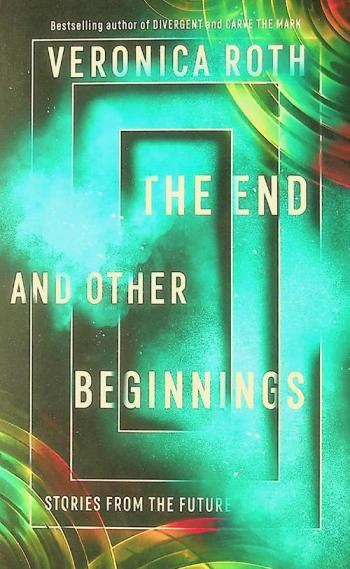
The end and other beginnings : stories from the future
No world is like the other. Within this collection, each setting is more strange and wonderful than the last, brimming with new technologies and beings. And yet, for all the advences, the people must still confront deeply human problems. \"Inertia\" focuses on a complex friendship between Claire and Matt. \"The Spinners\" follows a bounty hunter as she tracks and kills a predatory extraterrestrial race. \"Hearken\" tells the story of Darya, who makes a difficult decision between her role as a recorder of life songs or death songs. \"Vim and Vigor\" explores fandom, anxiety and female friendship. \"Armored Ones\" is set in the Carve the Mark world. Teka has one mission while working undercover: kill Cyra Noavek. \"The Transformationist\" delves into the psyche of Otho -- a prisoner in jail for a crime he never intended to commit.

Freud in Oz
Children’s literature has spent decades on the psychiatrist’s couch, submitting to psychoanalysis by scores of scholars and popular writers. Freud in Oz suggests that psychoanalysts owe a significant and largely unacknowledged debt to books ostensibly written for children. Kenneth B. Kidd argues that children’s literature and psychoanalysis have influenced and interacted with each other since Freud published his first case studies.
eBook


Writing youth
Writing Youth: Young Adult Fiction as Literacy Sponsorship studies young adult (YA) fiction that analyzes corporate sponsorship of media literacy practices in and through YA fiction. It shows how YA novels model for young people ways to manage the various media tools that surround them.
eBook

Gary Paulsen
\"Presents the biography of children's book author Gary Paulsen while exploring his creative process as a writer and the cultural impact of his work\"--Provided by publisher.
BOOK

Mental illness in young adult literature : exploring real struggles through fictional characters
This book explores how mental illness is portrayed in 21st-century young adult fiction and how selected works can help teachers, librarians, and mental health professionals to more effectively address the needs of students combating mental illness.
eBook