
Catalogue Search | MBRL


Are you sure you want to remove the book from the shelf?

{{itemTitle}}
8
result(s) for
"evaluaci "
Sort by:

The Norwegian traumatic grief inventory-self report plus (TGI-SR+): a psychometric evaluation in traumatically bereaved people
Prolonged grief disorder (PGD) has been added to the ICD-11 and DSM-5-TR. The Traumatic Grief Inventory-Self Report Plus (TGI-SR+) assesses self-rated PGD intensity as defined in ICD-11 and DSM-5-TR. The TGI-SR + is available in multiple languages, but has not been validated yet in Norwegian.
The aim of this study was to evaluate the psychometric properties of the Norwegian TGI-SR + .
Bereaved adults (
= 307) whose child or sibling died ≥6 months ago due to a sudden or violent loss completed the TGI-SR + and measures for posttraumatic stress, depression, and precursor PGD symptoms. We examined the factor structure and internal consistency of the ICD-11 and DSM-5-TR PGD items. Convergent validity and known-groups validity was evaluated. Probable PGD cases, pair-wise agreement between diagnostic scoring rules for both PGD criteria-sets, and cut-off scores were calculated.
The 1-factor model for ICD-11 and DSM-5-TR PGD showed the best fit and demonstrated good internal consistency. Convergent validity was supported by strong associations between summed ICD-11 and DSM-5-TR PGD scores and summed posttraumatic stress, depression, and precursor prolonged grief scores. Known-groups validity was supported by PGD intensity being related to educational level and time since loss. The perfect pair-wise agreement was reached using the ICD-11 and DSM-5-TR PGD diagnostic scoring rules. The optimal cut-off score for detecting probable PGD cases, when summing all TGI-SR + items, was ≥73.
The Norwegian TGI-SR + seems a valid and reliable instrument to assess ICD-11 and DSM-5-TR PGD intensity after losing a child or sibling under traumatic circumstances.
Journal Article
Development of a self-management mobile app for bereaved adolescents: evaluating patient and public involvement
Losing a family member during childhood is a potentially traumatic event and increases the risk of mental health difficulties. Adolescents have the right to express their views in research of relevance to them, but few studies have involved bereaved adolescents as collaborators (i.e. Patient and Public Involvement (PPI)). Furthermore, to ensure meaningful and non-tokenistic involvement, bereaved adolescents' levels of participation and experiences of taking part in research need to be evaluated.
The aim was to describe and evaluate a PPI process working with bereaved adolescents to develop a self-management mobile app for adolescents in grief.
The PPI process consisted of four workshops during which the app's logo, colours, name, content, and layout were discussed with six parentally bereaved adolescents aged 13-18 years. The adolescents were recruited through a non-profit organisation providing support for adolescents in grief. The PPI process was documented and evaluated using participant observations and an online survey completed by the adolescents, covering the themes of social context, participation, and influence.
The adolescents perceived the social context as comfortable and inclusive, where their knowledge was valued. Their participation was characterised by ownership and motivated by a desire to help others with similar experiences. The adolescents' ability to participate in PPI activities was assisted by the researchers' flexibility, although challenging assignments may have made participation harder. Throughout PPI activities, adolescents contributed with relevant input and reported feeling influential. The study reached the intended levels of participation and appeared to adequately fulfil the adolescents' right to participation.
Engaging adolescents who have undergone a potentially traumatic event, such as the loss of a family member, in research can enhance the overall relevance of the study. Moreover, it can entail a meaningful and positive experience for the participating adolescents, while also fulfilling their fundamental right to participation.
Journal Article

School Factors Related to Quality and Equity
Based on the survey results of OECD's PISA 2000 programme, this report looks at: the extent to which the schools that students attend make a difference in performance; the relative impact of school climate, school policies and school resources on quality and equity; the relationship between the structure of education systems and educational quality and equity; and the effect of decentralisation and privatisation to school performance. It concludes with a summary of how school factors relate to quality and equity, and the implications for policy. The analysis and data cover almost all OECD countries and 14 additional non-OECD countries.
eBook


Does Foreign Aid Really Work?
Provided for over 60 years, and expanding more rapidly today than it has for a generation, foreign aid is now a 100bn business. But does it work? Indeed, is it needed at all? In this first-ever, overall assessment of aid, Roger Riddell provides a rigorous but highly readable account of aid, warts and all.
eBook
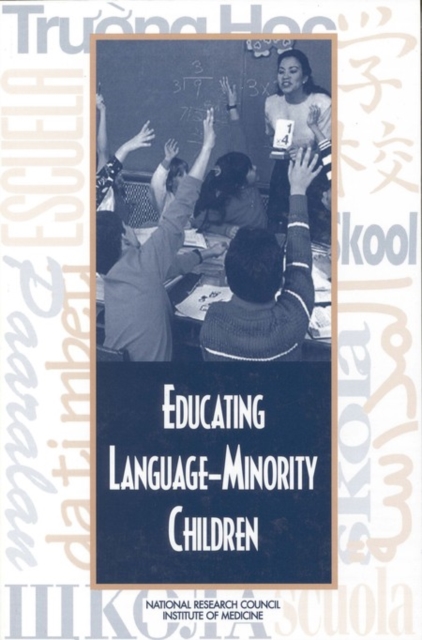
Educating Language-Minority Children
In the past 30 years, a large and growing number of students in U.S. schools have come from homes in which the language background is other than English. These students present unique challenges for America's education system.
Based on Improving Schooling for Language-Minority Children , a comprehensive study published in 1997, this book summarizes for teachers and education policymakers what has been learned over the past three decades about educating such students. It discusses a broad range of educational issues: how students learn a second language; how reading and writing skills develop in the first and second languages; how information on specific subjects (for example, biology) is stored and learned and the implications for second-language learners; how social and motivational factors affect learning for English-language learners; how the English proficiency and subject matter knowledge of English-language learners are assessed; and what is known about the attributes of effective schools and classrooms that serve English-language learners.
eBook

Making choices in health : WHO guide to cost-effectiveness analysis
Several guidelines on cost-effectiveness analysis (CEA) already exist. There are two reasons for producing another set. The first is that traditional or ''incremental'' CEA ignores the question of whether the current mix of interventions represents an efficient use of resources. Secondly, the resources required to evaluate the large number of interventions required to use CEA to identify opportunities to enhance efficiency are prohibitive. The approach of Generalized CEA proposed in this Guide seeks to provide analysts with a method of assessing whether the current as well as proposed mix of interventions is efficient. It also seeks to maximize the generalizability of results across settings. The Guide, in Part I, begins with a brief description of Generalized CEA and how it relates to the two questions raised above. It then considers issues relating to study design, estimating costs, assessing health effects, discounting, uncertainty and sensitivity analysis, and reporting results. Detailed discussions of selected technical issues and applications are provided in a series of background papers, originally published in journals, but included in this book for easy reference in Part II. The Guide and these papers are written in the context of the work of WHO-CHOICE: CHOosing Interventions that are Cost-Effective. WHO-CHOICE is assembling regional databases on the costs, impact on population health and cost-effectiveness of key health interventions using standardized methodology and tools. WHO-CHOICE tools on costing (CostIt©), population effectiveness modelling (PopMod©) and probabilistic uncertainty analysis (MCLeague©) are included in the accompanying compact disc.
eBook
