
Catalogue Search | MBRL


Are you sure you want to remove the book from the shelf?

{{itemTitle}}
2,222
result(s) for
"frying"
Sort by:
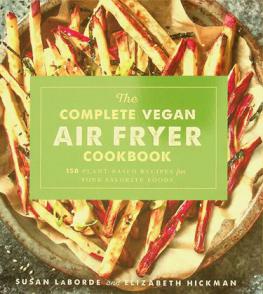
The complete vegan air fryer cookbook : 150 plant-based recipes for your favorite foods
\"Enjoy healthier, delicious versions of all of your favorite plant-based foods made with one of the hottest kitchen appliances on the market. Air fryers create the delicious crunch of fried foods without all the oil or grease, and [this book] shows you how to make amazingly tasty plant-based treats and meals that can save you time and help you eat healthy. The recipes are easy enough for the beginner, and your whole family will love them. Notes, tips, and variations offer best practices and ways to customize the recipes for different palates. A helpful introduction gives advice for air-frying success, a guide to terms and techniques, and a list of key ingredients. Handy appendixes include thematic menus, a comprehensive at-a-glance recipe table so you can find exactly the dish you want to make, a detailed air fryer buying guide, and conversion charts. Color photos and a full index complete this must-have plant-powered cookbook.\"--Cover flap.
Book

Review on deep-fat fried foods: physical and chemical attributes, and consequences of high consumption
Deep-fat frying is a widely discussed topic globally in the field of food processing due to the growing consumer demand. These foods are known for their appealing outer appearance, crispy texture, and rich taste. The increased consumption of deep-fat fried foods has raised concerns regarding potential health issues, as they are often high in calories and may contain unfavorable compounds formed during the process of deep frying. This review aims to provide an overview of previous studies examining the physical, chemical, and nutritional changes that occur in fried foods, the mechanisms of fat uptake during frying, and the health implications associated with the consumption of these foods. This increasing rate in consumption has been linked to various adverse health conditions. There has been a significant research focus on reducing the fat content in deep fried foods, particularly investigating the process of fat uptake during deep-fat frying. It is crucial to increase consumer awareness regarding the potential problems arising from excessive intake of deep-fat fried foods. Furthermore, further studies are needed to meet the rising demand for deep-fat fried foods while minimizing the impact on health and preserving their desirable taste.
Journal Article

Easy air fryer
\"Over 75 simple and delicious recipes to use with your new Air Fryer. Packed with healthy and low-effort recipes using supermarket staples, along with hints and tips on how to make the most of your Air Fryer, this cookbook will have you rustling up delicious meals time after time that save you time and money. Easy Air Fryer is the ultimate companion to your new kitchen gadget. From simple dinners to delicious brunches to even cooking a whole chicken, this book will bring variety and flavour to the meals you make with your Air Fryer! Recipes include: Sausage and egg breakfast muffin; Spinach and goats cheese frittata; Garlic, parmesan and lemon chicken wings; Nashville hot honey chicken fried burger; Whole roast chicken satay; Spinach and ricotta lasagna; Rhubarb custard puff pastry tarts; Salted caramel cupcakes\"--Publisher's description.
BOOK

A Review on Frying: Procedure, Fat, Deterioration Progress and Health Hazards
For decades, frying has been a popular technique for the preparation of foods, both on domestic and industrial scales. The effects of edible oil type and frying operation conditions on the shelf-life of fried products, the deterioration progress and the health hazards of fried foods have been studied by various researchers. To achieve a clear conception of the present situation, a collection of the results obtained from previous studies about product deterioration and safety issues due to the frying process, along with related tables, are of prime importance. According to the studies, it can be concluded that a vacuum, oil replenishment, frying temperature, and time of process are the most important parameters affecting the quality of oils and fried products; hence, by controlling them, it is possible to prevent the formation of toxic compounds and loss of nutritional components to a considerable extent during frying operation. Furthermore, according to recent studies indicating significant formation of toxic compounds before the chemical indices of the oil reach the disposal point, more studies are needed to determine whether they are formed at levels that compromise safety and affect consumers’ sensory perception before the established discard points.
Journal Article
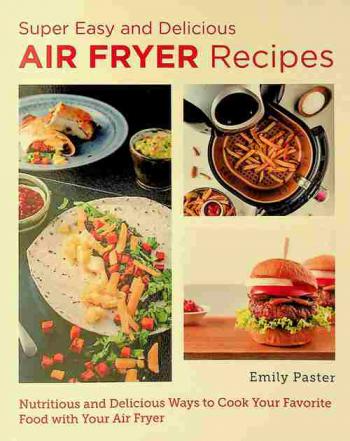

Effect of New Frying Technology on Starchy Food Quality
Frying is commonly used by consumers, restaurants, and industries around the globe to cook and process foods. Compared to other food processing methods, frying has several potential advantages, including reduced processing times and the creation of foods with desirable sensory attributes. Frying is often used to prepare starchy foods. After ingestion, the starch and fat in these foods are hydrolyzed by enzymes in the human digestive tract, thereby providing an important source of energy (glucose and fatty acids) for the human body. Conversely, overconsumption of fried starchy foods can promote overweight, obesity, and other chronic diseases. Moreover, frying can generate toxic reaction products that can damage people’s health. Consequently, there is interest in developing alternative frying technologies that reduce the levels of nutritionally undesirable components in fried foods, such as vacuum, microwave, air, and radiant frying methods. In this review, we focus on the principles and applications of these innovative frying technologies, and highlight their potential advantages and shortcomings. Further development of these technologies should lead to the creation of healthier fried foods that can help combat the rise in diet-related chronic diseases.
Journal Article

Healthy air fryer cookbook : 100 great recipes with fewer calories and less fat!
\"Air frying is fast, convenient, and healthier than oil frying, but it's not easy to find air frying recipes that are healthy and tasty. The Healthy Air Fryer Cookbook contains 100 recipes that are absolutely delicious and also better for your health because they use less oil and contain healthier ingredients than traditional fried foods. Included in this book are better-for-you versions of traditional main dishes, breakfasts, sides (like French fries), desserts (like cookies), and more. You'll also learn how to use this versatile appliance to bake, roast, and grill many of your favorite fried foods--with fewer calories.\" -- provided by publisher.
Book
Comparative Fingerprint Changes of Toxic Volatiles in Low PUFA Vegetable Oils Under Deep-Frying
The volatile fraction of three vegetable oils recommended for deep-frying due to their high MUFA:PUFA ratios, namely extra-virgin olive oil, peanut oil and canola oil, was compared before and after frying potatoes, with a particular focus on toxic volatiles. For the purpose, a headspace solid-phase-micro extraction technique coupled with gas chromatography and mass spectrometry was optimized, with semi-quantification achieved using two internal standards. Significant qualitative and quantitative differences were observed, both before and after frying. From a total of 51 compounds, aldehydes were the main group formed after deep-frying, their nature and abundance being highly associated with the initial fatty acid composition, particularly linoleic acid (
r
2
= −0.999,
p
≤ 0.001). Globally, extra-virgin olive oil revealed fewer formations of unsaturated aldehydes, including toxic ones, and correlated with lower amounts of degradation indicators, as polar compounds (
r
2
= 0.998,
p
≤ 0.001) and
p
-anisidine value (
r
2
= 0.991,
p
≤ 0.001). Despite the similarities in total unsaturation degree between canola and peanut oils, the former presented lower amount of volatiles, including
E,E
-2,4-decadienal and acrolein, the more toxic ones. These results highlight for the pertinence of volatile analyses to evaluate and compare oil degradation under thermal and oxidative stress, while complementing other degradation indicators. Additionally, the optimized methodology allows a direct comparison of different oil matrices, supporting further developments into more general methods for volatiles quantification, enabling more efficient comparison of results between research teams.
Journal Article

Effects of deep-fat frying process on the oil quality during French fries preparation
The performance of the sunflower oil in deep-fat frying was assessed by evaluating the efficacy of linoleic acid level and composition of tocopherol isomeric on its frying stability. The oil was used as a frying media to fry potato strips for 6 h daily for 7 days. Standard procedures for the measurement of used frying oil degradation such as fatty acid composition, acid value, anisidine value, conjugated diene value, total polar compounds and tocopherol concentration were used. At analogous composition of tocopherol isomers, the high oleic sunflower oil with smaller value of linoleic acid content indicated higher frying stability than the oil with higher linoleic acid level. This, indicating that the high oleic sunflower oil frying efficiency was depended mainly with the oil linoleic acid content and the composition of tocopherol isomers showed no significant effect. Also, the α-tocopherol degradation was lower compared to the corresponding degradation of γ-tocopherol.
Journal Article

Consumer acceptability and texture analysis of frozen dumplings using different cooking methods
Four frozen dumplings were prepared using air-frying, microwaving, pan-frying, and steaming for consumer acceptability and texture perception measure. Cluster analysis was performed and two groups resulted. Neutral consumers who generally rated ‘like slightly’ and ‘neither like nor dislike’ were influenced by the combinations of dumpling and cooking methods. Dumpling likers who rated higher than ‘like moderately’ were influenced by cooking methods. When divided into clusters, each effect was significant. For dumplings, consumers preferred three products over one. Regarding cooking methods, neutral consumers preferred pan-frying and air-frying. However, dumpling likers preferred pan-frying. Chewy, soft, crisp, and sticky characteristics positively influenced on acceptability. In addition, dumpling shells and fillings were analyzed to measure crispness and firmness, respectively, using a texture analyzer. Cooking methods influenced skin crispness but dumplings influenced filling firmness. Although correlation was very low between consumer texture perception and analytical measure, using both would be beneficial in further understanding.
Journal Article