
Catalogue Search | MBRL


Are you sure you want to remove the book from the shelf?

{{itemTitle}}
493,901
result(s) for
"measurements"
Sort by:

Measuring temperature
The temperature outside is always changing, which means getting an accurate read on it is important. This informative book shows readers how to measure temperature with a thermometer. Knowing the temperature will keep readers from diving into a freezing cold pool, or ensure they wear light clothes on a hot summer day. Showing measurements in both Fahrenheit and Celsius gives the book added value, and means readers will know the temperature no matter what kind of thermometer they use anywhere in the world.
Book

Bioluminescence
This book is an authoritative monograph on the recent progresses in the chemistry of bioluminescence. It provides a comprehensive overview of the past and the latest developments in understanding the biochemical mechanisms of some 35 different types of luminous organisms, together with information helpful to students and researchers in an Appendix. It is the first and only book that provides chemical information on all currently known bioluminescence systems. Dr Shimomura is the leading practitioner in the field for the past half century, and is best known for his discovery of the jellyfish photoprotein aequorin and the green fluorescent protein. This book is the bible of bioluminescence, and is “a must read,” not only for the students who study bioluminescence but also for those who work in various aspects relating to bioluminescence. This book will be an important source of chemical knowledge on bioluminescence for a long period of time in future.
eBook


Flow cytometry of hematological malignancies
Flow Cytometry of Hematological Malignancies contains an array of graphical outputs produced by the technique in the study of the most (and the least) common diseases. The images included allow you to compare your own results with a third party reference pattern. There is a detailed description of the main leukocyte antigens, together with a description of their distribution amongst normal and abnormal blood cells. The book also provides a comprehensive description of the phenotype of every neoplastic blood disease recorded in the WHO classification system, including all the instructions needed to recognise and classify even the least common entity. Designed to be practical, the book is perfect for quick consultation and is divided into two main sections. Section I deals with the direct object of immunophenotyping, and Section II deals with the ultimate target of the analysis. More than 50 antigens are covered and every antigen is dealt with in three main parts: general features, cytometric features and practical hints. This authoritative and state-of-the-art reference will be invaluable for clinicians directly involved in the diagnosis and analysis of hematological diseases, including hematologists, hematopathologists, oncologists, pathologists and technicians working in diagnostic laboratories.
eBook
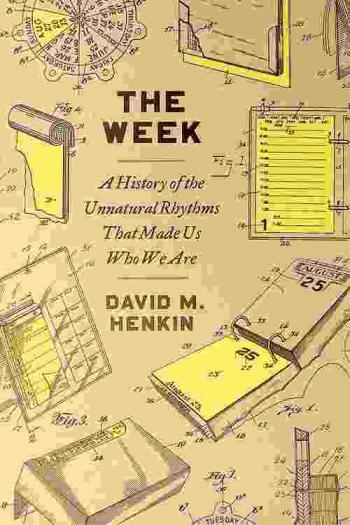
The week : a history of the unnatural rhythms that made us who we are
\"An investigation into the evolution of the seven-day week and how our attachment to its rhythms influences how we live. We take the seven-day week for granted, rarely asking what anchors it or what it does to us. Yet weeks are not dictated by the natural order. They are, in fact, entirely artificial -- a quintessentially modern cycle with an ancient pedigree. With meticulous archival research that draws on a wide array of sources -- including newspapers, restaurant menus, theater schedules, marriage records, school curricula, folklore, housekeeping guides, courtroom testimony, and diaries -- David Henkin reveals how our current devotion to weekly rhythms emerged in the United States during the first half of the nineteenth century. Reconstructing how weekly patterns insinuated themselves into the social practices and mental habits of Americans, Henkin argues that the week is more than just a regimen of rest days or breaks from work, but a dominant organizational principle of modern society. Ultimately, the seven-day week shapes our understanding and experience of time\"--Jacket.

Adapting educational and psychological tests for cross-cultural assessment
Adapting Educational and Psychological Tests for Cross-Cultural Assessment critically examines and advances new methods and practices for adapting tests for cross-cultural assessment and research. The International Test Commission (ITC) guidelines for test adaptation and conceptual and methodological issues in test adaptation are described in detail, and questions of ethics and concern for validity of test scores in cross-cultural contexts are carefully examined. Advances in test translation and adaptation methodology, including statistical identification of flawed test items, establishing equivalence of different language versions of a test, and methodologies for comparing tests in multiple languages, are reviewed and evaluated. The book also focuses on adapting ability, achievement, and personality tests for cross-cultural assessment in educational, industrial, and clinical settings.
This book furthers the ITC's mission of stimulating research on timely topics associated with assessment. It provides an excellent resource for courses in psychometric methods, test construction, and educational and/or psychological assessment, testing, and measurement. Written by internationally known scholars in psychometric methods and cross-cultural psychology, the collection of chapters should also provide essential information for educators and psychologists involved in cross-cultural assessment, as well as students aspiring to such careers.
Contents: Preface. Part I: Cross-Cultural Adaptation of Educational and Psychological Tests: Theoretical and Methodological Issues. R.K. Hambleton, Issues, Designs, and Technical Guidelines for Adapting Tests Into Multiple Languages and Cultures. F.J.R. van de Vijver, Y.H. Poortinga, Conceptual and Methodological Issues in Adapting Tests. T. Oakland, Selected Ethical Issues Relevant to Test Adaptations. S.G. Sireci, L. Patsula, R.K. Hambleton, Statistical Methods for Identifying Flaws in the Test Adaptation Process. S.G. Sireci, Using Bilinguals to Evaluate the Comparability of Different Language Versions of a Test. L.L. Cook, A.P. Schmitt-Cascallar, Establishing Score Comparability for Tests Given in Different Languages. L.L. Cook, A.P. Schmitt-Cascallar, C. Brown, Adapting Achievement and Aptitude Tests: A Review of Methodological Issues. Part II: Cross-Cultural Adaptation of Educational and Psychological Tests: Applications to Achievement, Aptitude, and Personality Tests. C.T. Fitzgerald, Test Adaptation in a Large-Scale Certification Program. C.Y. Maldonado, K.F. Geisinger, Conversion of the Wechsler Adult Intelligence Scale Into Spanish: An Early Test Adaption Effort of Considerable Consequence. N.K. Tanzer, Developing Tests for Use in Multiple Languages and Cultures: A Plea for Simultaneous Development. F. Drasgow, T.M. Probst, The Psychometrics of Adaptation: Evaluating Measurement Equivalence Across Languages and Cultures. M. Beller, N. Gafni, P. Hanani, Constructing, Adapting, and Validating Admissions Tests in Multiple Languages: The Israeli Case. P.F. Merenda, Cross-Cultural Adaptation of Educational and Psychological Testing. C.D. Spielberger, M.S. Moscoso, T.M. Brunner, Cross-Cultural Assessment of Emotional States and Personality Traits.
eBook

The perfect test
\"Some ten years from today, American schools have tried every possible education fad. Common national standards, year-round schools, takeover of school boards, and even the super-qualified teacher program have failed to improve low U.S. achievement on international assessments. That all changes when Grant and Jennifer Wilson, both Stanford Ph. D. graduates, create what they believe are the perfect tests. The Venus Assessment System, the first national tests in U.S. history, flip American education on its ear, making U.S. students number one in the world in math and science. But then Jennifer Wilson discovers a secret list of names, students who are exceptions to the high-stakes consequences of the test. So secret that some people are willing to kill for it.\"--Publisher's description.
Book

Enhancing Assessment in Higher Education
Co-published with AIR. Published in association with Assessment and accountability are now inescapable features of the landscape of higher education, and ensuring that these assessments are psychometrically sound has become a high priority for accrediting agencies and therefore also for higher education institutions. Bringing together the higher education assessment literature with the psychometric literature, this book focuses on how to practice sound assessment. This volume provides comprehensive and detailed descriptions of tools for and approaches to assessing student learning outcomes in higher education. The book is guided by the core purpose of assessment, which is to enable faculty, administrators, and student affairs professionals with the information they need to increase student learning by making changes in policies, curricula, and other programs. The book is divided into three sections: overview, assessment in higher education, and case studies. The central section looks at direct and indirect measures of student learning, and how to assure the validity, reliability, and fairness of both types. The first six chapters (the first two sections) alternate chapters written by experts in assessment in higher education and experts in psychometrics. The remaining three chapters are applications of assessment practices in three higher education institutions. Finally, the book includes a glossary of key terms in the field.
eBook

Calendar math
\"Calendar Math provides an ideal introduction to measuring time. From the days of the week to months of the year, readers will learn the different ways a calendar measures time. Vivid full-color images and entertaining narrative text model concepts such as patterning, comparing and contrasting, and solving simple problems\"-- Provided by publisher.
Book

ASSESSING STATE-OF-THE-ART CAPABILITIES FOR PROBING THE ATMOSPHERIC BOUNDARY LAYER
To assess current capabilities for measuring flow within the atmospheric boundary layer, including within wind farms, the U.S. Department of Energy sponsored the eXperimental Planetary boundary layer Instrumentation Assessment (XPIA) campaign at the Boulder Atmospheric Observatory (BAO) in spring 2015. Herein, we summarize the XPIA field experiment, highlight novel measurement approaches, and quantify uncertainties associated with these measurement methods. Line-of-sight velocities measured by scanning lidars and radars exhibit close agreement with tower measurements, despite differences in measurement volumes. Virtual towers of wind measurements, from multiple lidars or radars, also agree well with tower and profiling lidar measurements. Estimates of winds over volumes from scanning lidars and radars are in close agreement, enabling the assessment of spatial variability. Strengths of the radar systems used here include high scan rates, large domain coverage, and availability during most precipitation events, but they struggle at times to provide data during periods with limited atmospheric scatterers. In contrast, for the deployment geometry tested here, the lidars have slower scan rates and less range but provide more data during nonprecipitating atmospheric conditions. Microwave radiometers provide temperature profiles with approximately the same uncertainty as radio acoustic sounding systems (RASS). Using a motion platform, we assess motion-compensation algorithms for lidars to be mounted on offshore platforms. Finally, we highlight cases for validation of mesoscale or large-eddy simulations, providing information on accessing the archived dataset. We conclude that modern remote sensing systems provide a generational improvement in observational capabilities, enabling the resolution of finescale processes critical to understanding inhomogeneous boundary layer flows.
Journal Article