
Catalogue Search | MBRL


Are you sure you want to remove the book from the shelf?

{{itemTitle}}
167
result(s) for
"radical thought"
Sort by:

The Eastern Mediterranean and the making of global radicalism, 1860-1914
In this groundbreaking book, Ilham Khuri-Makdisi establishes the existence of a special radical trajectory spanning four continents and linking Beirut, Cairo, and Alexandria between 1860 and 1914. She shows that socialist and anarchist ideas were regularly discussed, disseminated, and reworked among intellectuals, workers, dramatists, Egyptians, Ottoman Syrians, ethnic Italians, Greeks, and many others in these cities. In situating the Middle East within the context of world history, Khuri-Makdisi challenges nationalist and elite narratives of Mediterranean and Middle Eastern history as well as Eurocentric ideas about global radical movements. The book demonstrates that these radical trajectories played a fundamental role in shaping societies throughout the world and offers a powerful rethinking of Ottoman intellectual and social history.
eBook

Haj to Utopia
In Haj to Utopia, Maia Ramnath tells the dramatic story of Ghadar, the Indian anticolonial movement that attempted overthrow of the British Empire. Founded by South Asian immigrants in California, Ghadar—which is translated as \"mutiny\"—quickly became a global presence in East Asia, Europe, the Middle East, and East Africa. Ramnath brings this epic struggle to life as she traces Ghadar's origins to the Swadeshi Movement in Bengal, its establishment of headquarters in Berkeley, California, and its fostering by anarchists in London, Paris, and Berlin. Linking Britain's declaration of war on Germany in 1914 to Ghadar's declaration of war on Britain, Ramnath vividly recounts how 8,000 rebels were deployed from around the world to take up the battle in Hindustan. Haj to Utopia demonstrates how far-flung freedom fighters managed to articulate a radical new world order out of seemingly contradictory ideas.
eBook

Between Problem and Critique: Whither the Postcolonial?
This essay seeks to set to work on the question of race and the futures of the postcolonial in post-apartheid South Africa through abiding by the site of the indeterminacy between problem and critique. Arguing that reading, in the robust sense offered by Gayatri Spivak and Stuart Hall, is a necessary and urgent response to the question, the paper examines the interventions of three key figures for thinking radical black thought in our time, namely Achille Mbembe's Critique of Black Reason, Nahum Chandler's X: The Problem of the negro as a Problem for Thought, and Qadri Ismail's Culture and Eurocentrism. Through abiding by the stakes of the work of reading in this conjuncture, I argue that it is through resisting the easy route of cultural and relativized difference that the pedagogical work of reading, and teaching reading, for the future, becomes possible.
Journal Article

Negative Evaluations of National Ethics and Its Impact on Islamic Radicalism
This research set out to examine the role of negative evaluations of national ethics in escalating Islamic radicalism. To this end, we conducted three studies among samples of Muslims in Indonesia. In Study 1b involving 610 participants, we tested in an explorative way the latent structure or the number of dimensions of negative evaluations of national ethics reflecting the perceived immorality, illegitimacy, and inefficiency of national ethics based on participants’ religious beliefs. We confirmed the number of dimensions of the negative evaluations of national ethics in Study 2 (N = 214), which also showed as expected how they augmented feelings of in-group superiority and tendencies to justify violence. These radical beliefs ultimately evoked intentions to carry out unlawful collective actions and offensive Jihad, negative intergroup attitudes such as out-group blame and negative group-based emotions such as anger. We also observed in Study 2 how the acknowledgment or awareness that Islam and the nation are of equal importance to the Indonesian context, which we referred to as dual identity centrality, explained fewer negative evaluations of national ethics. In Study 3, we recruited 583 participants through an online experiment devised as an intervention that proved significant for the enhancement of dual identity centrality. Designed as an extension of Study 2 in which radical beliefs were complemented with radical thoughts such as dogmatic intolerance, Study 3 also demonstrated that each of those radical tendencies significantly contributed to negative group-based attitudes and emotions, as well as motivations to engage in violent actions. What can be derived from these empirical findings is that dual identity centrality holds potential for reducing the negative evaluations of national ethics, which in turn may overcome Islamic radicalism along with its detrimental intergroup consequences.
Journal Article
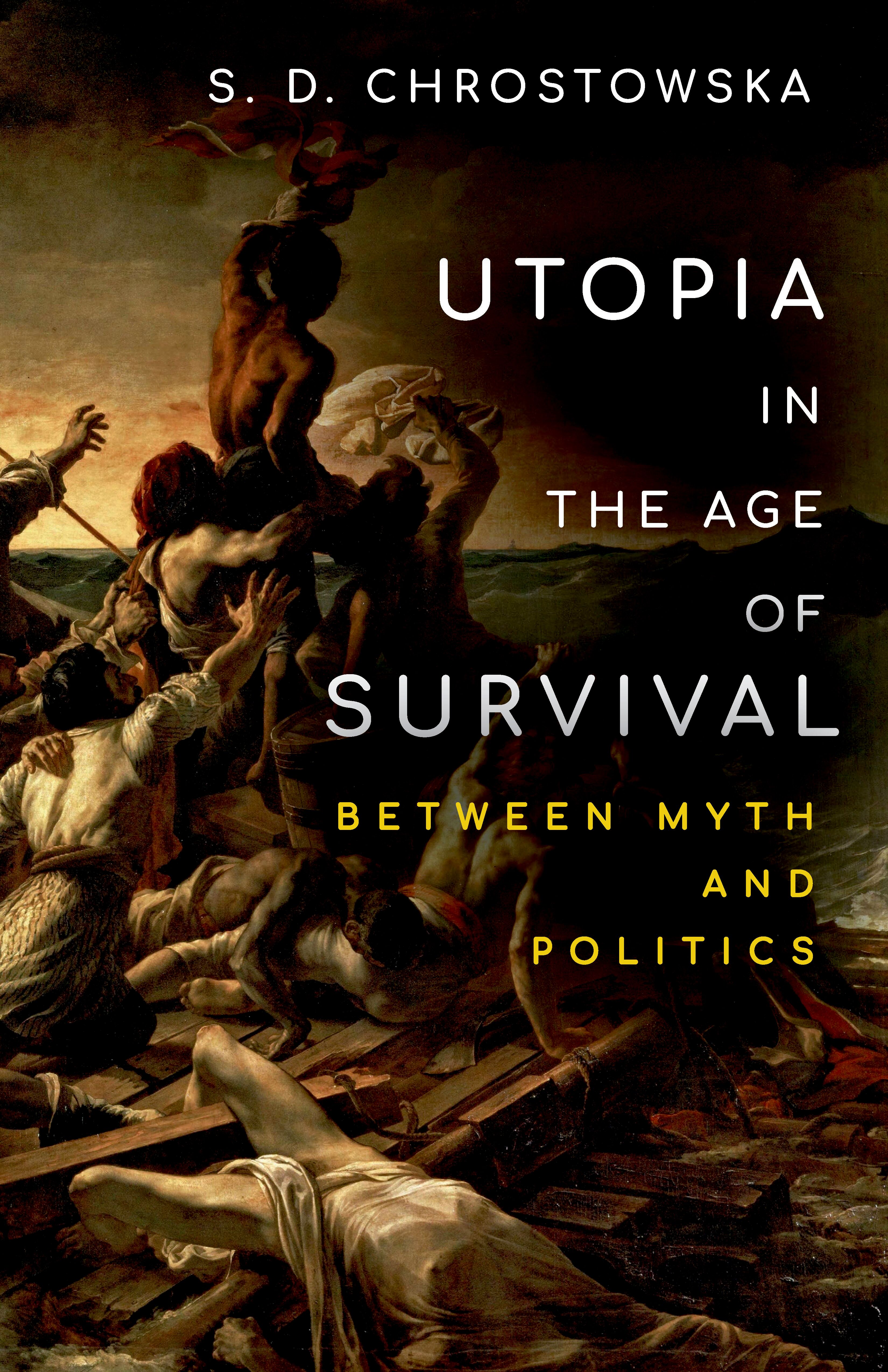
Utopia in the age of survival : between myth and politics
A pathbreaking exploration of the fate of utopia in our troubled times, this book shows how the historically intertwined endeavors of utopia and critique might be leveraged in response to humanity's looming existential challenges. Utopia in the Age of Survival makes the case that critical social theory needs to reinstate utopia as a speculative myth. At the same time the left must reassume utopia as an action-guiding hypothesis—that is, as something still possible. S. D. Chrostowska looks to the vibrant, visionary mid-century resurgence of embodied utopian longings and projections in Surrealism, the Situationist International, and critical theorists writing in their wake, reconstructing utopia's link to survival through to the earliest, most radical phase of the French environmental movement. Survival emerges as the organizing concept for a variety of democratic political forms that center the corporeality of desire in social movements contesting the expanding management of life by state institutions across the globe. Vigilant and timely, balancing fine-tuned analysis with broad historical overview to map the utopian impulse across contemporary cultural and political life, Chrostowska issues an urgent report on the vitality of utopia.
eBook
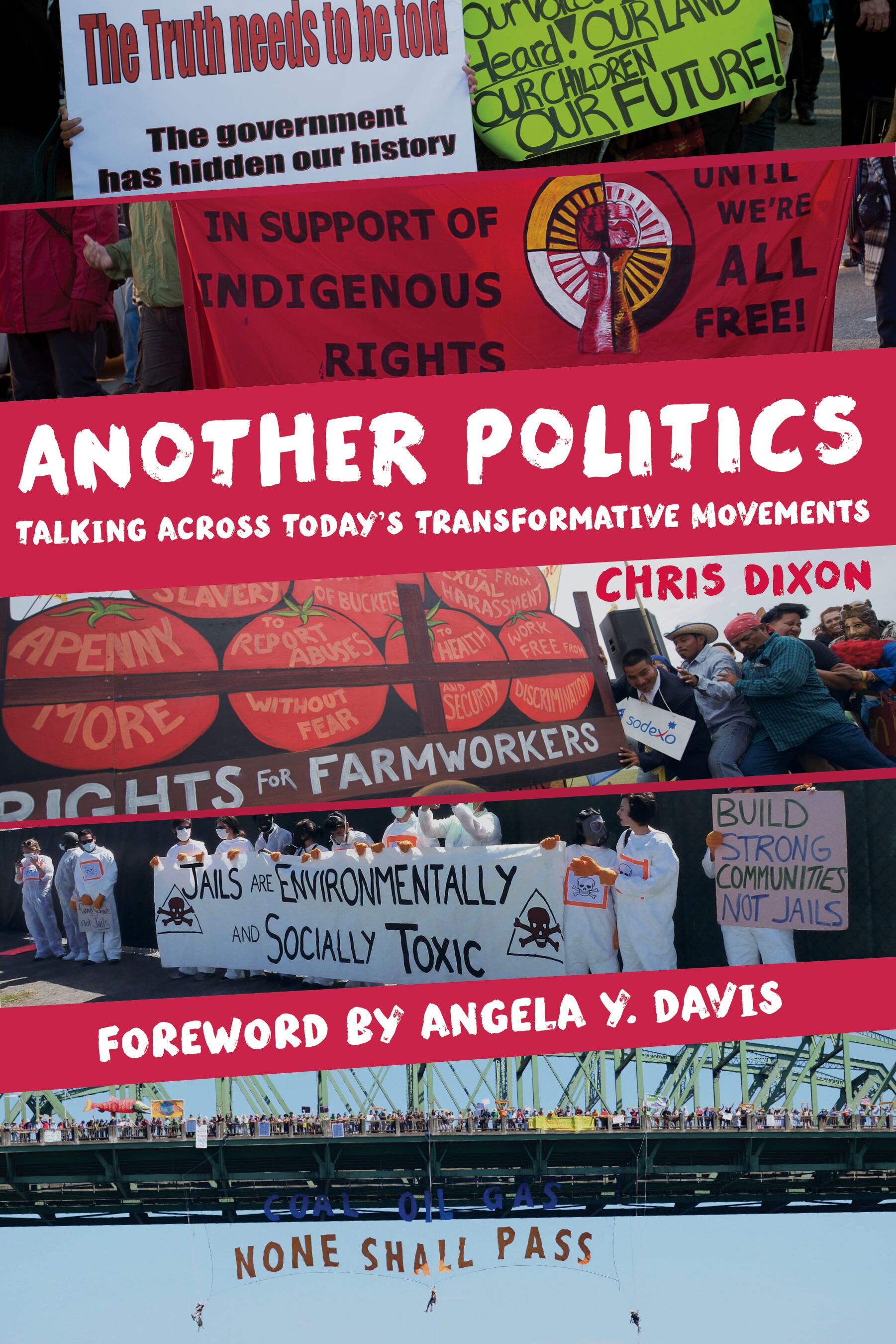
Another politics
Amidst war, economic meltdown, and ecological crisis, a \"new spirit of radicalism is blooming\" from New York to Cairo, according to Chris Dixon. In Another Politics, he examines the trajectory of efforts that contributed to the radicalism of Occupy Wall Street and other recent movement upsurges. Drawing on voices of leading organizers across the United States and Canada, he delivers an engaging presentation of the histories and principles that shape many contemporary struggles. Dixon outlines the work of activists aligned with anti-authoritarian, anti-capitalist, and anti-oppression politics and discusses the lessons they are learning in their efforts to create social transformation. The book explores solutions to the key challenge for today’s activists, organizers, fighters, and dreamers: building a substantive link between the work of \"against,\" which fights ruling institutions, and the work of \"beyond,\" which develops liberatory alternatives.
eBook

Black Vienna
Interwar Vienna was considered a bastion of radical socialist
thought, and its reputation as \"Red Vienna\" has loomed large in
both the popular imagination and the historiography of Central
Europe. However, as Janek Wasserman shows in this book, a \"Black
Vienna\" existed as well; its members voiced critiques of the
postwar democratic order, Jewish inclusion, and Enlightenment
values, providing a theoretical foundation for Austrian and Central
European fascist movements. Looking at the complex interplay
between intellectuals, the public, and the state, he argues that
seemingly apolitical Viennese intellectuals, especially
conservative ones, dramatically affected the course of Austrian
history. While Red Viennese intellectuals mounted an impressive
challenge in cultural and intellectual forums throughout the city,
radical conservatism carried the day. Black Viennese intellectuals
hastened the destruction of the First Republic, facilitating the
establishment of the Austrofascist state and paving the way for
Anschluss with Nazi Germany.
Closely observing the works and actions of Viennese reformers,
journalists, philosophers, and scientists, Wasserman traces
intellectual, social, and political developments in the Austrian
First Republic while highlighting intellectuals' participation in
the growing worldwide conflict between socialism, conservatism, and
fascism. Vienna was a microcosm of larger developments in
Europe-the rise of the radical right and the struggle between
competing ideological visions. By focusing on the evolution of
Austrian conservatism, Wasserman complicates post-World War II
narratives about Austrian anti-fascism and Austrian victimhood.
Interwar Vienna was considered a bastion of radical socialist
thought, and its reputation as \"Red Vienna\" has loomed large in
both the popular imagination and the historiography of Central
Europe. However, as Janek Wasserman shows in this book, a \"Black
Vienna\" existed as well; its members voiced critiques of the
postwar democratic order, Jewish inclusion, and Enlightenment
values, providing a theoretical foundation for Austrian and Central
European fascist movements. Looking at the complex interplay
between intellectuals, the public, and the state, he argues that
seemingly apolitical Viennese intellectuals, especially
conservative ones, dramatically affected the course of Austrian
history. While Red Viennese intellectuals mounted an impressive
challenge in cultural and intellectual forums throughout the city,
radical conservatism carried the day. Black Viennese intellectuals
hastened the destruction of the First Republic, facilitating the
establishment of the Austrofascist state and paving the way for
Anschluss with Nazi Germany.Closely observing the works
and actions of Viennese reformers, journalists, philosophers, and
scientists, Wasserman traces intellectual, social, and political
developments in the Austrian First Republic while highlighting
intellectuals' participation in the growing worldwide conflict
between socialism, conservatism, and fascism. Vienna was a
microcosm of larger developments in Europe-the rise of the radical
right and the struggle between competing ideological visions. By
focusing on the evolution of Austrian conservatism, Wasserman
complicates post-World War II narratives about Austrian
anti-fascism and Austrian victimhood.
eBook


Symposium Introduction
Introduces a journal symposium on \"Alternative Visions of Public Administration\".
Journal Article
Regarding the Animal
This article traces the anthropocentric orthodoxy of public administrative thought and scholarship to suggest how nonhuman animals give shape to the field's theoretical discourse and inform, in important and unspoken ways, its everyday practice. Even critical approaches in public administration remain rooted in anthropocentrism and speciesism and do not offer fundamental alternatives to mainstream approaches. The article outlines several of the limiting and violent consequences for animals and humans of this anthropocentric mode of thought and ordering and suggests how this process, described as \"radical othering,\" connects with other, more widely explored, human-to-human forms of marginalization in the field. It concludes by outlining personal, disciplinary, regulatory, and institutional possibilities for imagining a different kind of relationship with nonhuman animals.
Journal Article