
Catalogue Search | MBRL


Are you sure you want to remove the book from the shelf?

{{itemTitle}}
1,527
result(s) for
"self-confidence"
Sort by:


Perceived overqualification in higher education institutions: Enhancing employee innovative behavior via creative self-confidence and harmonious workplace climate
This study examines the relationship between perceived overqualification (POQ) and employee innovative behavior in higher education institutions in China. Further, this study examined the mediating role of creative self-confidence and moderating role of harmonious workplace climate. The data were collected from 340 employees (330 employees and 10 supervisors) in higher education institutions in China using a multi-time lag method based on convenience sampling. The findings of this study asserted a positive relationship between POQ and employee innovative behavior. This implies that employees who perceive themselves as overqualified for their current roles are more likely to display innovative behavior in their work. Furthermore, the study identifies creative self-confidence as a mediating factor in the link between POQ and employee innovative behavior. In other words, when employees feel overqualified and possess creative self-confidence, they are more inclined to exhibit innovative behaviors. Moreover, the research showed that a harmonious workplace climate plays a moderating role in the relationship between POQ and employee innovative behavior, as well as in the connection between creative self-confidence and employee innovative behavior. A harmonious workplace climate fosters an environment of support, cooperation, and encouragement among employees, which positively influences the outcomes of POQ and creative self-confidence on innovative behavior.
Journal Article

Be bold : a guide to unbreakable confidence
\"Tap into your innate potential by taking practical steps to build your confidence with Be Bold, Be You!\"-- Provided by publisher.
BOOK

Effects of simulation in improving the self-confidence of student nurses in clinical practice: a systematic review
Background
Considering the positive influence of simulation from previous literature may encourage educators to regard it as a valuable teaching strategy in nursing schools. This literature review aims to investigate whether the use of simulation improves undergraduate nurses’ self-confidence during clinical practice.
Methodology
This study employed a literature-based design. Five academic databases, including CINAHL, EBSCO, ProQuest, PubMed and Medline, were utilised to extract relevant studies using appropriate keywords and Boolean operators. Studies published in the last 15 years (2005–2020) were included in the search. Studies were retrieved using the Exclusion and Inclusion criteria. The Critical Appraisal Skills Programme (CASP) was used to critically appraise the studies.
Results
A total of 15 primary research studies were extracted for review. Four major themes emerged from the review: Improved self-confidence to carry out clinical tasks, Increased ability to work in teams, Improved self-confidence to perform community work and Improved self-confidence in communicating with patients and team members.
Conclusion
Clinical simulation is a useful tool in increasing the self-confidence of nursing students to perform clinical tasks, make clinical judgements, communicate with patients and team members and improve their teamwork. To improve the quality of care received by patients, it is recommended that clinical simulations be integrated into the nursing curriculum in Saudi Arabia. Increasing the confidence of students has been shown to be associated with greater confidence in performing clinical tasks.
Journal Article


Self-Confidence Conceptual Model Development in Volleyball Learning Courses
The research was motivated by the problem of students in the Physical Education, Health and Recreation Study Program not exhibiting optimal self-confidence, particularly the confidence to speak in front of the class during lecture activities. Self-confidence is an aspect of the human psyche that must be nurtured and developed. Self-confidence denotes the ability to do something confidently and without fear of failure. Confidence is also part of the subconscious and is unaffected by emotions and feelings. Therefore, it requires a method that can be accomplished by controlling emotions, feelings, and imagery. The volleyball learning course necessitates good psychological conditions for students to be confident when practicing in small groups and later when conducting teaching practice at school. In this course students are equipped with basic techniques in playing volleyball and how to construct volleyball learning tools, then students are able to practice teaching in small groups. This study employs a qualitative approach with a classroom action research design that follows the lecture schedule. The research procedure is divided into two cycles, with each cycle consisting of five stages: planning, action, observation, evaluation, and reflection. This research was conducted in two cycles and the time required was 5 weeks for each cycle so that the total time required was 10 weeks with two cycles. The research subjects were 50 students who took the volleyball learning course. Data collection methods include observations and interviews. The results of the study show that in an effort to increase student self-confidence, the strategy chosen is role-playing which provides broad opportunities for students to explore themselves in order to be able to demonstrate their quality in front of other friends to become teachers in the teaching practice of the material chosen by each student. In this study, the role-playing technique was seen to be successful in increasing the self-confidence of the students. Keyword: self-confidence, Role-playing, Learning, Volleyball
Journal Article


Predicting performance of elite kickboxers using the multi‐states theory framework
Using the multi‐states (MuSt) theory framework, this study examined the interplay between self‐confidence, emotional arousal control, worry, concentration disruption, challenge and threat appraisals, psychobiosocial experiences, and self‐evaluated performance of medalist kickboxers involved in the WAKO World Kickboxing Championship 2021. Participants were 103 gold, silver, or bronze medalists (58 women and 45 men), aged 18–39 (M = 25.16 ± 4.54 years), who were contacted via email and social media and asked to fill an online survey 3 months after the event. According to the MuSt theory predictions, self‐confidence and emotional arousal control were positively related to challenge appraisal, functional psychobiosocial experiences, and self‐evaluated performance. Worry and concentration disruption were positively associated with threat appraisal, and negatively related to functional psychobiosocial experiences; concentration disruption was also negatively related to self‐evaluated performance. Results from path analysis revealed a positive indirect link from self‐confidence to self‐evaluated performance via challenge appraisal and psychobiosocial experiences. Negative indirect links from worry and concentration disruption to self‐evaluated performance through threat appraisal and psychobiosocial experiences were significant. A positive indirect effect from emotional arousal control to self‐evaluated performance via psychobiosocial experiences was also shown. The findings are discussed in light of the MuSt theory. Highlights According to the multi‐states (MuSt) theory predictions, we observed that self‐confidence and emotional arousal control were positively related to challenge appraisal, functional psychobiosocial experiences, and self‐evaluated performance. We also showed that worry and concentration disruption were positively associated with threat appraisal, and negatively related to functional psychobiosocial experiences, with concentration disruption being also negatively related to self‐evaluated performance. We provide preliminary support to the multidimensional interplay between functional (i.e., self‐confidence and emotional arousal control) and dysfunctional (i.e., worry and concentration disruption) individual dispositions, challenge and threat appraisals, psychobiosocial experiences, and performance. We recommend that athletes adopt self‐regulation strategies, such as self‐talk, imagery, cognitive restructuring, mindfulness, and action monitoring to improve their self‐confidence, challenge appraisal, functional emotions, and ability to manage competitive pressure.
Journal Article
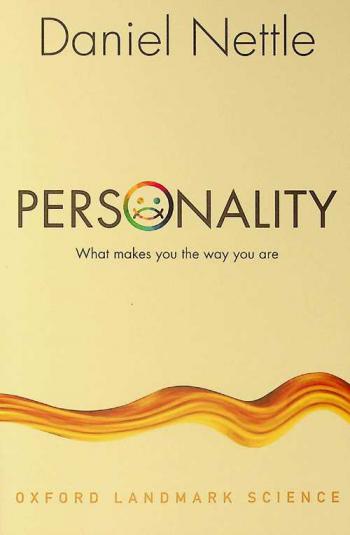
Personality : what makes you the way you are
A discussion of the science of human personality offers the latest findings from brain science and genetics to explain what determines the choices we make, looks at the different personality types, and blends true-life stories with scientific research to explore why some people are worriers and others wanderers.

Factors affecting dental self-confidence and satisfaction with dental appearance among adolescents in Saudi Arabia: a cross sectional study
Background
Dental appearance affects facial beauty, social interaction and psychological well-being particularly among adolescents. The aim of the current study was to determine factors affecting adolescent dental self-confidence and satisfaction with dental appearance in Saudi Arabia.
Methods
A cross-sectional study was conducted in the Eastern Province of Saudi Arabia among 3500 students attending intermediate and high schools. Data was collected from 2637 students using the translated Arabic version of the psychosocial impact of dental esthetics questionnaire (PIDAQ) in addition to questions about smile esthetics satisfaction and demographic variables including; gender, age, school grade, and parental level of education. Statistical analysis was performed by using logistic regression to assess the effect of demographical variables on PIDAQ and its domains at 5% significance level.
Results
About 80% of the participants were satisfied or somewhat satisfied with their smiles
.
Tooth alignment and tooth color were the most cited reasons for adolescents’ dissatisfaction about their smile, 34% and 33% respectively. Females and participants’ fathers’ university education figured in a statistically significant way regarding higher PIDAQ and aesthetic concerns. Females were 70%, and those with fathers’ university education were 22% more likely to have a negative psychological impact. Females expressed aesthetic concerns nearly two times more than males. Participants whose fathers possessed university education had an aesthetic concern 1.25 times more compared to those whose fathers had no school or limited school education. Females and those with mothers who had university education were less likely to have positive dental self-confidence.
Conclusions
Most adolescents exhibited satisfaction with their own smiles. Smile dissatisfaction in the remaining participants was related to teeth alignment, color and shape. Females were more concerned with dental esthetics and smile satisfaction than males. Females and participants whose fathers had a university education exhibited higher psychosocial impact than males and those with or without school education. However, males showed greater self-confidence in their dental aesthetics.
Journal Article