
Catalogue Search | MBRL


Are you sure you want to remove the book from the shelf?

{{itemTitle}}
5,515
result(s) for
"wine making"
Sort by:


Soft Soil, Black Grapes
From Ernest and Julio Gallo to Francis Ford Coppola, Italians have shaped the history of California wine. More than any other group, Italian immigrants and their families have made California viticulture one of America's most distinctive and vibrant achievements, from boutique vineyards in the Sonoma hills to the massive industrial wineries of the Central Valley. But how did a small group of nineteenth-century immigrants plant the roots that flourished into a world-class industry? Was there something particularly Italianin their success?In this fresh, fascinating account of the ethnic origins of California wine, Simone Cinotto rewrites a century-old triumphalist story. He demonstrates that these Italian visionaries were not skilled winemakers transplanting an immemorial agricultural tradition, even if California did resemble the rolling Italian countryside of their native Piedmont. Instead, Cinotto argues that it was the wine-makers' access to social capital, or the ethnic and familial ties that bound them to their rich wine-growing heritage, and not financial leverage or direct enological experience, that enabled them to develop such a successful and influential wine business. Focusing on some of the most important names in wine history - particularly Pietro Carlo Rossi, Secondo Guasti, and the Gallos - he chronicles a story driven by ambition and creativity but realized in a complicated tangle of immigrant entrepreneurship, class struggle, racial inequality, and a new world of consumer culture.Skillfully blending regional, social, and immigration history, Soft Soil, Black Grapes takes us on an original journey into the cultural construction of ethnic economies and markets, the social dynamics of American race, and the fully transnational history of American wine.
eBook

Wine and culture : vineyard to glass
This collection of essays by leading scholars explores the cultural, social and historical issues which inform the production and consumption of wine. It covers the latest ethnography, theoretical and ethnohistorical research on wine throughout the globe.
Book


Burgundy
\"Demossier's engrossing analysis of Burgundy—the wine, the place, the brand—should be imbibed (pun intended!) on many levels—and slowly, for best appreciation.\"—foodanthro.com
Drawing on more than twenty years of fieldwork, this book explores the professional, social, and cultural world of Burgundy wines, the role of terroir (the environmental factors that affect a crop's character), and its transnational deployment in China, Japan, South Korea, and New Zealand.
It demystifies the terroir ideology by providing a unique long-term ethnographic analysis of what lies behind the concept. While the Burgundian model of terroir has gone global by acquiring UNESCO world heritage status, its very legitimacy is now being challenged amongst the vineyards where it first took root.
From the introduction:
Superficially then, Burgundy might appear to be simply acquiring recognition for its unchanging landscape, tradition and culture. Yet, for all the power of its rich local identity, folklore and culture which is broadcast to the world, there hides underneath the comforting blanket of this seamless place, untouched by change or conflict, a far more complex reality. Burgundy's listing as a World Heritage landscape emphasises its international reputation as a traditional and historical site of wine production and opens a new chapter in the production and marketing of its quality, differentiation and authenticity. It is also about readjusting Burgundy and the grands crus in response to a changing global market and the shifting kaleidoscope of world wine values.
eBook
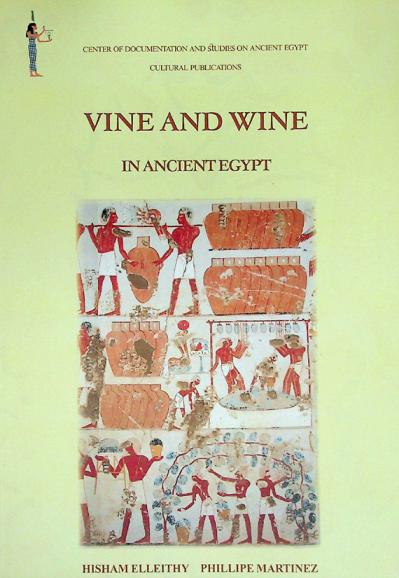

Making wine in earthenware vessels: a comparative approach to Roman vinification
Wine was deeply embedded in all aspects of Roman life and its role in society, culture and the economy has been much studied. Ancient Roman texts and archaeological research provide valuable insights into viticulture and the manufacture, trade and consumption of wine but little is known of the sensory nature of this prized commodity. Here, the authors offer a novel oenological approach to the study of Roman dolia through their comparison with modern Georgian qvevri and associated wine-production techniques. Far from being mundane storage vessels, dolia were precisely engineered containers whose composition, size and shape all contributed to the successful production of diverse wines with specific organoleptic characteristics.
Journal Article

Wine Law and Policy
Wine law and policy have evolved significantly over the last century, progressively moving from national terroirs to a global market. In this process, countries and regions took different approaches to address new problems wish are analyzed in this book.
eBook