
Catalogue Search | MBRL


هل أنت متأكد أنك تريد إزالة الكتاب من الرف؟

{{itemTitle}}
17,320
نتائج ل
"Metis"
صنف حسب:

A grandmother begins the story
Written like a crooked Métis jig, A Grandmother Begins the Story follows five generations of women and bison as they reach for the stories that could remake their worlds and rebuild their futures. Carter is a young mother, recently separated. She is curious, angry, and on a quest to find out what the heritage she only learned of in her teens truly means. Allie, Carter's mother, is trying to make up for the lost years with her first born, and to protect Carter from the hurt she herself suffered from her own mother. Lucie wants the granddaughter she's never met to help her join her ancestors in the Afterlife. And Geneviève is determined to conquer her demons before the fire inside burns her up, with the help of the sister she lost but has never been without. Meanwhile, Mamé, in the Afterlife, knows that all their stories began with her; she must find a way to cut herself from the last threads that keep her tethered to the living, just as they must find their own paths forward.
Book

Metis and the Medicine Line : Creating a Border and Dividing a People
Born of encounters between Indigenous women and Euro-American men in the first decades of the nineteenth century, the Plains Metis people occupied contentious geographic and cultural spaces. Living in a disputed area of the northern Plains inhabited by various Indigenous nations and claimed by both the United States and Great Britain, the Metis emerged as a people with distinctive styles of speech, dress, and religious practice, and occupational identities forged in the intense rivalries of the fur and provisions trade. Michel Hogue explores how, as fur trade societies waned and as state officials looked to establish clear lines separating the United States from Canada and Indians from non-Indians, these communities of mixed Indigenous and European ancestry were profoundly affected by the efforts of nation-states to divide and absorb the North American West. Grounded in extensive research in U.S. and Canadian archives, Hogue's account re-centers historical discussions that have typically been confined within national boundaries and illuminates how Plains Indigenous peoples like the Metis were at the center of both the unexpected accommodations and the hidden history of violence that made the 'world's longest undefended border.'
eBook
Incidence and Prevalence of Chronic Obstructive Pulmonary Disease among Aboriginal Peoples in Alberta, Canada: e0123204
Background Chronic obstructive pulmonary disease (COPD) is a major respiratory disorder, largely caused by smoking that has been linked with large health inequalities worldwide. There are important gaps in our knowledge about how COPD affects Aboriginal peoples. This retrospective cohort study assessed the epidemiology of COPD in a cohort of Aboriginal peoples relative to a non-Aboriginal cohort. Methods We used linkage of administrative health databases in Alberta (Canada) from April 1, 2002 to March 31, 2010 to compare the annual prevalence, and the incidence rates of COPD between Aboriginal and non-Aboriginal cohorts aged 35 years and older. Poisson regression models adjusted the analysis for important sociodemographic factors. Results Compared to a non-Aboriginal cohort, prevalence estimates of COPD from 2002 to 2010 were 2.3 to 2.4 times greater among Registered First Nations peoples, followed by the Inuit (1.86 to 2.10 times higher) and the Metis (1.59 to 1.67 times higher). All Aboriginal peoples had significantly higher COPD incidence rates than the non-Aboriginal group (incidence rate ratio [IRR]: 2.1; 95% confidence interval [CI]: 1.97, 2.27). COPD incidence rates were higher in First Nation peoples (IRR: 2.37; 95% CI: 2.19, 2.56) followed by Inuit (IRR: 1.92; 95% CI: 1.64, 2.25) and Metis (IRR: 1.49; 95% CI: 1.32, 1.69) groups. Conclusions We found a high burden of COPD among Aboriginal peoples living in Alberta; a province with the third largest Aboriginal population in Canada. Altogether, the three Aboriginal peoples groups have higher prevalence and incidence of COPD compared to a non-Aboriginal cohort. The condition affects the three Aboriginal groups differently; Registered First Nations and Inuit have the highest burden of COPD. Reasons for these differences should be further explored within a framework of social determinants of health to help designing interventions that effectively influence modifiable COPD risk factors in each of the Aboriginal groups.
Journal Article
Oshkosh Kentinin Kuruluşu ve Gelişimi (1853-1900)
Oshkosh, Amerika Birleşik Devletleri Wisconsin Eyaleti sınırları içerisinde yer alan bir kenttir. XIX. yüzyıl ortalarında geniş bir ormanlık kırlık arazide ve Fox Nehri’nin iki kıyısı boyunca kurulmuştur. İsmini Menominee Şefi Oshkosh’tan almıştır ki kelime manası “pençe”dir. 1650’lerden itibaren Avrupalıların bilhassa İngiliz ve Fransızların ilgi gösterip yerlilerle mücadele etmesine yol açmış bir topraktır. Mesquakie, Sauk, Ho-Chunk, Metis ve Menomineeler XVII. ve XVIII. yüzyıl sakinleridir. Yankeeler 1836’da gelerek büyükçe bir yerleşim kurmuşlardır. 1839’da kasaba sakini erkeklerin katılımıyla bir toplantı gerçekleştirilmiş ve kasabanın adı Oshkosh olarak belirlenip resmiyet kazanmıştır. 1853’te resmen bir kent olarak tanınmıştır. Protestan din ve partizan politikacılar kısa sürede Oshkosh’a doğu kültürünün bir yansımasını vermiştir. Paragöz girişimciler yerli topraklarını sömürüp kereste endüstrisini kurmuştur. İngiltere, İsviçre, Galler, İrlanda, Almanya, Kanada, Polonya ve Rusya’dan gelen göçmenlerle kent ırksal ve kültürel çeşitlilik kazanmıştır. Dinî özgürlüğün garanti altında olması, erkekler için politik özgürlük, oy kullanma ve askerden kaçınma hakları Oshkosh’u göçmenler için cazip kılmıştır. 1850’de nüfus 1.300 civarı olup çoğunluğu Alman kökenlidir. İngilizce konuşan Protestanlar kısa sürede asimile olurken diğerleri XX. yüzyıla kadar kültürlerini büyük ölçüde korumuştur. 1860’da Oshkosh, eyaletin ikinci büyük kenti haline gelmiştir. XIX. yüzyıl sonunda şehrin nüfusu 28.000 civarındadır. Yankee olmayanlar dışında nüfusun büyük çoğunluğu Alman kökenlidir. Kereste endüstrisinin büyümesiyle birlikte bölge kısa sürede sosyal ve ekonomik açıdan gelişme göstermiş; öyle ki yüzyılın sonunda büyük bir greve de sahne olmuştur. Bu çalışmada dönemin gazeteleri ve kitapları da dikkate alınarak arşiv kaynakları doğrultusunda kentin yaklaşık olarak ilk 50 yılı incelenecektir.
Journal Article
Asthma and Chronic Obstructive Pulmonary Disease (COPD) Prevalence and Health Services Use in Ontario Metis: A Population-Based Cohort Study: e95899
Introduction Chronic respiratory diseases cause a significant health and economic burden around the world. In Canada, Aboriginal populations are at increased risk of asthma and chronic obstructive pulmonary disease (COPD). There is little known, however, about these diseases in the Canadian Metis population, who have mixed Aboriginal and European ancestry. A population-based study was conducted to quantify asthma and COPD prevalence and health services use in the Metis population of Ontario, Canada's largest province. Methods The Metis Nation of Ontario Citizenship Registry was linked to provincial health administrative databases to measure and compare burden of asthma and COPD between the Metis and non-Metis populations of Ontario between 2009 and 2012. Asthma and COPD prevalence, health services use (general physician and specialist visits, emergency department visits, hospitalizations), and mortality were measured. Results Prevalences of asthma and COPD were 30% and 70% higher, respectively, in the Metis compared to the general Ontario population (p<0.001). General physician and specialist visits were significantly lower in Metis with asthma, while general physician visits for COPD were significantly higher. Emergency department visits and hospitalizations were generally higher for Metis compared to non-Metis with either disease. All-cause mortality in Metis with COPD was 1.3 times higher compared to non-Metis with COPD (p = 0.01). Conclusion There is a high burden of asthma and COPD in Ontario Metis, with significant prevalence and acute health services use related to these diseases. Lower rates of physician visits suggest barriers in access to primary care services.
Journal Article
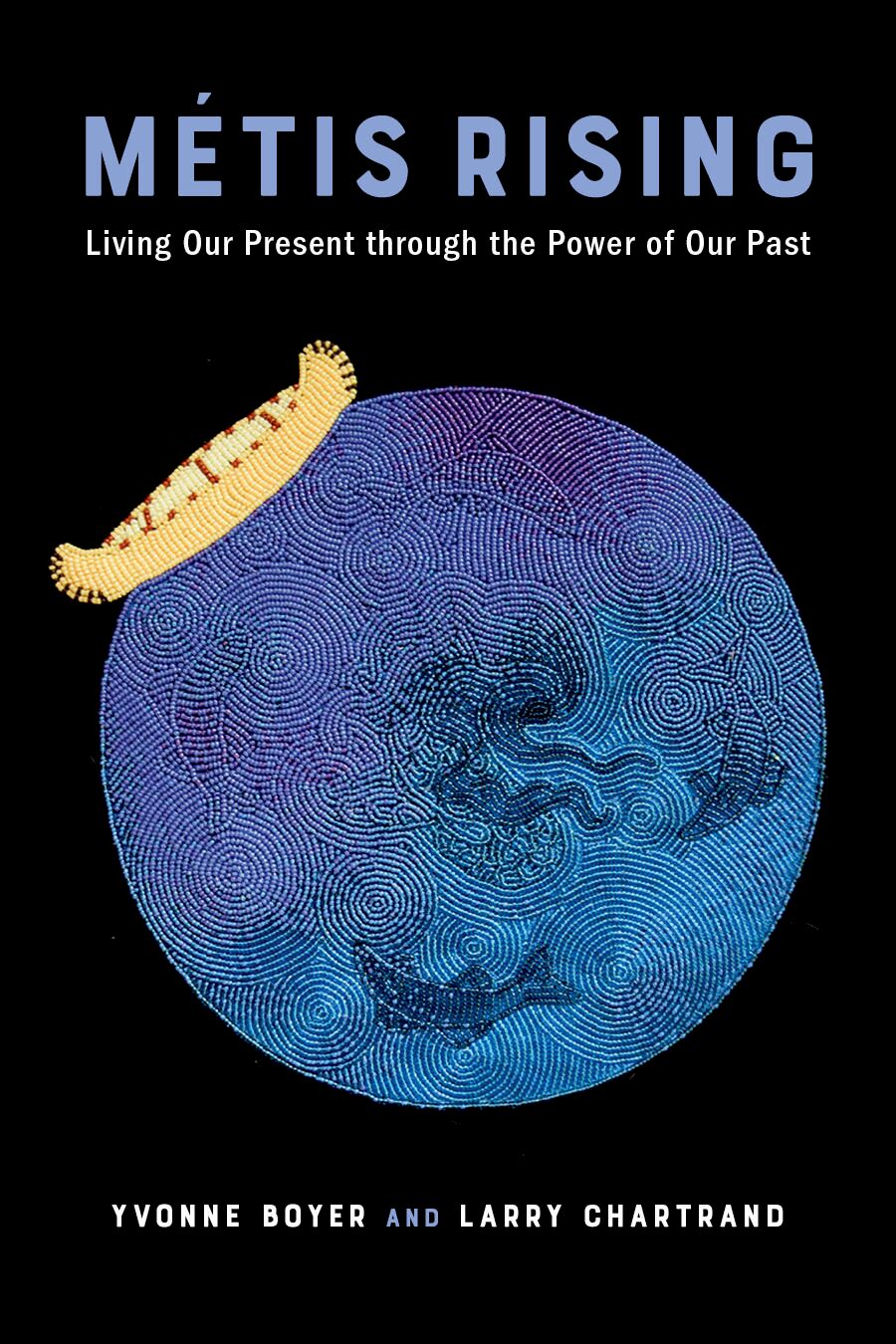
Métis rising : living our present through the power of our past
Métis Rising draws on a remarkable cross-section of perspectives to tell the histories and stories of people from richly varied backgrounds, demonstrating that there is no single Métis experience – only a common sense of belonging and a commitment to justice. The contributors to this unique collection, most of whom are Métis themselves, examine often-neglected aspects of Métis existence. They talk about the arduous journey to rebuild the Métis nation from a once-marginalized and defeated people; their accounts ranging from personal reflections on identity to tales of advocacy against poverty and poor housing, and for the recognition of Métis rights. Métis Rising is an extraordinary work that exemplifies how contemporary Métis identity has been forged into a force to be reckoned with.
eBook
Métis woman teaches kids to love the culture — but her own daughter surprised her
Felice, whose Métis ancestry comes from St. Laurent, Man., began sharing her culture with children while working for Aboriginal Head Start, a preschool program for Indigenous kids, more than two decades ago. About a decade ago she founded Metis ALIVE, a company based in Beaumont, Alta., (just south of Edmonton) to help share Métis history and traditions in schools and the community. The kits — which Metis ALIVE has also sold in child and adult sizes, as well as for dogs — include all the pieces of fabric needed to make the coats, a darning needle, pattern, instructions and even a tiny Métis sash. [...]by the end of my presentation, by the end of the experience, that kid is coming up to me in a real quiet voice [saying], 'You know what, actually? I am Cree.'\" She said she's asked kids why they wouldn't identify themselves at the beginning of the class, and they've said they were embarrassed.
Newsletter