
Catalogue Search | MBRL


هل أنت متأكد أنك تريد إزالة الكتاب من الرف؟

{{itemTitle}}
13
نتائج ل
"COOKING / Methods / Slow Cooking."
صنف حسب:
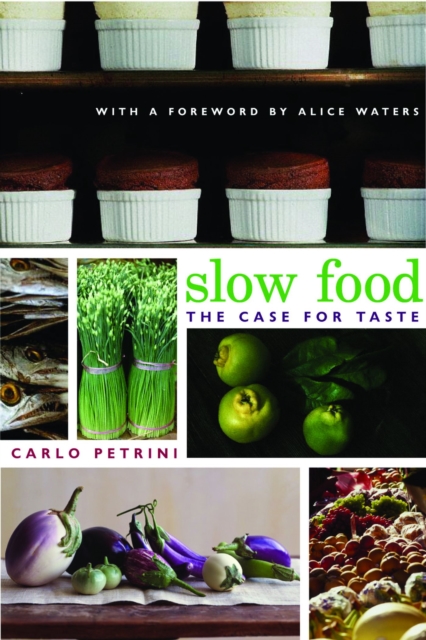
Slow Food
Take a breath. . . . Read slowly. How often in the course and crush of our daily lives do we afford ourselves moments to truly relish-to truly be present in-the act of preparing and eating food? For most of us, our enjoyment of food has fallen victim to the frenetic pace of our lives and to our increasing estrangement, in a complex commercial economy, from the natural processes by which food is grown and produced. Packaged, artificial, and unhealthful, fast food is only the most dramatic example of the degradation of food in our lives, and of the deeper threats to our cultural, political, and environmental well-being. In 1986, Carlo Petrini decided to resist the steady march of fast food and all that it represents when he organized a protest against the building of a McDonald's near the Spanish Steps in Rome. Armed with bowls of penne, Petrini and his supporters spawned a phenomenon. Three years later Petrini founded the International Slow Food Movement, renouncing not only fast food but also the overall pace of the \"fast life.\" Issuing a manifesto, the Movement called for the safeguarding of local economies, the preservation of indigenous gastronomic traditions, and the creation of a new kind of ecologically aware consumerism committed to sustainability. On a practical level, it advocates a return to traditional recipes, locally grown foods and wines, and eating as a social event. Today, with a magazine, Web site, and over 75,000 followers organized into local \"convivia,\" or chapters, Slow Food is poised to revolutionize the way Americans shop for groceries, prepare and consume their meals, and think about food. Slow Food not only recalls the origins, first steps, and international expansion of the movement from the perspective of its founder, it is also a powerful expression of the organization's goal of engendering social reform through the transformation of our attitudes about food and eating. As Newsweek described it, the Slow Food movement has now become the basis for an alternative to the American rat race, the inspiration for \"a kinder and gentler capitalism.\" Linger a while then, with the story of what Alice Waters in her Foreword calls \"this Delicious Revolution,\" and rediscover the pleasures of the good life.
eBook

Inactivation of Escherichia coli O157:H7 in Beef Roasts Cooked in Conventional or Convection Ovens or in a Slow Cooker under Selected Conditions
Inactivation of Escherichia coli O157:H7 in beef roasts cooked under selected cooking conditions was evaluated. Eye of round roasts were each inoculated at five sites in the central plane with a five-strain cocktail of E. coli O157:H7 at ca. 6.3 log CFU per site and cooked to center temperatures of 56 to 71°C in a convection oven set at 120, 140, 180, or 200°C, in a conventional oven set at 120 or 210°C, and in a slow cooker set on high or low. Prime rib roasts were each inoculated at 10 sites throughout the roast with the same E. coli O157:H7 cocktail at ca. 6.6 log CFU per site and cooked in the conventional oven set at 140 or 180°C to center temperatures of 58 to 71°C. The number of sites yielding E. coli O157:H7 after cooking decreased with increasing roast center temperature for the eye of round roasts cooked in the convection oven or in the slow cooker at a given setting, but this trend was not apparent for roasts of either type cooked in the conventional oven. Reductions of E. coli O157 in both types of roasts were generally less at the center than at other locations, particularly locations closer to the surface of the meat. When eye of round roasts were cooked to the same center temperature in the convection oven, the reduction of E. coli O157:H7 increased with increasing oven temperature up to 180°C and decreased after that. The reduction of E. coli O157:H7 in replicate roasts cooked under conditions in which the organism was not eliminated during cooking mostly differed by >1 log CFU per site. However, E. coli O157:H7 was not recovered from any of the inoculation sites when eye of round roasts were cooked to 65, 60, 60, or 63°C in the convection oven set at 120, 140, 180, and 200°C, respectively; cooked to 63 or 71°C in the conventional oven set at 120 and 210°C, respectively; or cooked to 63°C in the slow cooker set at high or low. For prime rib roasts, E. coli O157:H7 was not recovered from any of the inoculation sites in roasts cooked to 71 or 58°C in the conventional oven set at 140 and 180°C, respectively.
Journal Article
Survival of Escherichia coli O157:H7 in Ground Beef after Sublethal Heat Shock and Subsequent Isothermal Cooking
Heat shock of Escherichia coli O157:H7 in broth media reportedly leads to enhanced survival during subsequent heating in broth medium or ground beef. Survival of E. coli O157:H7 during slow cooking thus may be enhanced by prior exposure to sublethal heat shock conditions, thereby jeopardizing the safety of slow-cooked products such as beef roasts. This study examined the effect of heat shocking E. coli O157:H7-inoculated lean (6 to 9% fat) ground beef on the survival of the pathogen in the same ground beef during a subsequent 4-h, 54.4°C cooking process. Six different combinations of heat shock temperature (47.2, 48.3, or 49.4°C) and time (5 or 30 min) were applied to a five-strain cocktail of microaerophilically grown cells in 25 g of prewarmed ground beef, which was followed by cooking at 54.4°C. Temperature during a 30-min heat shock treatment did not significantly affect E. coli O157:H7 survival during subsequent isothermal cooking (P > 0.05). Survival after a 5-min heat shock was higher when the heat shock temperature was 48.3 or 49.4°C (P < 0.05) than when it was 47.2°C. The D-values at 54.4°C (130°F) (D54.4-value) of the process significantly increased only when cells were exposed to a heat shock combination of 5 min at 49.4°C. Mean (n = 3 trials) reductions in E. coli O157:H7 during the 4-h, 54.4°C isothermal cooking process ranged from 4.3 to 7.5 log CFU/g. Heating E. coli O157:H7-contaminated beef at the high end of the sublethal temperature range for 5 min could increase survival of E. coli O157:H7 during subsequent slow-cooking processes.
Journal Article

Falafel Memories
This essay proposes a pedagogy for food writing that is not dependent on decoding or interpretative practices. Instead, writers compose by juxtaposing personal writing with research around some item or issue that might seem insignificant or minor. A minor exigence—in this case, eating and cooking falafel—can be explored so that a larger issue—in this case, authenticity—emerges. In turn, writers move away from dominant tropes of power or representation.
Journal Article


Make Great Meals Under Pressure
A recipe for Tuscan bean stew made in a pressure cooker is offered.
Magazine Article
