
Catalogue Search | MBRL


Are you sure you want to remove the book from the shelf?

{{itemTitle}}
4,250
result(s) for
"Finance Computer simulation."
Sort by:

Artificial higher order neural networks for economics and business
\"This book is the first book to provide opportunities for millions working in economics, accounting, finance and other business areas education on HONNs, the ease of their usage, and directions on how to obtain more accurate application results. It provides significant, informative advancements in the subject and introduces the HONN group models and adaptive HONNs\"--Provided by publisher.
Book

Modern computational finance : scripting for derivatives and xVA
An incisive and essential guide to building a complete system for derivative scripting In Volume 2 of Modern Computational Finance Scripting for Derivatives and xVA, quantitative finance experts and practitioners Drs.
eBook

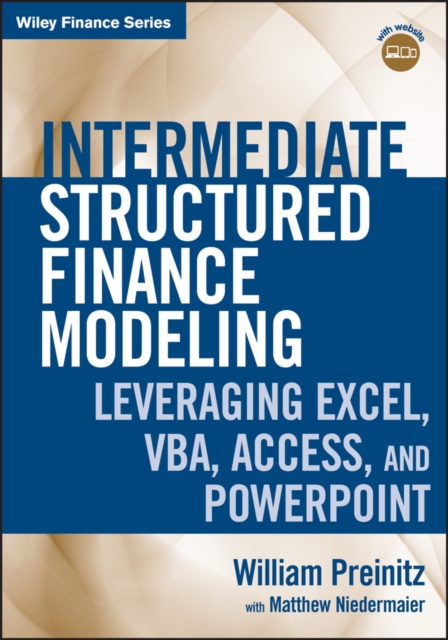
Intermediate Structured Finance Modeling
This book provides a pragmatic, hands-on approach to reaching an intermediate level of sophistication as a financial modeler.Expanding on the first book, A Fast Tract to Structured Finance Modeling, Monitoring, and Valuation , the book will guide you step-by-step through using learned principals in new and more powerful applications.
eBook


Glider soaring via reinforcement learning in the field
Soaring birds often rely on ascending thermal plumes (thermals) in the atmosphere as they search for prey or migrate across large distances
1
–
4
. The landscape of convective currents is rugged and shifts on timescales of a few minutes as thermals constantly form, disintegrate or are transported away by the wind
5
,
6
. How soaring birds find and navigate thermals within this complex landscape is unknown. Reinforcement learning
7
provides an appropriate framework in which to identify an effective navigational strategy as a sequence of decisions made in response to environmental cues. Here we use reinforcement learning to train a glider in the field to navigate atmospheric thermals autonomously. We equipped a glider of two-metre wingspan with a flight controller that precisely controlled the bank angle and pitch, modulating these at intervals with the aim of gaining as much lift as possible. A navigational strategy was determined solely from the glider’s pooled experiences, collected over several days in the field. The strategy relies on on-board methods to accurately estimate the local vertical wind accelerations and the roll-wise torques on the glider, which serve as navigational cues. We establish the validity of our learned flight policy through field experiments, numerical simulations and estimates of the noise in measurements caused by atmospheric turbulence. Our results highlight the role of vertical wind accelerations and roll-wise torques as effective mechanosensory cues for soaring birds and provide a navigational strategy that is directly applicable to the development of autonomous soaring vehicles.
A reinforcement learning approach allows a suitably equipped glider to navigate thermal plumes autonomously in an open field.
Journal Article

Global algorithmic capital markets : high frequency trading, dark pools, and regulatory challenges
Global capital markets have undergone fundamental transformations in recent years and, as a result, have become extraordinarily complex and opaque. Trading space is no longer measured in minutes or seconds but in time units beyond human perception: milliseconds, microseconds, and even nanoseconds. Technological advances have thus scaled up imperceptible and previously irrelevant time differences into operationally manageable and enormously profitable business opportunities for those with the proper high-tech trading tools. These tools include the fastest private communication and trading lines, the most powerful computers and sophisticated algorithms capable of speedily analysing incoming news and trading data and determining optimal trading strategies in microseconds, as well as the possession of gigantic collections of historic and real-time market data. 0Fragmented capital markets are also becoming a rapidly growing reality in Europe and Asia, and are an established feature of U.S. trading. This raises urgent market governance issues that have largely been overlooked. Global Algorithmic Capital Markets seeks to understand how recent market transformations are affecting core public policy objectives such as investor protection and reduction of systemic risk, as well as fairness, efficiency, and transparency. 0The operation and health of capital markets affect all of us and have profound implications for equality and justice in society. This unique set of chapters by leading scholars, industry insiders, and regulators discusses ways to strengthen market governance for the benefit of society at whole.
Book

Tracking a system of shared autonomous vehicles across the Austin, Texas network using agent-based simulation
This study provides a large-scale micro-simulation of transportation patterns in a metropolitan area when relying on a system of shared autonomous vehicles (SAVs). The six-county region of Austin, Texas is used for its land development patterns, demographics, networks, and trip tables. The agent-based MATSim toolkit allows modelers to track individual travelers and individual vehicles, with great temporal and spatial detail. MATSim’s algorithms help improve individual travel plans (by changing tour and trip start times, destinations, modes, and routes). Here, the SAV mode requests were simulated through a stochastic process for four possible fare levels: $0.50, $0.75, $1, and $1.25 per trip-mile. These fares resulted in mode splits of 50.9, 12.9, 10.5, and 9.2% of the region’s person-trips, respectively. Mode choice results show longer-distance travelers preferring SAVs to private, human-driven vehicles (HVs)—thanks to the reduced burden of SAV travel (since one does not have to drive the vehicle). For travelers whose households do not own an HV, SAVs (rather than transit, walking and biking) appear preferable for trips under 10 miles, which is the majority of those travelers’ trip-making. It may be difficult for traditional transit services and operators to survive once SAVs become available in regions like Austin, where dedicated rail lines and bus lanes are few. Simulation of SAV fleet operations suggest that higher fare rates allow for greater vehicle replacement (ranging from 5.6 to 7.7 HVs per SAV, assuming that the average SAV serves 17–20 person-trips per day); when fares rise, travel demands shift away from longer trip distances. Empty vehicle miles traveled by the fleet of SAVs ranged from 7.8 to 14.2%, across the scenarios in this study. Implications of mobility and sustainability benefits of SAVs are also discussed in the paper.
Journal Article
Robo-Taxi service fleet sizing: assessing the impact of user trust and willingness-to-use
The first commercial fleets of Robo-Taxis will be on the road soon. Today important efforts are made to anticipate future Robo-Taxi services. Fleet size is one of the key parameters considered in the planning phase of service design and configuration. Based on multi-agent approaches, the fleet size can be explored using dynamic demand response simulations. Time and cost are the most common variables considered in such simulation approaches. However, personal taste variation can affect the demand and consequently the required fleet size. In this paper, we explore the impact of user trust and willingness-to-use on the Robo-Taxi fleet size. This research is based upon simulating the transportation system of the Rouen-Normandie metropolitan area in France using MATSim, a multi-agent activity-based simulator. A local survey is made in order to explore the variation of user trust and their willingness-to-use future Robo-Taxis according to the sociodemographic attributes. Integrating survey data in the model shows the significant importance of traveler trust and willingness-to-use varying the Robo-Taxi use and the required fleet size.
Journal Article

Evolutionary game model of intellectual property pledge financing between technology-based SMEs and banks based on the EVCC
This study aims to improve the market efficiency of intellectual property pledge financing, based on the perspective of willingness to perform of technology-based SMEs, this paper defined the end-of-period value conversion coefficient of pledged property (EVCC) to measure the comparative relationship between the end-of-period value of the pledged intellectual property and the sum of principal and interest of the loan and introduced it into the game payment matrix; using evolutionary game theory, based on the assumption of bounded rationality, an evolutionary game model of intellectual property pledge financing between technology-based SMEs and banks based on the EVCC was constructed, and a numerical simulation was then conducted. The results of asymptotic stability analysis showed that when a certain condition is met, the strategy combination (performance, loan) is the evolutionary stability strategy (ESS). The numerical simulation showed that the EVCC has a positive impact on the speed of technology-based SMEs choosing the performance strategy, and there is a positive threshold effect (The threshold is 0.90). The initial value of pledged intellectual property has a negative impact on the speed of technology-based SMEs choosing the performance strategy, and there is a reverse threshold effect (The threshold is 1250), as well as the pledge rate of intellectual property (The threshold is 0.375). However, the loan interest rate has no significant impact on the strategic choice of technology-based SMEs. In addition, the EVCC has no significant impact on the banks’ strategy choice. The initial value of pledged intellectual property has a negative impact on the speed of banks choosing loan strategies, and there is a reverse threshold effect (The threshold is 1250). The pledge rate of intellectual property has an inverted U-shaped impact on the speed of banks choosing loan strategies ( ω * may be close to 0.30), and there is a reverse threshold effect (The threshold is 0.375). The loan interest rate has a positive impact on the speed of banks choosing loan strategies, and there is a positive threshold effect (The threshold is 0.03). In addition, the trustworthy joint incentive not only has a positive impact on the speed of technology-based SMEs choosing the performance strategy, but also has a positive impact on the speed of banks choosing the loan strategy, and both have a positive threshold effect (The threshold for both is 15), as well as the dishonesty joint punishment (The threshold for both is 85). This model enriches the multi-agent game theory framework of intellectual property pledge financing. The numerical simulation results can provide a decision-making reference for technology-based SMEs and banks to formulate intellectual property pledge financing strategies.
Journal Article