
Catalogue Search | MBRL


Are you sure you want to remove the book from the shelf?

{{itemTitle}}
74
result(s) for
"175019 CAB International, Wallingford (United Kingdom) eng"
Sort by:

Nematodes as biocontrol agents
This book documents and illustrates major developments in the use of nematodes for the biological control of insects and slugs. It covers the use of three main types of nematodes: entomopathogenic nematodes, entomophilic nematodes and slug-parasitic nematodes. The biology, commercial production, formulation and quality control, application technology, strategy and safety of each of these three nematode groups is discussed. The book also examines the application of nematodes in different cropping systems, and the efficacy of nematodes against specific pests. The potential of predatory nematodes to control plant-parasitic nematodes and mycophagous nematodes to control fungal pathogens is also reviewed.
eBook
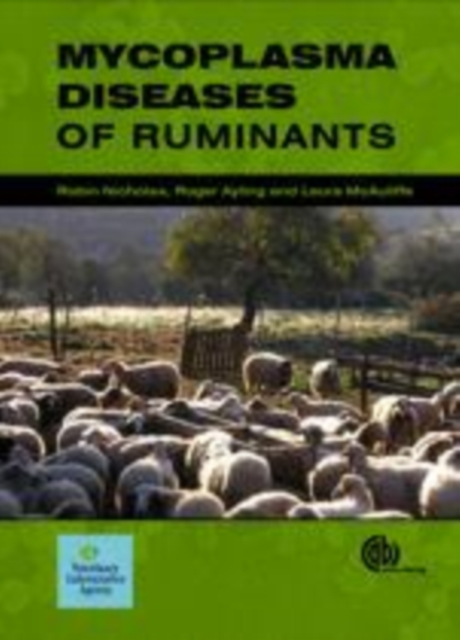
Mycoplasma diseases of ruminants
Mycoplasmas are the smallest of free-living organisms and are intermediate between viruses and bacteria. Many species thrive as parasites in animal (including human) hosts. This book is based on proceedings of a conference held in Palermo, Italy. It reviews some of the most important mycoplasma diseases of sheep, goats and cattle including contagious bovine pleuropneumonia, contagious agalactia and calf pneumonia, which are listed by the OIE because of their economic implications.
eBook

Nutrition and feeding of organic poultry
Organic poultry production Has increased significantly in recent years in response to increasing consumer demand for organic eggs and meat. Nutrition and Feeding of Organic Poultry is the first comrehensive text on feeding organic poultry; presenting advice on selecting suitable ingredients, preparing appropriate feed mixtures and intergrating them into organic poultry production systems.The international standards of organic feeding, the species and breeds of poultry most suitable for organic farming , up-to-date information on the nutritional requirements of poultry, and examples of diets formulated to organic standards are all discussed.
eBook

Small-scale Fisheries Management
Small-scale fisheries make up a large proportion of world's fisheries, both by catch and participation. Effective management is essential to ensure access to fish for food and income. Covering social and economic aspects of the fishery management and governance challenge, this book provides guidance on innovative and alternative management measures and methods for small-scale fisheries. The book covers key topics such as rights, policy, co-management, communications and trade, and is an important reference for researchers and students in fisheries science and management as well as fisheries research organizations and policymakers.
eBook

Vegetable brassicas and related crucifers
The Brassica crops provide the greatest diversity of products derived from a single genus. As vegetables they deliver leaves, flowers, stems and roots that are used either fresh or in processed forms. This book covers the Occidental crops derived from B. oleracea (cole or cabbage group) and Oriental types from B. rapa (Chinese cabbage and its relatives). Both groups are of immense importance for human nutrition, containing vital vitamins and cancer preventing substances.
eBook

Climate change and crop production
Current trends in population growth suggest that global food production is unlikely to satisfy future demand under predicted climate change scenarios unless rates of crop improvement are accelerated. In order to maintain food security in the face of these challenges, a holistic approach that includes stress-tolerant germplasm, sustainable crop and natural resource management, and sound policy interventions will be needed. The first volume in the CABI Climate Change Series, this book provides an overview of the essential disciplines required for sustainable crop production in unpredictable environments. Chapters include discussions of adapting to biotic and abiotic stresses, sustainable and resource-conserving technologies and new tools for enhancing crop adaptation. Examples of successful applications as well as future prospects of how each discipline can be expected to evolve over the next 30 years are also presented. Laying out the basic concepts needed to adapt to and mitigate changes in crop environments, this is an essential resource for researchers and students in crop and environmental science as well as policy makers.
eBook
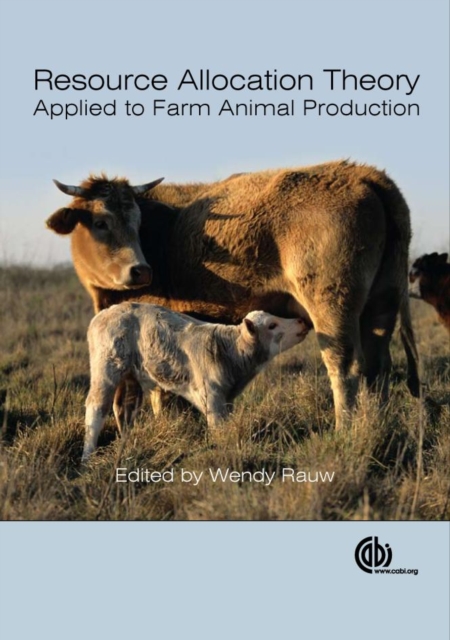
Resource allocation theory applied to farm animal production
According to the Resource Allocation Theory, an individual’s genetic potential can only be realized in an environment in which essential food resources are adequately supplied. This book describes resource allocation patterns in natural populations, the costs, preferences and trade-offs of maintenance, growth, reproduction and immune function, the consequences of selection for high production efficiency in livestock species, methods that can be used to quantify resource allocation patterns, and the application of resource allocation theory to improve animal production and wellbeing.
eBook

Chemistry of spices
Spices are high value, export-oriented crops used extensively in food and beverage flavourings, medicines, cosmetics and perfumes. Interest is growing however in the theoretical and practical aspects of the biosynthetic mechanisms of active components in spices as well as the relationship between the biological activity and chemical structure of these secondary metabolites. A wide variety of phenolic substances and amides derived from spices have been found to possess potent chemopreventive, anti-mutagenic, anti-oxidant and anti-carcinogenic properties. Representing the first discussion of the chemical properties of a wide cross section of important spices, this book covers extensively the three broad categories of plant-derived natural products: the terpenoids, the alkaloids and the phenyl propanoids and allied phenolic compounds. Spice crops such as black pepper, ginger, turmeric and coriander are covered with information on botany, composition, uses, chemistry, international specifications and the properties of a broad range of common and uncommon spices.
eBook

Heat treatments for postharvest pest control: theory and practice
Due to the nature of agricultural commodities as carriers of exotic pests, importing countries have employed varying methods of pest control for postharvest products. Thermal treatments are emerging as effective, environmentally-friendly alternatives to traditional methods, eliminating chemical residues and minimizing damage to produce. This book provides comprehensive information of these increasingly important treatments, covering temperature measurement, heat transfer, physiological responses of plants, insects and pathogens to heat, and an introduction to current and potential quarantine treatments based on hot air, hot water, and radio frequency energy.
eBook

Global pesticide resistance in arthropods
Pesticide resistance has had a substantial impact on crop production and has been an important driver of change in modern agriculture, animal production and human health. Focusing specifically on arthropods, this book provides a comprehensive review of relevant issues in pesticide resistance. Detailed listings and references to all documented reports of resistance from around the world are included.
eBook