
Catalogue Search | MBRL


Are you sure you want to remove the book from the shelf?

{{itemTitle}}
90
result(s) for
"ALISON PARGETER"
Sort by:

The New Frontiers of Jihad
Following the terrorist attacks on London and Madrid, radical Islam is presumed to be an increasingly potent force in Europe.Yet beneath the media hysteria, very little is actually known about it.What radical movements are there?How do they operate?What is driving them?Who are their recruits?What is their relationship, if any, to Al Qaeda?.
eBook
Libya
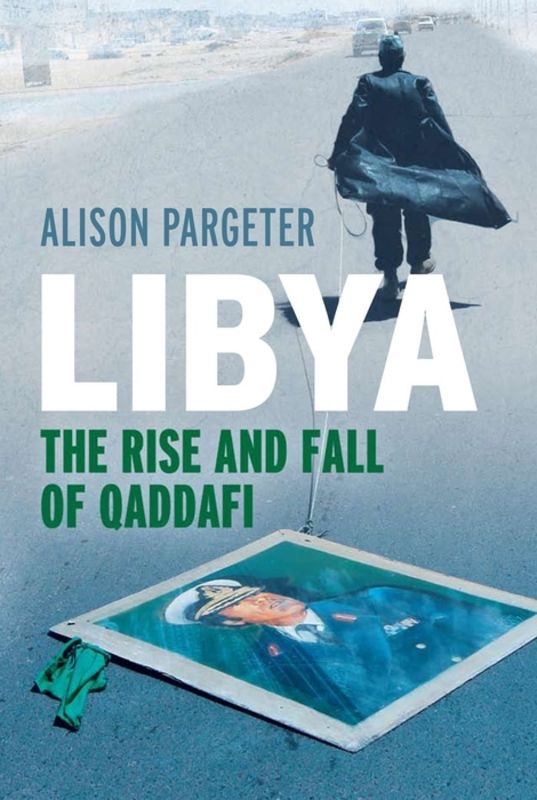
For a reader unfamiliar with the history of Libya, Muammar Qaddafi might be mistaken for a character in fiction. His eccentric leadership as the nation's \"Brother Leader,\" his repressive regime, sponsorship of terrorist violence, unique vision of the state, and relentless hold on power all seem implausibly extreme. This riveting book documents the extraordinary reality of Qaddafi's rise and 42-year reign. It also explores the tenacious popular uprising that finally defeated him and the possibilities for Libya as the future unfolds.
Alison Pargeter, an author with deep understanding of Libya's history and people, explains what led up to Qaddafi's bloodless coup in 1969 and how he proceeded to translate his highly personalized vision into political, economic, and social policy. She discusses his tight-knit networks, the crises he overcame-including sanctions after the Lockerbie bombing in 1988-as well as his astounding maneuverings in the early 2000s to restore tattered relations with the West. Pargeter provides a thoroughly fascinating analysis of the 2011 revolt and uncovers the full details of Qaddafi's downfall. She concludes by introducing the new power brokers in post-Qaddafi Libya as well as the variety of knotty challenges that now confront them.
eBook

Libya: Reforming the impossible?
The violent protests that broke out in Libya's eastern city of Benghazi in February 2006 in response to the row over the Danish cartoons of the Prophet Mohamed came as no big surprise to Libya watchers. Although the demonstrations were sparked by Italian minister Roberto Calderoli's declaration that he intended to print t-shirts bearing the cartoons, they also reflected the simmering discontent and frustration that have long been building in the country's second city. Indeed, the protests were as much a means of expressing anger with the situation inside Libya as they were about the depiction of the Prophet and it wasn't long before protestors began shouting anti-regime slogans. Although Benghazi has traditionally been a rebellious region kept deliberately impoverished by the regime, the frustrations expressed by those in the incident are not unique to the eastern region. There is a groundswell of anger and despondency among much of the Libyan population at the regime's apparent inability or lack of will to improve living conditions and day-to-day life in the country.
Journal Article


Localism and radicalization in North Africa: local factors and the development of political Islam in Morocco, Tunisia and Libya
Over the past three decades North Africa has experienced a wave of Islamic activism. From the emergence of groups such as Shabiba Islamiya in Morocco in the 1970s to the recent appearance of Al-Qaeda in the Islamic Maghreb, the region has been home to a plethora of different Islamist movements, each with its own national characteristics. As such the region has displayed a general propensity to Islamist activism. However, certain areas within each North African state have proven particularly receptive to the ideology of political Islam. Although this trend is by no means universal, given the strong appeal of the Islamist ideology that has been able to transcend geographical boundaries, these areas have nonetheless been a key source of recruitment not only for the more moderate strands of the Islamist opposition, but also to the militant movements and networks that espouse violence. As such there would appear to be a correlation between localism and Islamist activism in North Africa. Focusing on Morocco, Tunisia and Libya, this article will examine some of these local issues and will argue that in order to understand better the causes of radicalization in the region, the rise of Islamism in North Africa should be considered within the broader historical context of political and cultural resistance by certain peripheral regional elements to a delegitimized and stagnated central authority.
Journal Article
The Muslim Brotherhood and An-Nahda after the Arab Spring
One of the consequences of the Arab Spring was the catapulting to the fore of Islamist opposition movements that for decades had been operating in the shadows. The Egyptian Muslim Brotherhood scored a stunning victory at the ballot box, while Tunisian Islamist movement, An-Nahda, which although not formally part of the Muslim Brotherhood was born out of the same ideological tradition, came to head up the country's new troika government. Yet within just one year what had appeared as the dawn of a new Islamist age had been completely shattered, leaving the Egyptian brotherhood completely decimated and An-Nahda struggling to reinvent itself.
This chapter examines why the Brotherhood and An-Nahda's time in power proved to be so calamitous. It will argue that while these movements' failings were the result of a combination of both objective and subjective factors, the primary reasons for their downfall were their inability to articulate or implement any meaningful political vision, and their failure to turn themselves from forces of the past to those that could rise to the challenges of the contemporary era. Furthermore, in their desire to be in power, these movements ended up watering down their own ideology to the point where it wasn't clear what they stood for, or what political Islam, as articulated by the Brotherhood, actually meant.
One of the consequences of the Arab Spring was the catapulting to the fore of Islamist opposition movements that for decades had been operating in the shadows. The Muslim Brotherhood in Egypt scored a stunning victory, winning both parliamentary and presidential elections in 2011-2012, while in Tunisia, An-Nahda, which although not formally part of the Muslim Brotherhood was born out of the same ideological tradition, achieved electoral success, going on to head up the new troika government. This chapter examines some of the key reasons why the Brotherhood and its Tunisian affiliate's time in power proved to be so calamitous. It argues that while the Brotherhood's failings were the result of a combination of both objective and subjective factors, the primary reasons for its downfall were its inability to articulate or implement any political vision and its failure to turn itself from a force of the past to one that could rise to the challenges of the contemporary era.
Book Chapter

The New Frontiers of Jihand
Following the terrorist attacks on London and Madrid, radical Islam is presumed to be an increasingly potent force in Europe. Yet beneath the media hysteria, very little is actually known about it. What radical movements are there? How do they operate? What is driving them? Who are their recruits? What is their relationship, if any, to Al Qaeda? Alison Pargeter has spent three years interviewing radical Islamists throughout Europe to find answers to these questions. She examines how radical ideology travels from East to West, and how the two contexts shape each other. She finds that contrary to what some analysts have claimed, the European Muslim community has not become radicalised en masse. What has happened is that in a globalised world, Middle Eastern power struggles are now being played out in the mosques of Birmingham, Paris and Milan. This is a must-read book for anyone who wants to know the real story of the jihad which has apparently arrived in our back yard.
eBook
The Chimera of Reform
Qaddafi was faced with a dilemma. Libya was deep in crisis and the Colonel desperately needed a way out. Everywhere he looked, the pressures were building and he feared the country might slip out of his hands. His cherished Jamahiriyah was on shakier ground than ever before. If his regime was going to live, he was going to have to do something drastic. The exhausted Colonel knew that the key to extricating himself from this mess was to hand over the Lockerbie suspects, thereby securing the lifting of the international embargo that was strangling the country and grinding down the
Book Chapter
Foreign Adventurism
Libya was always going to be too small for Qaddafi; he believed himself a revolutionary of international proportions, and Qaddafism was not about to be confined to the domestic sphere. With a self-belief that knew no bounds, the prophet of the desert immediately set about projecting his revolution beyond Libya’s borders. The world became the Colonel’s oyster, as he employed the immense oil wealth at his disposal in the quest to put himself and his revolution on the map.
While some of this foreign adventurism was about seeking domestic legitimacy – winning over the masses with bold and rabble-rousing anti-imperialist
Book Chapter