
Catalogue Search | MBRL


Are you sure you want to remove the book from the shelf?

{{itemTitle}}
12,012
result(s) for
"Abbasi, A."
Sort by:
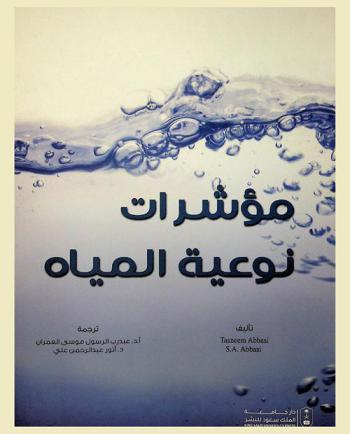
مؤشرات نوعية المياه
يتعرض الكتاب إلي مصطلح على هام وهو مؤشر نوعية المياه أهمية هذا المؤشر أنه يجمع جميع المعاير المقدسة لتحديد نوعية المياه في رقم واحد يسهل به معرفة صلاحية المياه و المؤشر يمكن معرفة مدى تلوث المصادر المائية المختلفة ومن ثم يسهل على متخذي القرار اتخاذ الإجراءات المناسبة. هذا ويتعرض الكتاب لمؤشرات نوعية المياه المعتمدة في الأساس على الخواص الكيميائية والفيزيائية وكذا المعتمدة على التقييم الحيوي.
BOOK

Computational design of experimentally validated multi-epitopes vaccine against hepatitis E virus: An immunological approach
Hepatitis E virus (HEV) is one of the leading acute liver infections triggered by viral hepatitis. Patients infected with HEV usually recover and the annual death rate is negligible. Currently, there is no HEV licensed vaccine available globally. This study was carried out to design a multi-epitope HEV peptide-based vaccine by retrieving already experimentally validated epitopes from ViPR database leading to epitope prioritization. Epitopes selected as potential vaccine candidates were non-allergen, immunogenic, soluble, non-toxic and IFN gamma positive. The epitopes were linked together by AAY linkers and the linker EAAAK was used to join adjuvant with epitopes. Toll-like receptor (TLR)-4 agonist was used as an adjuvant to boost efficacy of the vaccine. Furthermore, codon optimization followed by disulfide engineering was performed to analyse the designed vaccine’s structural stability. Computational modeling of the immune simulation was done to examine the immune response against the vaccine. The designed vaccine construct was docked with TLR-3 receptor for their interactions and then subjected to molecular dynamic simulations. The vaccine model was examined computationally towards the capability of inducing immune responses which showed the induction of both humoral and cell mediated immunity. Taken together, our study suggests an In-silico designed HEV based multi-epitope peptide-based vaccine (MEPV) that needs to be examined in the wet lab-based data that can help to develop a potential vaccine against HEV.
Journal Article

Heat Transport Exploration for Hybrid Nanoparticle (Cu, Fe3O4)—Based Blood Flow via Tapered Complex Wavy Curved Channel with Slip Features
Curved veins and arteries make up the human cardiovascular system, and the peristalsis process underlies the blood flowing in these ducts. The blood flow in the presence of hybrid nanoparticles through a tapered complex wavy curved channel is numerically investigated. The behavior of the blood is characterized by the Casson fluid model while the physical properties of iron (Fe3O4) and copper (Cu) are used in the analysis. The fundamental laws of mass, momentum and energy give rise the system of nonlinear coupled partial differential equations which are normalized using the variables, and the resulting set of governing relations are simplified in view of a smaller Reynolds model approach. The numerical simulations are performed using the computational software Mathematica’s built-in ND scheme. It is noted that the velocity of the blood is abated by the nanoparticles’ concentration and assisted in the non-uniform channel core. Furthermore, the nanoparticles’ volume fraction and the dimensionless curvature of the channel reduce the temperature profile.
Journal Article

Efficacy of the Vermicomposts of Different Organic Wastes as “Clean” Fertilizers: State-of-the-Art
Vermicomposting is a process in which earthworms are utilized to convert biodegradable organic waste into humus-like vermicast. Past work, mainly on vermicomposting of animal droppings, has shown that vermicompost is an excellent organic fertilizer and is also imbibed with pest-repellent properties. However, there is no clarity whether vermicomposts of organic wastes other than animal droppings are as plant-friendly as the manure-based vermicomposts are believed to be. It is also not clear as to whether the action of a vermicompost as a fertilizer depends on the species of plants being fertilized by it. This raises questions whether vermicomposts are beneficial (or harmful) at all levels of application or if there is a duality in their action which is a function of their rate of application. The present work is an attempt to seek answers to these questions. To that end, all hitherto published reports on the action of vermicomposts of different substrates on different species of plants have been assessed. The study reveals that, in general, vermicomposts of all animal/plant based organic wastes are highly potent fertilizers. They also possess some ability to repel plant pests. The factors that shape these properties have been assessed and the knowledge gaps that need to be bridged have been identified.
Journal Article

Fungal Endophytes and Their Role in Agricultural Plant Protection against Pests and Pathogens
Virtually all examined plant species harbour fungal endophytes which asymptomatically infect or colonize living plant tissues, including leaves, branches, stems and roots. Endophyte-host interactions are complex and span the mutualist–pathogen continuum. Notably, mutualist endophytes can confer increased fitness to their host plants compared with uncolonized plants, which has attracted interest in their potential application in integrated plant health management strategies. In this review, we report on the many benefits that fungal endophytes provide to agricultural plants against common non-insect pests such as fungi, bacteria, nematodes, viruses, and mites. We report endophytic modes of action against the aforementioned pests and describe why this broad group of fungi is vitally important to current and future agricultural practices. We also list an extensive number of plant-friendly endophytes and detail where they are most commonly found or applied in different studies. This review acts as a general resource for understanding endophytes as they relate to potential large-scale agricultural applications.
Journal Article

An Analysis of Failures Leading to Fire Accidents in Hospitals; with Specific Reference to India
Fire can be especially dangerous when it occurs in hospitals because many patients in any typical hospital are not physically fit enough to quickly respond to emergency measures, especially evacuation calls. The present paper reports an in-depth assessment of the factors which have led to major fire accidents in Indian hospitals. The study reveals that several building safety codes, acts and guidelines are available, not only to prevent accidental fires but also to minimize harm when such fires do take place. However, observance of the stipulations is very lax, and seems to be exercised more in breach than in compliance. The study reveals that hospitals have zones like the intensive care units which are not only more prone to accidents than other zones but can also cause greater loss of lives due to the presence of critically ill patients, or persons who are extremely vulnerable (for instance newborn babies). Special codes and practices need to be framed for such zones. The study has also identified and catalogued a series of measures which must be implemented in future to prevent accidental fires in hospitals. The study is with reference to accidents that have occurred in India from 2010 to the present but is representative of the situation prevailing in most developing countries.
Journal Article

Phytochemicals and biofunctional properties of buckwheat: a review
A growing trend for nutraceutical and gluten-free cereal-based products highlights the need for development of new products. Buckwheat is one of the potential candidates for such products and the present paper reviews the functional and nutraceutical compounds present in common buckwheat (Fagopyrum esculentum) and tartary buckwheat (Fagopyrum tataricum). The vital functional substances in buckwheat are flavonoids, phytosterols, fagopyrins, fagopyritols, phenolic compounds, resistant starch, dietary fibre, lignans, vitamins, minerals and antioxidants, which make it a highly active biological pseudocereal. Cholesterol-lowering effects that lessen the problems of constipation and obesity are important health benefits that can be achieved through the functional substances of buckwheat.
Journal Article

Rebound effects undermine carbon footprint reduction potential of autonomous electric vehicles
Autonomous vehicles offer greater passenger convenience and improved fuel efficiency. However, they are likely to increase road transport activity and life cycle greenhouse emissions, due to several rebound effects. In this study, we investigate tradeoffs between improved fuel economy and rebound effects from a life-cycle perspective. Our results show that autonomy introduces an average 21.2% decrease in operation phase emissions due to improved fuel economy while manufacturing phase emissions can surge up to 40%. Recycling efforts can offset this increase, cutting emissions by 6.65 tons of Carbon dioxide equivalent per vehicle. However, when examining the entire life cycle, autonomous electric vehicles might emit 8% more greenhouse gas emissions on average compared to nonautonomous electric vehicles. To address this, we suggest; (1) cleaner and more efficient manufacturing technologies, (2) ongoing fuel efficiency improvements in autonomous driving; (3) renewable energy adoption for charging, and (4) circular economy initiatives targeting the complete life cycle.
Autonomous electric vehicles reduce operational emissions but increase manufacturing emissions due to rebound effects. Recycling helps, but their full life cycle emits 8% more greenhouse gases. Embrace renewable energy, circular economy, cleaner manufacturing, and improved efficiency.
Journal Article

Frequency-diverse multimode millimetre-wave constant-ϵr lens-loaded cavity
This paper presents a physical frequency-diverse multimode lens-loaded cavity, designed and used for the purpose of the direction of arrival (DoA) estimation in millimetre-wave frequency bands for 5G and beyond. The multi-mode mechanism is realized using an electrically-large cavity, generating spatio-temporally incoherent radiation masks leveraging the frequency-diversity principle. It has been shown for the first time that by placing a spherical constant dielectric lens (constant-
ϵ
r
) in front of the radiating aperture of the cavity, the spatial incoherence of the radiation modes can be enhanced. The lens-loaded cavity requires only a single lens and output port, making the hardware development much simpler and cost-effective compared to conventional DoA estimators where multiple antennas and receivers are classically required. Using the lens-loaded architecture, an increase of up to 6 dB is achieved in the peak gain of the synthesized quasi-random sampling bases from the frequency-diverse cavity. Despite the fact that the practical frequency-diverse cavity uses a limited subset of quasi-orthogonal modes below the upper bound limit of the number of theoretical modes, it is shown that the proposed lens-loaded cavity is capable of accurate DoA estimation. This is achieved thanks to the sufficient orthogonality of the leveraged modes and to the presence of the spherical constant-
ϵ
r
lens which increases the signal-to-noise ratio (SNR) of the received signal. Experimental results are shown to verify the proposed approach.
Journal Article

The myth and the reality of energy recovery from municipal solid waste
Background
Any manner of development can be sustainable only if the waste generated by it is not allowed to accumulate but is fully reused/recycled/recovered. Among the strategies to attain this goal have been the attempts to recover energy from municipal solid waste (MSW). About 60% of MSW is carbonaceous, consisting of materials which can either be biodegraded into fuels like methane or incinerated, thereby generating utilizable energy. MSW also contains several components—like metallic scrap and glass pieces—which can be reused or recycled, thereby achieving energy conservation. Given these attributes, MSW appears to be a potential source of energy and resources. Indeed, this belief that MSW is usable
if only we try sincerely enough to do so
prompts most of us to keep generating much more MSW than is warranted. But how realizable really is the energy potential of MSW? What perils loom into view when we actually set out to utilize MSW as an energy source? The present study addresses these crucially important questions.
Methods
The work is based on a critical content analysis of the prior art.
Results
The generation of MSW has consistently outpaced the world’s efforts to dispose of it cleanly, and the energy (and material) recovery from MSW is easier said than done. In most instances, what is technically feasible is economically unfeasible. And what is economically feasible—such as setting the waste on fire as is often done in developing countries—is exceedingly harmful to the environment and the human health. Measures such as sanitary landfilling and incineration create as many new problems as the old ones they solve. Moreover, despite the use of these less-than-adequate technologies, a major portion of MSW generated in the world lies untreated.
Conclusions
As the MSW output is expected to double by 2025, this situation is only set to become worse. Rising tides of E-waste would compound the problem even further. Hence, enormous stress should be put on the
reduction
of MSW generation by controlling wanton consumerism and wastage, rather than continuing with it in the false hope that technology will soon provide a magical solution and eliminate the problem.
Journal Article