
Catalogue Search | MBRL


Are you sure you want to remove the book from the shelf?

{{itemTitle}}
523
result(s) for
"Abel, Brian"
Sort by:
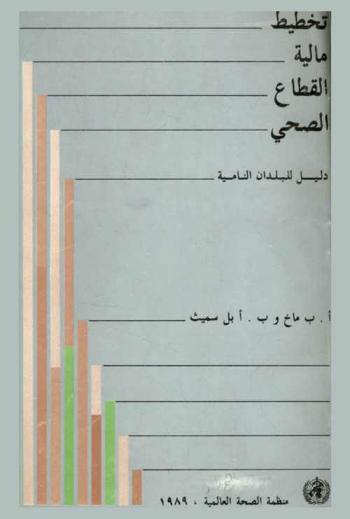
تخطيط مالية القطاع الصحي : دليل للبلدان النامية
تتناول دراسة (تخطيط مالية القطاع الصحي : دليل للبلدان النامية) والذي قام بتأليفه (أ. ب. ماخ، ب. آبل-سميث) في حوالي (165) صفحة من القطع المتوسط موضوع (إدارة الخدمات الصحية في الدول النامية) مستعرضا المحتويات التالية : الفصل الأول : المقدمة، الفصل الثاني : تعاريف، الفصل الثالث : أهداف الدراسة، الفصل الرابع : تخطيط الدراسة، الفصل الخامس : جمع المعطيات، الفصل السادس : الرعاية الصحية الأولية، الفصل السابع : تقييم المادة التي تم جمعها، الفصل الثامن : تقدير الإنفاق في المستقبل ومصادره تمويله.
BOOK

Minimal crossover between mutations associated with Omicron variant of SARS-CoV-2 and CD8ˆ+ T-cell epitopes identified in COVID-19 convalescent individuals
The newly identified Omicron variant of concern contains more mutations than any of the previous variants described to date. In addition, many of the mutations associated with the Omicron variant are found in areas that are likely bound by neutralizing antibodies, suggesting that the first line of immunological defense against COVID-19 is compromised. There is a growing concern that ongoing evolution of SARS-CoV-2 could lead to variants of concern (VOC) that are capable of avoiding some or all of the multifaceted immune response generated by both prior infection or vaccination, with the recently described B.1.1.529 (Omicron) VOC being of particular interest. Peripheral blood mononuclear cell samples from PCR-confirmed, recovered COVID-19 convalescent individuals ( n = 30) infected with SARS-CoV-2 in the United States collected in April and May 2020 who possessed at least one or more of six different HLA haplotypes were selected for examination of their anti-SARS-CoV-2 CD8 + T-cell responses using a multiplexed peptide-major histocompatibility complex tetramer staining approach. This analysis examined if the previously identified viral epitopes targeted by CD8 + T cells in these individuals ( n = 52 distinct epitopes) are mutated in the newly described Omicron VOC ( n = 50 mutations). Within this population, only one low-prevalence epitope from the Spike protein, restricted to two HLA alleles and found in 2/30 (7%) individuals, contained a single amino acid change associated with the Omicron VOC. These data suggest that virtually all individuals with existing anti-SARS-CoV-2 CD8 + T-cell responses should recognize the Omicron VOC and that SARS-CoV-2 has not evolved extensive T-cell escape mutations at this time. IMPORTANCE The newly identified Omicron variant of concern contains more mutations than any of the previous variants described to date. In addition, many of the mutations associated with the Omicron variant are found in areas that are likely bound by neutralizing antibodies, suggesting that the first line of immunological defense against COVID-19 is compromised. However, both natural infection and vaccination develop T-cell-based responses in addition to antibodies. This study examined if the parts of the virus, or epitopes, targeted by the CD8 + T-cell response in 30 individuals who recovered from COVID-19 in 2020 were mutated in the Omicron variant. Only one of 52 epitopes identified in this population contained an amino acid that was mutated in Omicron. These data suggest that the T-cell immune response in previously infected, and most likely vaccinated, individuals should still be effective against Omicron.
Journal Article

Influenza Vaccine-Induced Antibody Responses Are Not Impaired by Frailty in the Community-Dwelling Elderly With Natural Influenza Exposure
Elderly adults over 65 years of age are recommended to receive seasonal influenza vaccination as they are at a higher risk of infection and its complications than the younger community. The elderly are often stratified according to frailty status where frail individuals are more susceptible to adverse health outcomes than their non-frail counterparts, however, it is not known whether immunity induced by influenza vaccination is impaired in the frail elderly.
Two hundred and five elderly subjects of Chinese ethnicity in Singapore (mean age 73.3 ± 5.3 years, 128 females and 77 males) were administered the recommended trivalent inactivated 2013-14 seasonal influenza vaccine (Vaxigrip™) containing A/H1N1, A/H3N2, and B strains. The elderly subjects were stratified into three groups according to Fried's frailty criteria (59 frail, 85 pre-frail, 61 robust) and were also ranked by Rockwood's frailty index (RFI). Statistical associations were evaluated between frailty status and pre- and post-vaccination antibody titres in sera measured by Hemagglutination inhibition (HAI) and microneutralization (MN) assays. Immunological responses across frailty strata were also studied in terms of leukocyte cellular distribution, cytokine levels and gene expression.
: Post-vaccination, 83.4% of the subjects seroconverted for A/H1N1, 80.5% for A/H3N2, and 81% for the B strain. The seroconversion rates were comparable across frailty groups (A/H1N1, ANOVA,
= 0.7910; A/H3N2, ANOVA,
= 0.8356, B, ANOVA,
= 0.9741). Geometric mean titres of HAI and MN as well as seroprotection rates were also similar in all three frailty groups and uncorrelated with RFI (Spearman,
= 0.023,
= 0.738). No statistically significant differences were observed between the frailty groups in vaccine-induced modulation of leukocyte populations, cytokine responses, and gene expression profiles of peripheral blood mononuclear cells (PBMCs). Whereas, post- and pre-vaccination HAI titres were positively correlated after adjusting for age and gender (A/H1N1,
= 0.216,
= 9.1e-11; A/H3N2,
= 0.166,
= 3.4e-8; B,
= 0.104,
= 3.1e-5). With most subjects lacking previous history of influenza vaccination, the pre-vaccination titres were likely due to natural exposure and seen to match the pattern of influenza subtype prevalence in the time period of vaccination.
: The majority of the elderly subjects seroconverted for seasonal influenza upon vaccination, and importantly, influenza vaccination-induced humoral immune responses and seroprotection were similar across the frailty strata, indicating that frail individuals may also benefit from influenza vaccination. Pre-existing antibodies due to natural exposure appeared to positively influence vaccine-induced antibody responses.
Journal Article
A Novel Sample Selection Approach to Aid the Identification of Factors That Correlate With the Control of HIV-1 Infection
Individuals infected with HIV display varying rates of viral control and disease progression, with a small percentage of individuals being able to spontaneously control infection in the absence of treatment. In attempting to define the correlates associated with natural protection against HIV, extreme heterogeneity in the datasets generated from systems methodologies can be further complicated by the inherent variability encountered at the population, individual, cellular and molecular levels. Furthermore, such studies have been limited by the paucity of well-characterised samples and linked epidemiological data, including duration of infection and clinical outcomes. To address this, we selected 10 volunteers who rapidly and persistently controlled HIV, and 10 volunteers each, from two control groups who failed to control (based on set point viral loads) from an acute and early HIV prospective cohort from East and Southern Africa. A propensity score matching approach was applied to control for the influence of five factors (age, risk group, virus subtype, gender, and country) known to influence disease progression on causal observations. Fifty-two plasma proteins were assessed at two timepoints in the 1st year of infection. We independently confirmed factors known to influence disease progression such as the B * 57 HLA Class I allele, and infecting virus Subtype. We demonstrated associations between circulating levels of MIP-1α and IL-17C, and the ability to control infection. IL-17C has not been described previously within the context of HIV control, making it an interesting target for future studies to understand HIV infection and transmission. An in-depth systems analysis is now underway to fully characterise host, viral and immunological factors contributing to control.
Journal Article

Healthy elderly Singaporeans show no age-related humoral hyporesponsiveness nor diminished plasmablast generation in response to influenza vaccine
Improving influenza vaccine efficacy is a priority to reduce the burden of influenza-associated morbidity and mortality. By careful selection of individuals based on health we show sustained response to influenza vaccination in older adults. Sustaining health in aging could be an important player in maintaining immune responses to influenza vaccination.
Trial registration
NCT03266237. Registered 30 August 2017,
https://clinicaltrials.gov/ct2/show/NCT03266237
.
Journal Article

Innate Signals Compensate for the Absence of PKC-θ during in vivo CD8+ T Cell Effector and Memory Responses
PKC-θ is central to T-helper (Th) 2 cell differentiation and effector function; however, its importance for antiviral effector, and in particular memory CD8+ T cell responses, remains unclear. We have investigated the role of PKC-θ during in vivo and in vitro responses against influenza virus, lymphocytic choriomeningitis virus, vaccinia virus, and replication-deficient virus-like particles. In the absence of PKC-θ, antiviral CD8+ T cells presented an unresponsive phenotype in vitro, which could be restored with exogenous IL-2 or by Toll-like receptor ligand-activated dendritic cells. In striking contrast, PKC-θ appeared to be superfluous for in vivo antiviral responses irrespective of whether the virus infected systemically, was localized to the lung, or did not replicate. In addition, CD8+ CCR7-effector memory responses were normal in PKC-θ-deficient mice, both in lymphoid and peripheral tissues. Our data show that increased activation signals delivered in vivo by highly activated dendritic cells, as present during viral infections, overcome the requirement for PKC-θ during CD8+ T cell antiviral responses.
Journal Article

Evaluation of the notifiable diseases surveillance system in sanyati district, Zimbabwe, 2010-2011
The Notifiable disease surveillance system (NDSS) was established in Zimbabwe through the Public Health Act. Between January and August 2011, 14 dog bites were treated at Kadoma Hospital. Eighty-six doses of anti-rabies vaccine were dispensed. One suspected rabies case was reported, without epidemiological investigations. The discrepancy may imply under reporting of Notifiable Diseases. The study was conducted to evaluate the NDSS in Sanyati district.
A descriptive cross sectional study was conducted. Healthcare workers in selected health facilities in urban, rural, and private and public sector were interviewed using questionnaires. Checklists were used to assess resource availability and guide records review of notification forms. Epi Info(TM) was used to generate frequencies, proportions and Chi Square tests at 5% level.
We recruited 69 participants, from 16 facilities. Twenty six percent recalled at least 9 Notifiable diseases, 72% correctly mentioned the T1 form for notification, 39% correctly mentioned the forms completed in triplicate and 20% knew it was a legal requirement to notify. Ninety six percent of respondents indicated willingness to participate, whilst 41% had ever received feedback. Three out of 16 health facilities had T1 forms.
NDSS is useful, acceptable, simple, and sensitive. NDSS is threatened by lack of T1 forms, poor feedback and knowledge of health workers on NDSS. T1 forms and guidelines for completing the forms were distributed to all health facilities, public and private sector. On the job training of health workers through tutorials, supervision and feedback was conducted.
Journal Article

SARS-CoV-2–specific CD8+ T cell responses in convalescent COVID-19 individuals
Characterization of the T cell response in individuals who recover from severe acute respiratory syndrome coronavirus 2 (SARS-CoV-2) infection is critical to understanding its contribution to protective immunity. A multiplexed peptide-MHC tetramer approach was used to screen 408 SARS-CoV-2 candidate epitopes for CD8+ T cell recognition in a cross-sectional sample of 30 coronavirus disease 2019 convalescent individuals. T cells were evaluated using a 28-marker phenotypic panel, and findings were modelled against time from diagnosis and from humoral and inflammatory responses. There were 132 SARS-CoV-2-specific CD8+ T cell responses detected across 6 different HLAs, corresponding to 52 unique epitope reactivities. CD8+ T cell responses were detected in almost all convalescent individuals and were directed against several structural and nonstructural target epitopes from the entire SARS-CoV-2 proteome. A unique phenotype for SARS-CoV-2-specific T cells was observed that was distinct from other common virus-specific T cells detected in the same cross-sectional sample and characterized by early differentiation kinetics. Modelling demonstrated a coordinated and dynamic immune response characterized by a decrease in inflammation, increase in neutralizing antibody titer, and differentiation of a specific CD8+ T cell response. Overall, T cells exhibited distinct differentiation into stem cell and transitional memory states (subsets), which may be key to developing durable protection.
Journal Article
Delayed initiation of anti-retroviral therapy in TB/HIV co-infected patients, Sanyati District, Zimbabwe, 2011-2012
Tuberculosis (TB) remains a public health problem and is driven by HIV. Recent studies indicate that anti-retroviral therapy (ART) initiated during the first two months of anti-TB treatment (ATT) reduces risk of HIV morbidity and mortality. In Sanyati district, 14% of TB/HIV co-infected patients were initiated on ART during TB treatment, in 2010. The study was conducted to determine the magnitude and determinants of delay in ART initiation, in TB/HIV co-infected patients.
An analytic cross sectional study was conducted at three study sites in Sanyati district. The outcome was delayed ART initiation, being failure to be initiated on ART during the first two months of ATT. Respondents were interviewed using pre-tested questionnaires. Epi-Info was used to generate frequencies, means, odds ratios and 95% confidence intervals. Stratified and logistic regression analysis was done.
Of the 186 respondents, 63% had delayed ART initiation. Median delay from initiation of ATT to ART was 48 days (Q1=20; Q3=82). Risk factors for delayed ART initiation were: being treated for TB first time, AOR=2.23 (p=0.03); initially registered for HIV care outside Sanyati, AOR=3.08 (p<0.01); staying more than 5km from a clinic, AOR=3.29 (p<0.01). Enabling factors for early ART initiation was having a family member on ART, AOR=0.23 (p<0.01).
Significant delay and barriers to ART initiation were identified. Decentralization of ART initiation should be expedited. ART initiation should be expedited in patients with identified risk factors for delaying ART initiation. Peer support should be strengthened in families and community. Periodic evaluation of magnitude of delay and impact of early ART initiation in TB/HIV patients is recommended.
Journal Article
Psoriasiform dermatitis is driven by IL-36–mediated DC-keratinocyte crosstalk
Psoriasis is a chronic inflammatory disorder of the skin affecting approximately 2% of the world's population. Accumulating evidence has revealed that the IL-23/IL-17/IL-22 pathway is key for development of skin immunopathology. However, the role of keratinocytes and their crosstalk with immune cells at the onset of disease remains poorly understood. Here, we show that IL-36R-deficient (Il36r-/-) mice were protected from imiquimod-induced expansion of dermal IL-17-producing γδ T cells and psoriasiform dermatitis. Furthermore, IL-36R antagonist-deficient (Il36rn-/-) mice showed exacerbated pathology. TLR7 ligation on DCs induced IL-36-mediated crosstalk with keratinocytes and dermal mesenchymal cells that was crucial for control of the pathological IL-23/IL-17/IL-22 axis and disease development. Notably, mice lacking IL-23, IL-17, or IL-22 were less well protected from disease compared with Il36r-/- mice, indicating an additional distinct activity of IL-36 beyond induction of the pathological IL-23 axis. Moreover, while the absence of IL-1R1 prevented neutrophil infiltration, it did not protect from acanthosis and hyperkeratosis, demonstrating that neutrophils are dispensable for disease manifestation. These results highlight a central and unique IL-1-independent role for IL-36 in control of the IL-23/IL-17/IL-22 pathway and development of psoriasiform dermatitis.
Journal Article