
Catalogue Search | MBRL


Are you sure you want to remove the book from the shelf?

{{itemTitle}}
330
result(s) for
"Abrahams, Tim"
Sort by:

Ideas exchange : the collaborative studio of Hawkins\\Brown
The Hawkins\\Brown architectural firm in London, founded in 1988 by Roger Hawkins and Russell Brown, is one of the up-andcoming offices on the international architecture scene. The spectrum of the firm's works ranges from residences and interior design by way of office buildings and various public buildings such as theaters and university buildings all the way to urban planning, such as designs for squares and subway stations. Hawkins\\Brown strives to come to an optimal result in a process that integrates all of the players.--Product Description.
Book
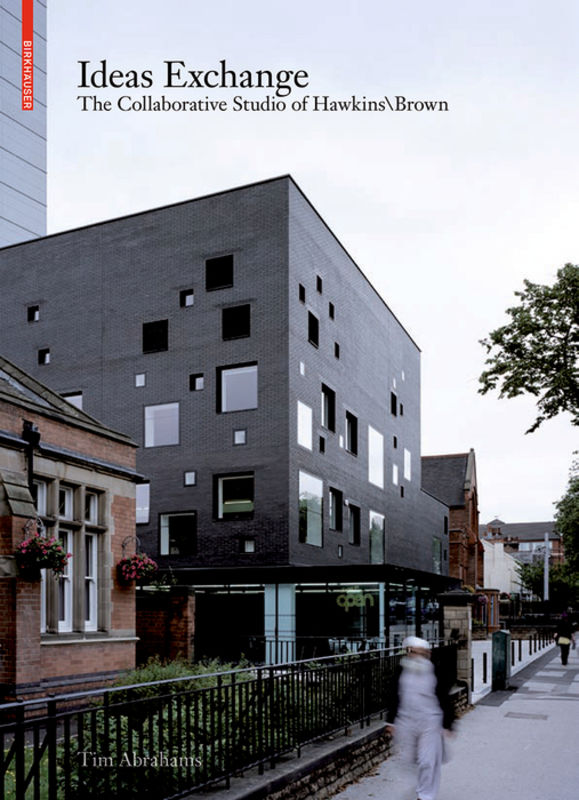
Ideas Exchange
The Hawkins\\Brown architectural firm in London, founded in 1988 by Roger Hawkins and Russell Brown, is one of the up-and-coming offices on the international architecture scene. The spectrum of the firm's works ranges from residences and interior design by way of office buildings and various public buildings such as theaters and university buildings all the way to urban planning, such as designs for squares and subway stations. Hawkins\\Brown strives to come to an optimal result in a process that integrates all of the players. Hawkins\\Brown has received numerous awards for various projects, such as the RIBA Award for its Wysing Arts Centre (2008), the New Chemistry Building of the University of Oxford (2009), and the New Art Exchange art center in Nottingham (2009) and the BREEAM Award for Eltham Hill Technology College (2008). This book documents some twenty-five buildings from the past five years. The projects presented include the Tottenham Court Road Underground Station, one of the busiest Tube stations in London with a hundred thousand passengers daily (to be completed in 2011); the Stratford Regional Station in London, an access platform for one of the major sites for the Olympic Games (to be completed in 2010); Park Hill, the master plan for a neighborhood in Sheffield (to be completed in 2011), and the Dubai Arts Pavilion in the United Arab Emirates.
eBook

HOUSE of the Month
\"HISTORICALLYspeaking, an embassy was the house of the ambassador,\" says Thomas Padmanabhan, half of Zurich-based practice Liitjens Padmanabhan-\"a place where they would receive guests, where there would be no separation between private and public, in the modern sense.\" The firm's new home for the Swiss ambassador in Algiers may be a colorful Memphis-inflected garden pavilion skirted in canopies-more Ibiza party pad than government building-but it is still informed by this historical understanding of the ambiguous relationship between private and public in embassy architecture, despite the bureaucratic functions the diplomatic profession assumed in the 20th century. With a floor area of 7,555 square feet, this single-story house in the embassy district of Algeria's capital is less than half the size of the earthquake-damaged 1920s residence it replaces, fulfilling its domestic and official program in as condensed a fashion as possible.
Trade Publication Article
Support Structure
The firm, which has considerable experience designing behavioral and mental health-care facilities throughout Belgium, replaced the school building with a purpose-built children's mental health-care center that is closely tied into the surrounding neighborhood. A new pedestrian and bicycling path that links the nearby town center to a verdant 19th-century residential neighborhood is sandwiched between the north side of the building and a matching white brick wall on the edge of the site. On the ground floor are 45 bedrooms, providing on-site residential care of varying lengths to 39 children and young adults from the ages of 5 to 18, as well as room for six outpatients. Since a combination of play and rest was seen as optimal by the client, sleeping and rest spaces were placed together on the ground floor to ensure that patients could be effectively supervised from interior and exterior spaces.
Trade Publication Article
An Invitation to Dine
DESIGNED BY the France-based Lebanese architect Lina Ghotmeh, this year's Serpentine Pavilion is a deceptively simple structure made of glulam beams and timber posts, providing Kensington Gardens, one of London's grand central parks, with an ornate wood tent. Whereas several recent pavilions have explored architectural language or sculptural form (think of Junya Ishigami's daring, slightly preposterous slate roof in 2019, or the Minecraft Neoclassicism of Sumayya Vally's 2021 design), Ghotmeh's pavilion is derived from an understanding of the building's program. While the inexpensive materials from which it is assembled-it has a pleated plywood roof and simple timber floors-suggest that the Zeitgeist may be short on cash, on a deeper level the building suggests that the times call for renewed emphasis on human interaction, and for some fun.
Trade Publication Article
Breakaway Arena
Known for architecture that is as intellectually rigorous as it is aesthetically sensitive, the firm's work often resolves in a commitment to context, be that in a topographical way-as with the Nottingham Contemporary (2009), which superbly marries the engineering of an elevated tramway with the geology of a hill-or in structural expression, as with the St. Jakob Foundation (2018), where balconies play visual games with the historic viaduct immediately adjacent. Where it is needed-the ground-floor restaurant at the southern end of the building, offices at the northern end, and what is grandly called the \"Business Club\" but which effectively offers gametime hospitality viewing on the third floor-there's an inner lining of blockwork or plaster that houses insulation. Caruso St John Architects - Adam Caruso, Peter St John, partners; Michael Schneider, project lead; Adriana Müller, project architect ENGINEERS:
Trade Publication Article
Manchester Metropolitan University School of Digital Arts
Feilden Clegg Bradley Studios Studiotech THE SCHOOL of Digital Arts (SODA) is a new initiative for Manchester Metropolitan University: a purpose-built home for its existing digital-art and filmmaking programs as well as new courses in game and sound design. A 29½- by 16-foot section at the top has a denser array and displays the university logo. Since the lighting scheme is on throughout the day and into the evening (during the school's operating hours), Studiotech director Ed Vickery says, this configuration \"will use around 5 to 7 kilowatts (kW). The LEDS are partially powered by a photovoltaic array on the roof of the building, which can be doubled in capacity to fully power them if desired.
Trade Publication Article
LANDSCAPE
[...]it is based on an urban grid, designed by the architects and planners MVRDV, to extend the center of Almere, a new town founded on reclaimed land. The water opens up the opportunity for access by boat, and there's the cable car.\" The UAE pavilion is a low wood building, for example, wrapped by a closed-loop bio-saline agriculture system: seawater and waste are recycled, using plants like mangroves and salt-tolerant succulents, to produce drinking water and irrigation to grow edible crops.
Trade Publication Article
Two to Tango
The new Royal College of Art (RCA) buildings in Battersea, just south of the Thames in London, are a quiet rebuke to the gargantuas designed by a previous generation of architects. Looking out from the fourth-floor balcony of Herzog and de Meuron's new studio building, you do not find a view of the river. Instead, all you can see when peering over the top of the preexisting RCA campus is the vast rump of the luxury apartment block that Foster + Partners built next to its own riverfront headquarters both buildings that helped make the banks along this segment of the Thames an architectural free-for-all of bloated glass-fronted luxury. South London is not without hope, though. Herzog and de Meuron's two new RCA buildings are not small, together providing 181,275 square feet of workshop, studio, and research space. Representing the biggest expansion in the 190-year history of one of Britain's leading educational institutions, this latest addition is far larger than the school's other two campuses across the river in North London. As a pair, the studio building and the research building adjoining it demonstrate the compatibility of modernist architectural nuance with a walkable street pattern and older neighboring structures. London has again been improved immeasurably by the work of the Swiss practice designers of the Tate Modern (2000) and its extension (2016) that has absorbed the city's material culture and added to it so ingeniously.
Trade Publication Article