
Catalogue Search | MBRL


Are you sure you want to remove the book from the shelf?

{{itemTitle}}
1,635
result(s) for
"Abrams, D."
Sort by:

All the pieces matter : the inside story of The wire
\"The definitive oral history of the iconic and beloved TV show The Wire, as told by the actors, writers, directors, and others involved in its creation.\"--Provided by publisher.
Book

The Demise of Fire and “Mesophication” of Forests in the Eastern United States
A diverse array of fire-adapted plant communities once covered the eastern United States. European settlement greatly altered fire regimes, often increasing fire occurrence (e.g., in northern hardwoods) or substantially decreasing it (e.g., in tallgrass prairies). Notwithstanding these changes, fire suppression policies, beginning around the 1920s, greatly reduced fire throughout the East, with profound ecological consequences. Fire-maintained open lands converted to closed-canopy forests. As a result of shading, shade-tolerant, fire-sensitive plants began to replace heliophytic (sun-loving), fire-tolerant plants. A positive feedback cycle—which we term “mesophication”—ensued, whereby microenvironmental conditions (cool, damp, and shaded conditions; less flammable fuel beds) continually improve for shade-tolerant mesophytic species and deteriorate for shade-intolerant, fire-adapted species. Plant communities are undergoing rapid compositional and structural changes, some with no ecological antecedent. Stand-level species richness is declining, and will decline further, as numerous fire-adapted plants are replaced by a limited set of shade-tolerant, fire-sensitive species. As this process continues, the effort and cost required to restore fire-adapted ecosystems escalate rapidly.
Journal Article

The come up : an oral history of the rise of hip-hop
\"The essential oral history of hip-hop, from its origins on the playgrounds of the Bronx to its reign as the most powerful force in pop culture-from the award-winning journalist behind All the Pieces Matter, the New York Times bestselling oral history of The Wire. The music that we would later know as hip-hop was born at a party in the Bronx in the summer of 1973. Now, fifty years later, it's the most popular genre in America and its electric impact on contemporary music is likened to that of jazz on the first half of the twentieth century. And yet, despite its tremendous influence, the voices of many of hip-hop's pioneers have never been thoroughly catalogued-and some are at risk of being lost forever. Now, in The Come Up, Jonathan Abrams offers the most comprehensive account so far of hip-hop's rise, told in the voices of the people who made it happen. Abrams traces how the genre grew out of the resourcefulness of an overlooked population amid the decay of the South Bronx, and from there how it overflowed into the other boroughs and then across the nation-from parks onto vinyl, below to the Mason-Dixon line, to the West Coast through gangster rap and G-funk, and then across generations. In more than 300 interviews conducted over three years, Abrams has captured the stories of the DJs, label executives, producers, and artists who both witnessed and made the history of hip-hop. He has on record Grandmaster Caz detailing hip-hop's infancy, Edward \"Duke Bootee\" Fletcher describing the origins of \"The Message,\" DMC narrating his introduction of hip-hop to the mainstream, Ice Cube recounting N.W.A's breakthrough and breakup, Kool Moe Dee elaborating on his Grammys boycott, and many more key players. And he has conveyed with singular vividness the drive, the stakes, and the relentless creativity that ignited one of the greatest revolutions in modern music. The Come Up is an important contribution to the historical record and an exhilarating behind-the-scenes account of how hip-hop came to rule the world\"-- Provided by publisher
Book

Biomarkers of chronic inflammation in disease development and prevention: challenges and opportunities
The US National Institutes of Health convened a workshop on disease-promoting chronic inflammation to identify the challenges and needs in the development of clinically feasible strategies for monitoring a person's inflammation status before, during and after disease occurrence.
Journal Article
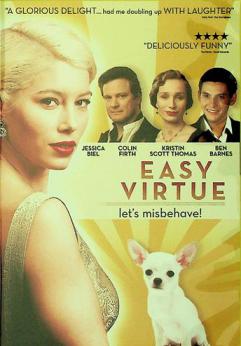
Easy virtue : let's misbehave!
A glamorous American woman enters into a spirited battle of wits with her disapproving English mother-in-law.
DVD

Native American geography shaped historical fire frequency in forests of eighteenth-century Pennsylvania, USA
Researchers have debated the relative importance of environmental versus Indigenous effects on past fire regimes in eastern North America. Tree-ring fire-scar records (FSRs) provide local-resolution physical evidence of past fire, but few studies have spatially correlated fire frequency from FSRs with environmental and anthropogenic variables. No study has compared FSR locations to Native American settlement features in the eastern United States. We assess whether FSRs in the eastern US are located near regions of past Native American settlement. We also assess relationships between distance to Native American settlement, environmental conditions, and fire frequency in central Pennsylvania (PA), US, using an “ensemble of small models” approach for low sample sizes. Regression models of fire frequency at 21 locations in central PA often selected distance-based proxies of Indigenous land use. Models with mean annual temperature and Native American variables as predictors explained > 70% of the variation in fire frequency. Alongside temperature and wind speed, “distance to nearest trail” and “mean distance to nearest town” were significant and important predictors. In 18th-century central PA, fires were more frequent near Indigenous trails and towns, and further south due to increasing temperature and pyrophilic vegetation. However, for the entire eastern US, FSRs are located far from past settlement, limiting their effectiveness in detecting fire patterns near population centers. Improving understanding of historical fire will require developing FSRs closer to past Native American settlement.
Journal Article

Socioeconomic status over the life course and stages of cigarette use: initiation, regular use, and cessation
Study objective: To investigate the association between multiple indicators of socioeconomic status (SES) over the life course and three stages of cigarette use: initiation, regular use, and cessation. Design: Prospective birth cohort study. Setting: Providence, Rhode Island. Participants: Subjects (n=657) aged 30 to 39 were offspring of participants in the Brown University cohort of the United States National Collaborative Perinatal Project started in 1959. Main results: A significantly increased risk of smoking initiation was observed among people from lower socioeconomic backgrounds. Low SES in childhood also increased the risk for progression to regular smoking, and was associated with a reduced likelihood of smoking cessation. Progression to regular smoking and smoking persistence were also associated with lower adult SES. Conclusions: Socioeconomic conditions over the life course accumulate to produce increased rates of smoking uptake and reduced rates of cessation among lower SES people. Addressing SES gradients in smoking will require persistent and extended intervention over multiple life stages.
Journal Article

Systematic and searchable classification of cytochrome P450 proteins encoded by fungal and oomycete genomes
Background
Cytochrome P450 proteins (CYPs) play diverse and pivotal roles in fungal metabolism and adaptation to specific ecological niches. Fungal genomes encode extremely variable “CYPomes” ranging from one to more than 300 CYPs. Despite the rapid growth of sequenced fungal and oomycete genomes and the resulting influx of predicted CYPs, the vast majority of CYPs remain functionally uncharacterized. To facilitate the curation and functional and evolutionary studies of CYPs, we previously developed Fungal Cytochrome P450 Database (FCPD), which included CYPs from 70 fungal and oomycete species. Here we present a new version of FCPD (1.2) with more data and an improved classification scheme.
Results
The new database contains 22,940 CYPs from 213 species divided into 2,579 clusters and 115 clans. By optimizing the clustering pipeline, we were able to uncover 36 novel clans and to assign 153 orphan CYP families to specific clans. To augment their functional annotation, CYP clusters were mapped to David Nelson’s P450 databases, which archive a total of 12,500 manually curated CYPs. Additionally, over 150 clusters were functionally classified based on sequence similarity to experimentally characterized CYPs. Comparative analysis of fungal and oomycete CYPomes revealed cases of both extreme expansion and contraction. The most dramatic expansions in fungi were observed in clans CYP58 and CYP68 (Pezizomycotina), clans CYP5150 and CYP63 (Agaricomycotina), and family CYP509 (Mucoromycotina). Although much of the extraordinary diversity of the pan-fungal CYPome can be attributed to gene duplication and adaptive divergence, our analysis also suggests a few potential horizontal gene transfer events. Updated families and clans can be accessed through the new version of the FCPD database.
Conclusions
FCPD version 1.2 provides a systematic and searchable catalogue of 9,550 fungal CYP sequences (292 families) encoded by 108 fungal species and 147 CYP sequences (9 families) encoded by five oomycete species. In comparison to the first version, it offers a more comprehensive clan classification, is fully compatible with Nelson’s P450 databases, and has expanded functional categorization. These features will facilitate functional annotation and classification of CYPs encoded by newly sequenced fungal and oomycete genomes. Additionally, the classification system will aid in studying the roles of CYPs in the evolution of fungal adaptation to specific ecological niches.
Journal Article

Surgeon practice patterns for pre-soaking ACL tendon grafts in vancomycin: a survey of the ACL study group
Purpose
To survey members of The ACL study group to determine the current practice patterns surrounding the technique of pre-soaking ACL grafts in vancomycin.
Methods
A web-based questionnaire was distributed to members of the ACL Study Group. Questions included the use of vancomycin solution for graft soaking during ACL reconstruction, their protocol for soaking the graft, vancomycin concentration utilized, graft choices, and concerns with the technique.
Results
Sixty-six (57%) ACL surgeons completed the survey. Approximately one-third (37.9%) of respondents currently pre-soak their ACL grafts in vancomycin prior to implantation, with 60% of these surgeons being from Europe. Seventy-six percent have adopted this practice within the past 5 years. The majority of surgeons wrap the graft in a vancomycin-soaked gauze prior to implantation (56%), soak for a variable amount of time before implantation (56%), use a concentration of 5 mg/mL (68%), and soak hamstring grafts (92%). Concerns included the mechanical properties of the graft (35%), cost of vancomycin (23%), availability (12%), and antibiotic resistance (9%).
Conclusion
This survey demonstrates that 37.9% of ACL study group members currently utilize vancomycin to pre-soak ACL tendon grafts as a means to decrease post-operative infection risk, with the majority of surgeons having implemented this practice within the past 5 years. The biggest concern towards using vancomycin was the mechanical properties of the graft after soaking.
Level of evidence
IV.
Journal Article

Seasonal variability in macroinvertebrate assemblages in paired perennial and intermittent streams in Costa Rica
Ecological effects of flooding and drying events are relatively understudied in the Neotropics and less is known about these hydrological extremes in intermittent streams. Neotropical headwater streams in Costa Rica provide opportunities to evaluate the response of macroinvertebrate communities to seasonal changes in flow regime in relatively human undisturbed systems. We quantified the effects of seasonal flow variation on aquatic macroinvertebrate assemblages (i.e., density, richness, and functional traits) within two headwater streams with differing hydrological regimes (i.e., intermittent versus perennial), in the Pacific North of Costa Rica. We sampled macroinvertebrates monthly over a year in riffle and pool habitats. Non-metric multidimensional scaling (NMDS) analyses indicated differences in macroinvertebrate taxonomic richness and density between the two streams and riffle and pool habitats. We found that macroinvertebrates in the intermittent stream riffles had significantly higher richness during the dry season. We also found higher macroinvertebrate functional trait richness in the intermittent stream riffle habitats during the dry season. Our results may be explained by life history traits related to stream velocity preference or tolerance, short life cycles that limit exposure to disturbances, and dispersal capacities and feeding mechanisms that are dependent on water movement.
Journal Article