
Catalogue Search | MBRL


Are you sure you want to remove the book from the shelf?

{{itemTitle}}
5
result(s) for
"Adamson, Peter, 1972- editor"
Sort by:

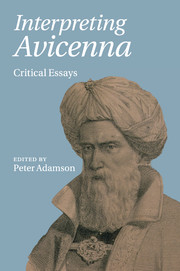
Interpreting Avicenna
Avicenna is the greatest philosopher of the Islamic world. His immense impact on Christian and Jewish medieval thought, as well as on the subsequent Islamic tradition, is charted in this volume alongside studies which provide a comprehensive introduction to and analysis of his philosophy. Contributions from leading scholars address a wide range of topics including Avicenna's life and works, conception of philosophy and achievement in logic and medicine. His ideas in the main areas of philosophy, such as epistemology, philosophy of religion and physics, are also analyzed. While serving as a general introduction to Avicenna's thought, this collection of critical essays also represents the cutting edge of scholarship on this most influential philosopher of the medieval era.
eBook

Philosophy and jurisprudence in the Islamic world
This book brings together the study of two great disciplines of the Islamic world: law and philosophy. In both sunni and shiite Islam, it became the norm for scholars to acquire a high level of expertise in the legal tradition. Thus some of the greatest names in the history of Aristotelianism were trained jurists, like Averroes, or commented on the status and nature of law, like al-F♯1r♯1b♯±. While such authors sought to put law in its place relative to the philosophical disciplines, others criticized philosophy from a legal viewpoint, like al-Ghaz♯1l♯± and Ibn Taymiyya. But this collection of papers does not only explore the relative standing of law and philosophy. It also looks at how philosophers, theologians, and jurists answered philosophical questions that arise from jurisprudence itself. What is the logical structure of a well-formed legal argument? What standard of certainty needs to be attained in passing down judgments, and how is that standard reached? What are the sources of valid legal judgment and what makes these sources authoritative? May a believer be excused on grounds of ignorance? Together the contributions provide an unprecedented demonstration of the close connections between philosophy and law in Islamic society, while also highlighting the philosophical interest of texts normally studied only by legal historians.
Book

Interpreting Avicenna : critical essays
\"Avicenna is the greatest philosopher of the Islamic world. His immense impact on Christian and Jewish medieval thought, as well as on the subsequent Islamic tradition, is charted in this volume alongside studies which provide a comprehensive introduction to and analysis of his philosophy. Contributions from leading scholars address a wide range of topics including Avicenna's life and works, conception of philosophy, and achievement in logic and medicine. His ideas in the main areas of philosophy, such as epistemology, philosophy of religion, and physics, are also analyzed. While serving as a general introduction to Avicenna's thought, this collection of critical essays also represents the cutting edge of scholarship on this most influential philosopher of the medieval era\"-- Provided by publisher.
Book
